The slaying of Goliath may just be a fable that is seldom achieved in reality.
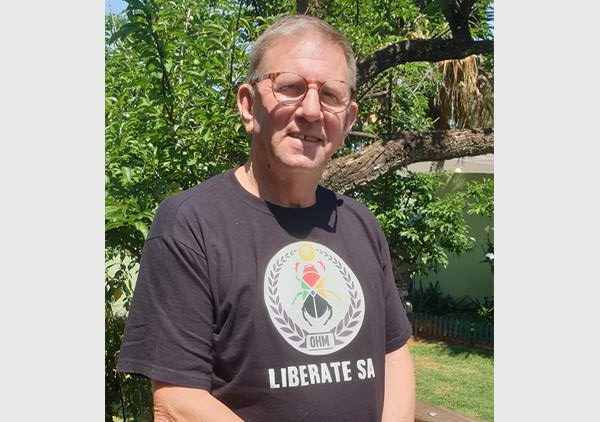
Organic Humanity Movement (OHM) is one of the multitude of less-recognised parties on the 2021 local government elections ballot. A Florida resident for 30 years, Andre Brink will be the party’s candidate in over 60 different wards including 70, 83, 84, 85, 86 and 89. OHM is founded on the ‘Six Principles’: “Liberty, Protection of Life, Respect for the Earth, Self-reliance, Continuous Progress and National Unity”, Andre enlightened OHM’s mission.
Q. What is your vision for Ward 70/ Roodepoort?
A. I see Ward 70 as a leading community in terms of self-sustainability in regards to less reliance on the power company and the municipal water supply. I see Ward 70 as having one of the first community wellness emporiums in Gauteng, bringing the community together in one space where people can learn how to take back their power from the current system.
Q. What is the biggest difficulty in running as candidate for a less-recognised party?
The party political system is undemocratic in so many ways. One way is the fact that represented parties receive funding from taxpayers. This gives them an unfair advantage from the very start of our democracy. Represented parties will always have the resources necessary to pay all the staff they need to execute their vision and to market their message to millions of South Africans.
When any new party springs up in our democracy, they are starting, often with nothing but a vision and a few hopeful individuals. We work tirelessly to get our message out there. We struggle with the workload, often unable to employ people to share that workload. Compared to represented parties, we are out-resourced by far, not having the influence necessary for mainstream media to take us seriously. So the only option we have is to spread the word one person at a time.
Q. Why do you think people gravitate towards the more recognised political brands?
A. Simply brand awareness. Their logos have been seen that much more and they have had continuous coverage in the news for years and years.
Q. How would you streamline the electoral process?
A. OHM is striving to get rid of the party system completely and replace it with direct elections where voters will vote directly for their representatives, from ward councillor right up to president of the country. In order for a new democratic system to be successful however, we recognise that first we need constitutional change before we usher in a new kind of democracy.
Our country’s constitution as the foundation of our multiparty democracy is flawed and needs to change. From the structure of government to the Bill of Rights we are rewriting the constitution to honour liberty and humanity. With a new constitutional framework introduced into government we will then usher in the new electoral system where political parties are no longer recognised, and voters vote directly for individuals which means more accountability in government and no more control from parties and their funders.
It’s fairly easy to capture an entire municipal council or even national assembly with parties but it’s far harder to achieve the same when those councils or national assembly is made up of many individuals acting on their own – not grouped within an organisation.
Q. Elaborate on how the ‘Six Principles’ mesh?
A. All six principles need to be present within society or within a solution proposed by government for success.
They all work together. We want everyone to have individual liberty – the freedom to do what you want, live how you want. But at the same time we don’t want people to lose their lives or livelihood so our second principle is protection of life. We very strongly feel that to honour this principle government should govern from the perspective of the most vulnerable.
We also recognise that society, business and government need to have respect for the Earth because the Earth is our only true nurturer. Respecting the Earth also protects our lives through clean air, clean water and healthy food. Self-reliance ensures liberty. Our interpretation of self-reliance is not being dependent on government or corporations to meet your basic needs, so it’s a move away from consumerism and a move towards personal independence which leads into continuous progress.
In a country where corporations and big business no longer pull the strings, society has the space to invent new things and progress around humanity instead of stunting progress for the sake of profit. Finally that brings us to national unity. We acknowledge our diversity, and sometimes our differences have caused conflict. However for South Africa to move forward and stand strong against a global enemy we need to learn to have tolerance and respect for one another, and unite behind the vision of liberation for South Africa.
Q. I believe you support decentralisation of government? How would one go about achieving this in a practical sense?
A. Our government is already decentralised, that is why we have three spheres of government: local, provincial and national. However, we believe it can be done better. We want to change both the philosophy and structure of government. We will do away with provincial governments and give local governments more authority to meet the needs of the community.
National Government will only have three areas of responsibility – Defence of the Country, the Justice System and Management of Infrastructure and Resources. Everything else will fall under local municipalities which means more direct accountability. Right now in our current form of decentralisation, it’s national that holds most of the power. In the system we are proposing, the local governments will hold most of the power. This also means most tax will be paid locally and administered locally – making it easier to spot mismanagement of funds and easier to see when and where government fails, and then to do something about it.
Q. What is your message for the voters?
A. My message to the voters is that there is hope and there are solutions, and they should see this possibility as a reality. Vote Organic Humanity Movement.
DISCLAIMER: Caxton Local Media is always objective. When we report on the views of politicians or political parties, the reasonable reader should be able to gather that the views are those of the interviewees, and not of the publication interviewing them. If an editor believes that there may be room for doubt in this regard, a disclaimer will be added to the reporting, stating: “The views expressed in this report were expressed by the relevant interviewee(s) and the party or parties they represent, and are not held by this publication.”