New property rates for education institutions ‘disgraceful’
Government run schools to be categorised as Public Service Purpose while private schools now fall under Business and Commercial category
A change to City of Johannesburg’s (CoJ) property rates classifications is posing possible financial strain for schools across the city.
New property rates throughout the city came into effect at the beginning of the CoJ’s financial year, July 1. With the new rates came the reclassification of educational facilities, both private and government-owned. While government-run schools have been reclassified as Public Service Purpose, private schools have been classified in the Business and Commercial category.
This consequential reclassification has been made a necessity in terms of the Municipal Property Rates Amendment Act 29 of 2014 (MPRA) that was promulgated in 2015 by the Ministry of Corporate Governance and Traditional Affairs (CoGTA) and after the CoJ’s final request for a special classification was rejected in December 2021, it came into effect a few weeks ago.
Up until the 2021/ 2022 financial year, ‘education’ had been a category for CoJ rates classifications but the CoJ claims CoGTA has ended that. “Section 8 (of the MPRA) has mandatory categories to be implemented by all municipalities, which were given seven years to implement same from July 1, 2015. A decision was taken to approach the Minister of CoGTA to consider that the subcategories be included from the amended Section 8 of the MPRA. The application request was not considered favourably,” stated CoJ MMC for Finance, Julie Suddaby.
The 2021/ 2022 property rates allowed for 22 different categories but the new categories stated in the MPRA, applicable July 1, amount to a total of just ten. The new property rates classification will see significant increases from what schools have been paying but they are able to apply for a 25% rebate on the property rate. CoGTA were approached for comment via email on July 7 but no response has been received.
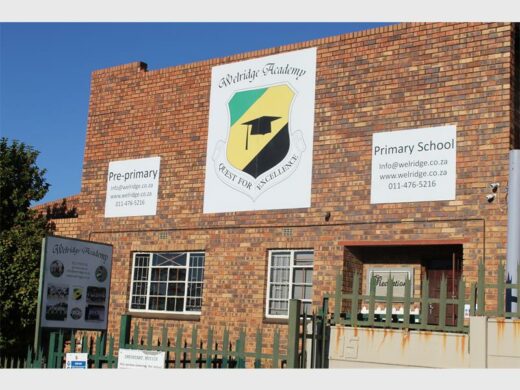
The rebate may not be enough and some private school owners are facing a nervous wait for their new CoJ account. “We were unaware of the exponential rates increase until about ten days ago. We have not yet received our rates bill for July, but should the rates have increased tenfold, the impact on our operational budget will be massive. Very few schools, if any, will be able to absorb such a huge increase,” stated Welridge Academy’s Veronica Nel, responding to questions on July 6.
The property rate under the Public Service Purpose will be less than for those now falling under Business and Commercial. Gauteng Department of Education was contacted on July 5 via email, and on July 11 via WhatsApp with no response being forthcoming. “Schools cannot afford the increased expense and the parents of the youth of this city cannot afford to pay higher school fees. This action by the City of Johannesburg is disgraceful and shows very clearly how much value is placed on education,” added Veronica.
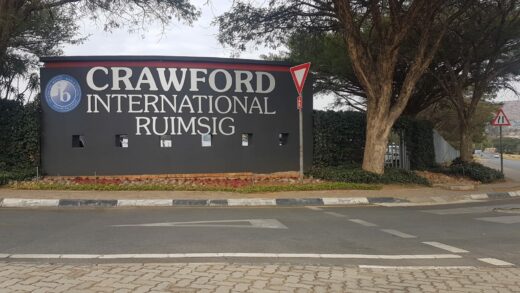
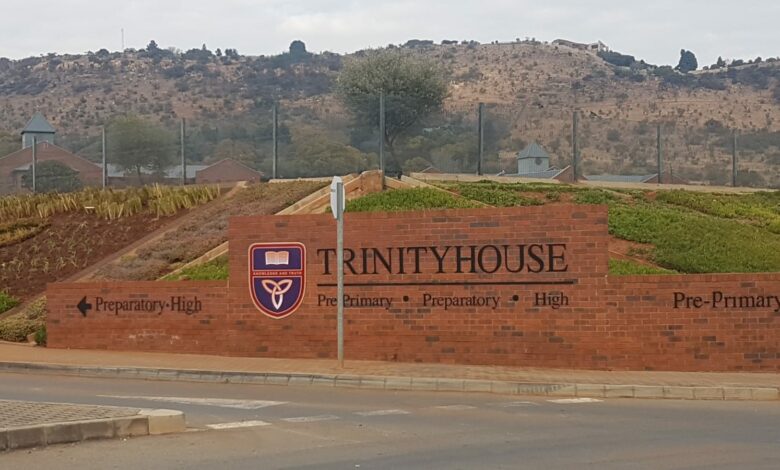
Private schools have become popular alternatives throughout Johannesburg, as edu-entrepreneurship provides a tailored product for parents, learners and educators. Operators of Crawford International Ruimsig and Trinityhouse Little Falls within the ADvTECH Group are among the leaders in private education in South Africa. “We do not believe the recent property rates reclassification for educational facilities is in the best interest of education in South Africa,” said ADvTECH CEO, Roy Douglas.
ADvTECH confirmed they are preparing to bring legal action against the CoJ relating to the recent property rates reclassification for educational facilities the city plans to implement for all public and private schools. This reclassification is applicable to all educational facilities, including universities and colleges, and as the bills are received, the true impact can be gauged properly.