Patients suffer as local clinic closures continue in Durban Deep
Residents say the clinic is often closed due to a shortage of staff, leaving them nowhere to turn to for medical attention.
For residents of Sol Plaatjie in Durban Deep, the local clinic is an essential lifeline and the only accessible local medical facility for miles around.
According to clinic committee chairperson and community leader Tshidiso Makara, the Sol Plaatjie Clinic is barely functioning due to severe staff shortages, specifically in the administrative department.
“This is the only place for people of Sol Plaatjie and Durban Deep to come to,” he says.
“But for the past three years, it has been so understaffed that people would often arrive to find the clinic closed.
“The two permanent administrators are often off sick or on leave, leaving the clinic with no option but to close for the day.”

Also read: Elderly residents fear a cold winter since being left with no hot water
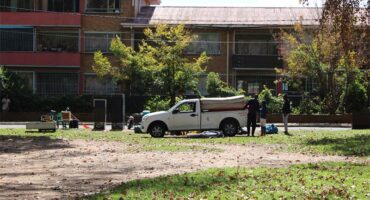
During the Roodepoort Record’s visit on March 26, at least eight people arriving at the clinic for medical attention, including a woman with a very ill baby, were turned away by security. This within just 30 minutes.
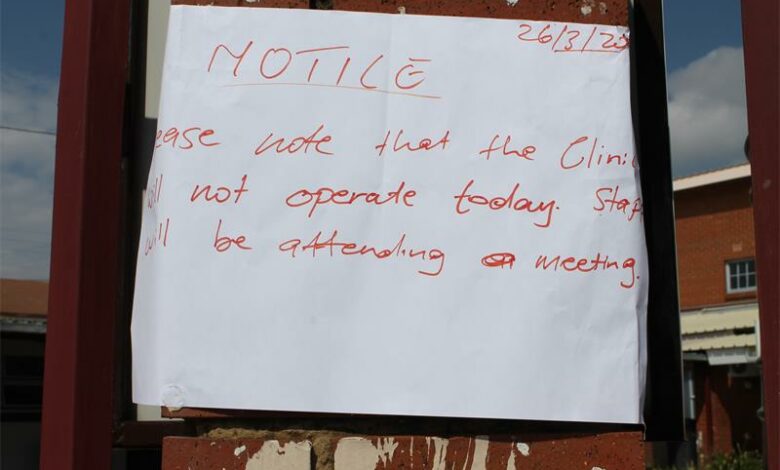
The clinic was closed because staff were away attending a union meeting.
Makara says that there was, as usual, no prior notice to the community that the clinic would be closed on the day, except for some hastily applied posters, stuck on the fence that morning.
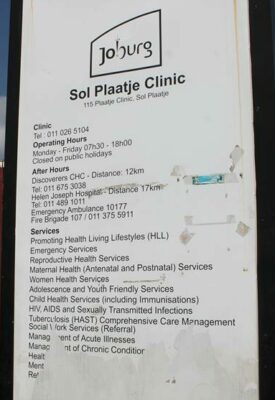
Resident Constance Nkuna adds that barely a week goes by that the clinic is not closed for at least one or two days.
“This is a disadvantaged area,” she says. “People already have to scrape together money for transport to get here.
“When this clinic is closed, people have to travel far to another clinic, and then they get turned away because you are supposed to visit your local clinic.”

Unlike most local clinics, Sol Plaatjie Clinic is not run by the Gauteng Health Department, but by the City of Johannesburg.
According to a media relations specialist for the City, Ayanda Radebe, the clinic is staffed by six administrators, two of whom are permanently employed at the clinic.
“There are two vacancies in the administrative unit that cannot be filled due to a city-wide moratorium on the filling of vacancies.”
She adds that workers from the City’s expanded public works programme are used to offer additional administrative support.

Radebe denied that the clinic was closed on March 26, saying that all patients who were booked for the doctor were seen and all emergencies were attended to. She added that the South African Municipal Workers Union was granted permission to hold a meeting at the clinic, but that it did not interfere with patient care.
This, despite the Record witnessing many patients being turned away on the day.
Radebe adds that patients are not allowed to be turned away by clinic staff, even if it is not their local clinic, saying that such incidents should be reported to the clinic manager.