WaterCAN volunteers test Cypress Road river water for pollution sources
Volunteers are sampling local waterways to trace sewage entry points and investigate unexpected chemical readings following recent pipeline repairs.
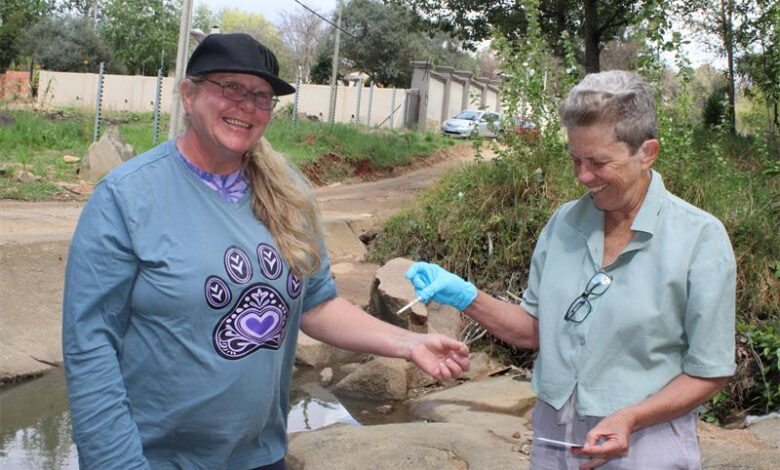
Volunteers are testing a local river at multiple locations in Zonnehoewe near Cypress Road to trace the entry points of sewage pollution following recent infrastructure repairs.
Jill Fransen and Lee Douglas collected water samples at Cypress Road on September 15 as part of WaterCAN’s Citizen Science Water Testing Week, which runs from September 14 to 18.
Fransen explained that the volunteers are not only testing the water at the point where pollution is visible, but are comparing samples upstream and downstream.
“We’re trying to ascertain where the pollution is coming in, so we’re going to take samples above and below on this river, and then we’re going to do the same on the Strubens Valley side to see where the biggest problem is,” she said.
The investigation follows previous reports of sewage entering the river system at several points. Johannesburg Water previously confirmed poor microbiological water quality and elevated E. coli levels.
• Also read: E. coli found in polluted river along Cypress Road after sewer pipeline failure
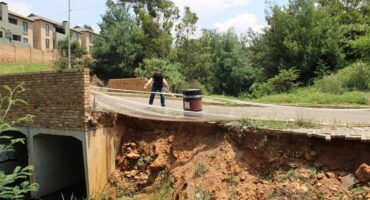
A damaged sewer pipeline near the Sjampanje Street Bridge was repaired in July, while a separate damaged pipe behind Strubens Valley United Church on Florin Road was also repaired. Further suspected sewage discharge points were subsequently identified upstream.
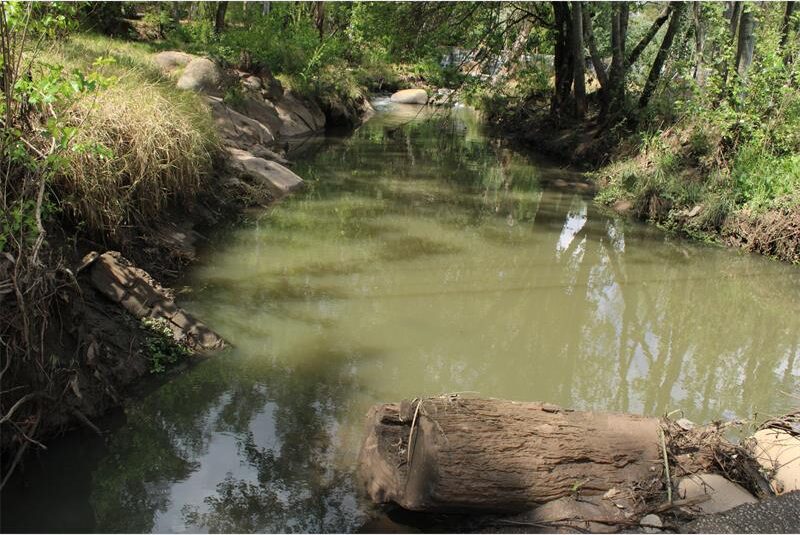
At Cypress Road, the Roodepoort Northsider observed that the water appeared more greenish and had a stronger smell than during an earlier visit.
Chemical readings raise concerns
Fransen said the first sample was taken at Johan Road, near an aviation property behind the Academy of Aviation. “That water there was amazingly clean,” she said.
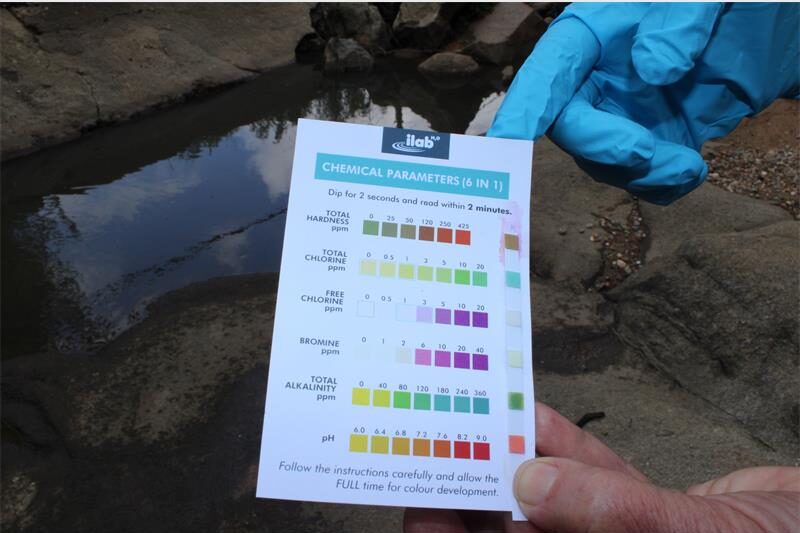
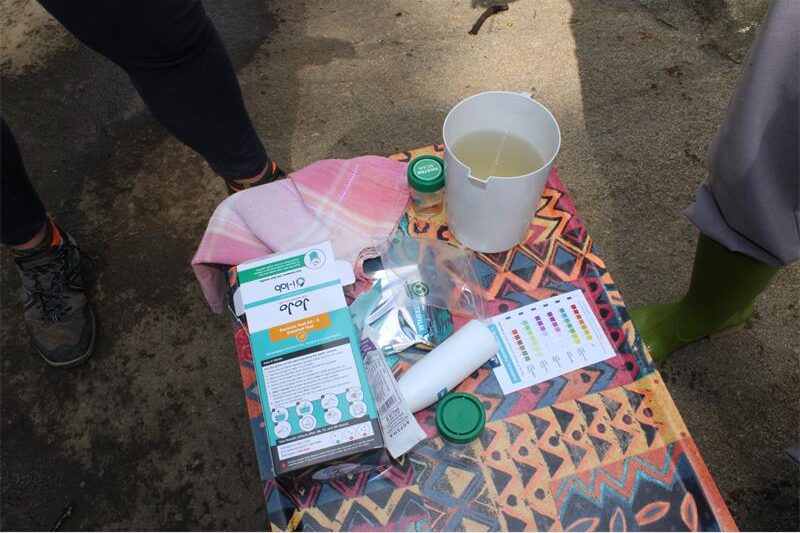
The Cypress Road sample was tested for total hardness, total chlorine, total alkalinity, pH, nitrates and phosphates. The volunteers also took a coliform sample, which is left for 72 hours to show whether coliform bacteria are present.
Fransen explained that coliform can indicate organic matter from humans, animals or decaying material, while E. coli is more specifically associated with faecal contamination. The testing also produced a high chlorine reading.
“We’ve got high chlorine in both rivers, which is very strange, and we need to investigate that further because chlorine in a natural water source damages fish gills,” Fransen said.
Douglas expressed that her concern is that the river eventually flows into the Crocodile River, meaning pollutants entering the local waterway can travel downstream and affect aquatic ecosystems and communities that depend on the river.
Household waste drives sewer blockages
The volunteers said pollution cannot only be viewed as an infrastructure problem, but that waste entering sewer systems is also contributing to blockages.
Douglas said the items found in sewer infrastructure included nappies, blankets, earbuds, cool drink bottles, sanitary towels and condoms.
• Also read: Stormill Association and DA repair deteriorated Shaft Street after 3-year JRA delay
“People use it as a trash can. They put things down the toilet that shouldn’t go down the toilet, and then you get a blockage, and the sewage has got nowhere to go. It then finds its way into the river,” she said.
She also warned against putting cooking fat down household sinks because it can contribute to sewer blockages. Douglas added that education was particularly important because people may not realise the consequences of what they put down toilets and sinks.
“Education is so important because people don’t necessarily know that when they throw something down the toilet, it can end up causing a blockage and then that sewage can end up in the river,” Douglas said. “We need to teach people from a young age what they can and cannot put into the system.”
Fransen recently worked with the Honeydew Residents Association and Honeydew Cubs on a water-awareness event, where children learned about river pollution, caring for waterways and everyday habits that can contribute to blocked sewer systems.
Community involvement in water monitoring
WaterCAN’s Citizen Science Water Testing Week allows residents, schools, community organisations and water activists to participate in basic water-quality testing and contribute their findings to the organisation’s MapMyWater database.
The 2026 testing kits were limited and registration for this year’s programme has closed. Residents can follow WaterCAN for information about future citizen-science testing opportunities.
Fransen said pollution points are also being mapped and that the information will contribute to discussions at a pollution summit in Ekurhuleni. The latest testing aims to establish where pollution is entering the river and whether unidentified sources remain between the upstream sites and Cypress Road.