Roodekrans couple walk 890km through Spain for Germiston care home
Nickey Seger and Grant Clack are tackling the Camino de Santiago pilgrimage with a travelling teddy bear to raise R750 000 for hydrotherapy upgrades.
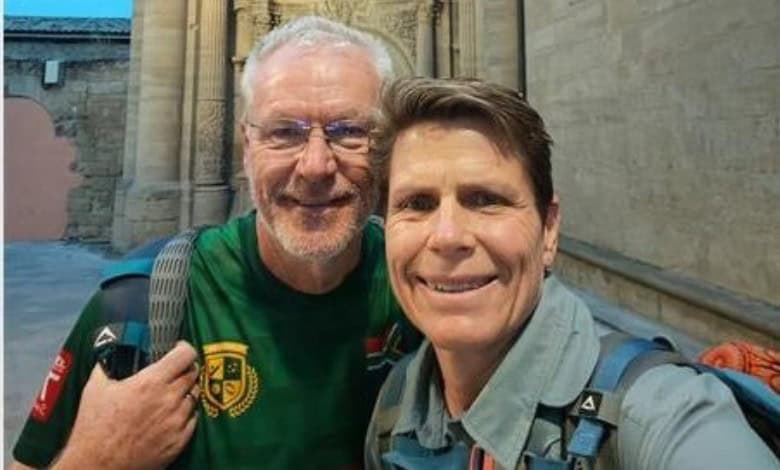
For Roodekrans couple Nickey Seger and Grant Clack, every kilometre of their 890km walk through Spain carries the hopes of 154 people who cannot make the journey themselves.
The couple is taking on the Camino de Santiago pilgrimage to raise R750 000 for the Avril Elizabeth Home (AEH) in Germiston, with the money earmarked for upgrades to the home’s hydrotherapy facilities.
Joining them on the journey is Tumi, a travelling teddy bear whose name is derived from Tumelo, meaning faith. Tumi has become the campaign’s ambassador and represents the AEH residents as he travels alongside the couple through Spain.
“I heard about AEH when I was at a networking event in Pretoria earlier this year. The home provides lifelong residential care to 154 adults with severe intellectual and physical disabilities,” said Seger.
She added that the Camino was already a personal ambition she had dreamed of completing for about 30 years, but she decided to give the challenge a greater purpose by using it to raise money for AEH.
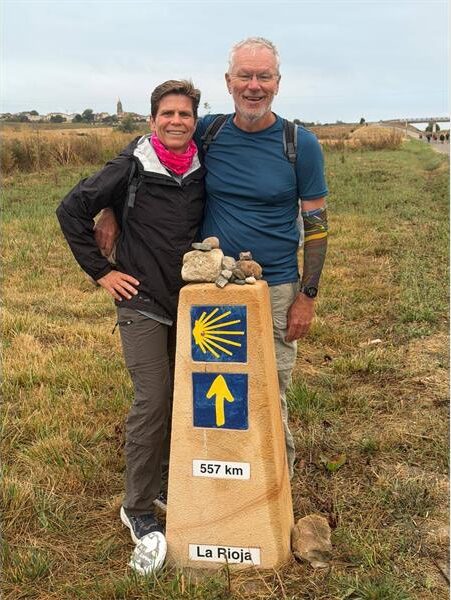
Faith and endurance on the road
The couple plans to spend 42 days making their way to Santiago de Compostela before continuing to Finisterre, traditionally known as the “end of the world”.
By Friday, September 11, on day 15 of the journey, the pair had already covered 290km from their starting point in Spain.
The physical demands of the challenge have been considerable, with Seger admitting that the reality of the walk has been tougher than she anticipated.
“Every endurance challenge is different, but this has been harder than expected because of the intense heatwave, daily distances covered and carrying the 9kg backpack, including sore feet and blisters,” she said.
Yet the pain has also reinforced why she is walking.
“However, the AEH residents kept me going because my purpose is bigger than sore feet or blisters,” she said.
Upgrading vital hydrotherapy facilities
At the heart of the fundraising campaign is AEH’s hydrotherapy facility, which provides an important form of therapy for residents with severe physical disabilities.
Water-based therapy can help support movement, relax stiff muscles, reduce pressure on joints and provide greater comfort for people whose mobility may be severely limited on land.
The pool can also offer sensory stimulation and opportunities for engagement for residents with severe mental and sensory disabilities.
But the facility is currently only usable for about half of the year.
The R750 000 fundraising target will help fund a range of upgrades, including solar panels to heat the pool during winter, refurbished tiles and grouting, upgraded showers, an assisted pool hoist, railings, flotation devices and therapy equipment, as well as a heating system, towels and robes.
For Seger, reaching the fundraising target would mean turning a gruelling personal challenge into a lasting improvement for the residents.
“Long-term success would be if we can raise the funds and redo the hydrotherapy pool facilities so that the residents can do their water therapy the whole year round,” she said.
As the couple continues towards Santiago de Compostela and Finisterre, Seger says she is reminded that the walk is ultimately not about her.
“Every step I take is on behalf of one of our residents who cannot. Every hill we climb, every kilometre we cover and every sunrise we greet is a reminder that hope grows one step at a time.
“Our residents may not be able to walk the Camino. But through me, they will.”
The public can support the campaign by donating through the couple’s BackaBuddy fundraiser or sharing the campaign to help it reach its R750 000 target.
Community members can also follow Seger’s journey and receive daily updates by searching for Nickey Seger on Facebook or Instagram.