Book of poetry from struggle icon
JOBURG – Anti-apartheid activist and academic, Patrick FitzGerald has launched a new collection of poetry, titled Epitaphs and Dreams: Poems to Remember the Struggle.
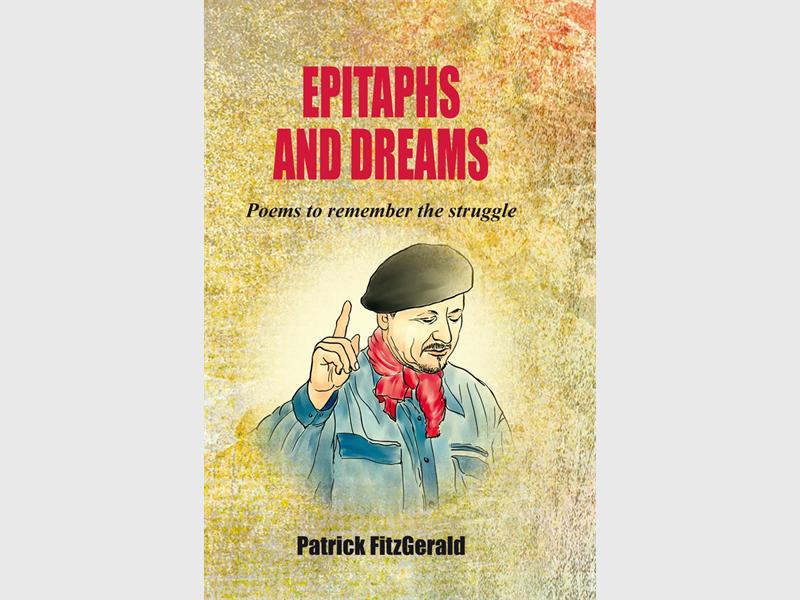
Patrick FitzGerald is currently an adjunct professor at the Wits School of Governance which he founded in 1990 upon his return from exile, and is chair of the City of Joburg’s performance audit committee.
In the 70s and 80s he was a vocal and often-detained student activist at Wits, a founder member of the influential Junction Avenue Theatre Company, and an active part of the ANC underground structures inside the country before going into exile in Botswana.
He later moved to Lusaka to become the administrative secretary of the ANC’s department of arts and culture, before furthering his studies at Liverpool University in the United Kingdom.
FitzGerald’s experiences of the intensified period of the struggle in the 80s prompted him to write a book of poetry, Epitaphs and Dreams.
The poems, written in the days when, in his words, ‘[it] was an everyday matter to be carrying both a pen and a weapon’, were read at public and private gatherings of comrades, performed at political gatherings and at international cultural festivals, used in poetry workshops, set to music, and discussed among exiled writers.
FitzGerald, the grandson of pioneering trade unionist Mary FitzGerald, after whom a square in Newtown is named, notes in his introduction that art thrives in revolutionary environments.
“Poetry, then, became an important ingredient in keeping alive the flame of resistance, of spirit and dedication, of solidarity, of courage, of determination,” he said.
The memory of those times, he said, “burns with a vivid and ever-present sense of purpose and idealism, a willingness to fight for right against gross injustice.”
Poet and novelist, Mandla Langa said of Epitaphs and Dreams , “Patrick FitzGerald might not know what he has achieved with this volume. Coming at a time when there is a campaign to minimise the contribution of the struggle towards the creation of our democracy, his poetry serves as a chronicle of times.
“It is a record, employing language that is as indelible as something wrought in iron, and as enduring.”