Breaking down stigma and discrimination for people living with albinism
BEZ VALLEY– People living with albinism demand the governments and all community members play their part to ensure that their rights are respected, protected, promoted and fulfilled.
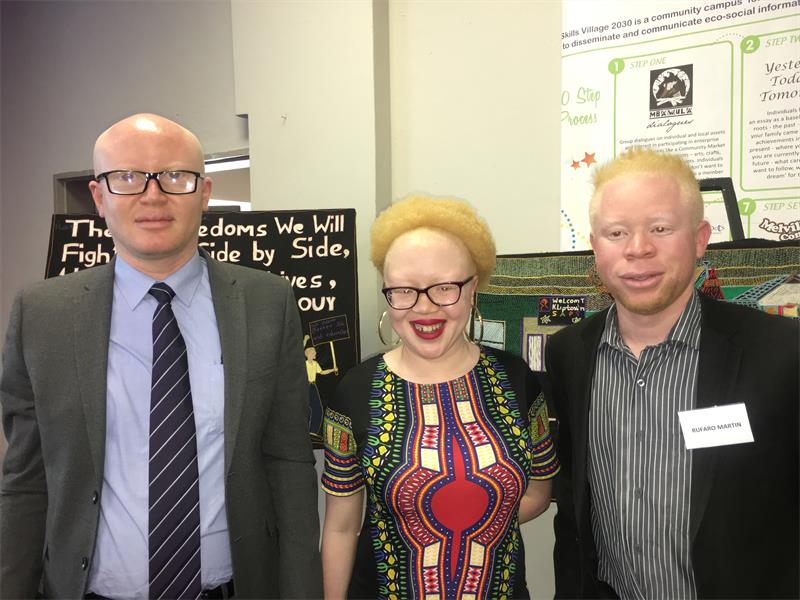
The international day of social justice saw several albinism activists from South Africa, Zimbabwe and Tanzania echo the words, ‘I exist as I am’ at the Skills Village, Bez Valley.
Each activist was given an opportunity to share their stories and challenges as a person living with albinism in a society full of stigma and discrimination.
Social justice activist and founder of a social media platform, The I Am Movement, Ingrid Bame said, “My movement highlights the various activities and initiatives involving the albinism community in various parts of the continent. I produce and deliver a monthly segment which I call the The Albinism Report on Channel Africa. I discuss key activities that are taking place within the albinism community in Africa.”
Bame explained that she felt she needed to be a voice for the albino community in order to help others know that their lives matter. “First and foremost, we are human beings. We are not ghosts and it is very important for people living with albinism to know that they can stand up, move and make their dreams a reality. To know that they can go for what they want in life and not be afraid. I want them to know that they can be brave without fear. The time is now.”

The gathering on 20 February was aimed at exploring how the financial and social exclusion of people with albinism can be dealt with in an environment across borders
Sharing her story, Regina-Mary Ndlovu who is an actress, singer-songwriter, motivational speaker, model and human rights activist has overcome adversities in her life as a young girl and woman with albinism. She was raped at the age of seven and 21, sexually abused during her school years, kidnapped and admitted to a mental hospital which led her to attempt to commit suicide 11 times.

“I only learnt to read at the age of 25 and I can bravely say I have overcome these horrific violations. I now run my own online show called ‘My Voice, Albinism the New Era’.”
Ndlovu also starred in an educational theatre production Mama I want the black that you are which depicts the story of a young girl with albinism who goes through challenges because of her condition.

The day also served to bridge together like-minded people affected by and living with albinism and pilot an initial discussion for what is aimed to eventually become an Africa-wide meeting of minds for a critical mass of parties to discuss strategic interventions led and informed by people with albinism, to develop a formula to shift the paradigm of the public at large towards this dehumanised or invisible sector of the communities.
In their statement of intent and having realised their common challenges, namely, discrimination and exclusion from political, social and economic arenas, they:
- Demand the governments to create a conducive environment to ensure the inclusion in social, political and economic development structures and systems
- Petition the societies to realise the existence, ability and potential to effectively contribute to our national development
- Request all religious leaders to acknowledge them, teach the truth about albinism and embrace them in their places of worship
- Mandate witch doctors and fortune tellers to stop spreading lies and myths about albinism
- Require civil society organisations and corporates to support them in realising their rights
- Call on the media to henceforth convey their stories of triumph against all odds in order to shift public perception
- Implore their families, to accept them, love them, value them and protect them.
The statement further stated that in return, they, as individuals and within their representative organisations will remain duty bound to respect the laws and constitutions of their countries while, at the same time, continue to commit to raise awareness to demystify the harmful misconceptions, beliefs and practices on persons with albinism; lobby and advocate for full reclamation of our dignity; and collaborate with relevant stakeholders to monitor, evaluate and report on progress towards the realisation of their rights.
They also demand the governments and all community members play their part in ensuring that their rights are respected, protected, promoted and fulfilled.
Do you believe that protecting the albino community is a priority? Tell us @NE_Tribune
Related article:
https://northeasterntribune.co.za/226344/local-community-finally-heard/