SA’s Covid-19 mortality rate surprising low
South Africa maintains a low mortality rate for Covid-19 infections, despite having the highest rate of HIV and TB infection in the world, coupled with a prevalence of lifestyle diseases.
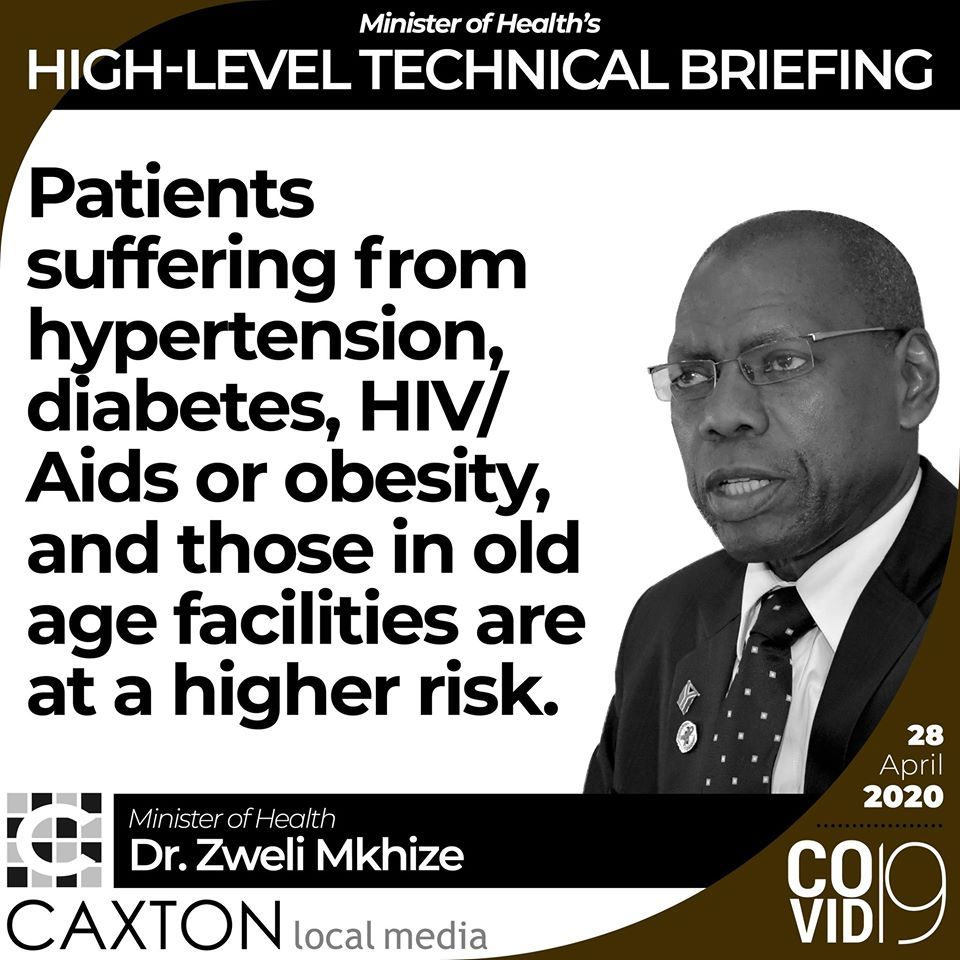
The high prevalence of lifestyle diseases, coupled with the fact that South Africa has the highest number of HIV and TB infections in the world, should have spelled disaster as the number Covid-19 infections steadily increasing day by day.
However, South Africa’s mortality rate from Covid-19 infection is a low 1.9%, compared to some European countries where mortality rates as high as 14% have been reported.
During his technical briefing on 28 April, Health Minister Dr Zweli Mkhize revealed that more than a third of South Africans suffer from hypertension, more than 4.5 million people have diabetes and more than 70 % of women and 40% of men are overweight or obese.
“Studies have continuously shown that there is a strong association of serious illness or death from Covid-19 infection with pre-existing morbidities, like hypertension, diabetes and obesity,” said Mkhize. He attributes South Africa’s low mortality rate to the fact that most of the people who have contracted the virus so far are young and healthy, and have, therefore, recovered well.
He pointed out, however, that there are patients with underlying conditions who survived Covid-19 despite becoming very ill and expressed his gratitude to the medical staff “who are working hard to ensure that we keep the mortality rate as low as it is at the moment.”
To date 185 497 tests have been conducted, with 25 000 of these done in the public sector in the past week alone.

There are three groups of people being tested, explained Mkhize: “Those who are tested in the private sector, those who are tested in the public sector because they showed symptoms when they went to a hospital or clinic, and those referred for the testing from the public screening programmes.”
From March 28, when the lockdown was implemented, the number of positive cases remained between 3% and 3.8% among those who tested for Covid-19 at public facilities.
While Covid-19 has affected various parts of the country differently, according to Mkhize, the implementation of the lockdown has successfully slowed down the spread of infection. This has resulted in a situation where the peak of the epidemic in South African has been pushed back by six weeks, giving the government more time to prepare medically for the surge of infections.
Now, Mkhize believes that it is not possible to ‘push the curve further’ even if the lockdown is extended.
“The decision to ease the lockdown was based on scientific calculations that proved there would be no further benefit, from an epidemiological perspective to continuing the lockdown as it was,” he said, adding that he supported the decision for the government to turn its attention towards food security and protecting citizen’s livelihoods.
Briefly addressing concerns expressed by healthcare workers regarding personal protective equipment, Mkhize stressed the importance of adequate training as the biggest ammunition in the war against Covid-19. He described the acquisition of protective gear for health staff as a moving target, saying: “Sometimes we have enough, other times we run out.”
He added that challenges have arisen due to the increased demand for protective gear, globally, and prices of protective gear have escalated.
“We have asked for an audit of the stock in the hospitals so we are able to address the matter, at any time, if there is a concern. We want to ensure staff are protected,” said Mkhize.
Within South Africa, 135 healthcare workers have tested positive for Covid-19 thus far.
Mkhize concluded his address by thanking the 217 doctors from Cuba who will work alongside South African healthcare workers to offer Covid-19 interventions at the community level. Fifth and sixth-year medical students from various universities will also join the fight against Covid-19 on the ground, along with retired doctors and private practitioners who have offered their service to the public sector.
Related articles:
Tech Thursday: Be aware of what Coronavirus apps you download
Covid-19: HSRC releases findings of second part of lockdown survey
Operation Hunger helps ensure people stay healthy during lockdown
* Notice: Coronavirus reporting at Caxton Local Media aims to combat fake news
Dear reader,
As your local news provider, we have the duty of keeping you factually informed on Covid-19 developments. As you may have noticed, mis- and disinformation (also known as “fake news”) is circulating online. Caxton Local Media is determined to filter through the masses of information doing the rounds and to separate truth from untruth in order to keep you adequately informed. Local newsrooms follow a strict pre-publication fact-checking protocol. A national task team has been established to assist in bringing you credible news reports on Covid-19.
Readers with any comments or queries may contact National Group Editor Irma Green (irma@caxton.co.za) or Legal Adviser Helene Eloff (helene@caxton.co.za).