Partnership for information integrity and elections programme meets to discuss potential threats and solutions ahead of local elections
Stakeholders recently gathered at the Johannesburg Holocaust & Genocide Centre as Moxii Africa and its partners launched initiatives to combat disinformation, shield journalists from legal threats, and safeguard information integrity ahead of the 2026 Local Government Elections.
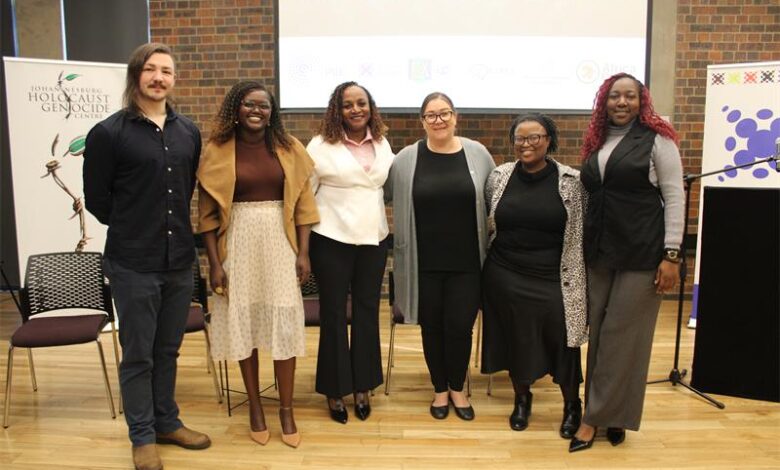
In an effort to reflect on the important role media plays in promoting information integrity and protecting democratic participation during elections, Moxii Africa hosted stakeholders on July 30, at the Johannesburg Holocaust & Genocide Centre under its partnership for information integrity and elections (PIIE) programme.
To kickstart the dialogue, Moxii Africa’s head of programmes Thandi Smith explained what PIIE is and its relevance. “It is a multi-stakeholder coalition led by Moxii Africa, South African National Editors’ Forum (Sanef), and Africa Check, uniting civil society, media, tech platforms, and state organs to combat disinformation and safeguard South Africa’s 2026 Local Government Elections.”
Read more: EduEmporium leads the way in child mental health with free masterclass
Smith explained that the problem we face is disinformation, which undermines voter confidence, fuels polarisation, and weakens electoral integrity. In the lead-up to the elections co-ordinated false narratives across platforms, in local languages, often invisible to traditional fact-checkers threaten public trust in democracy itself.
Slapp
To help us understand the continuous and emerging media threats, Daniel Roodt, from the Centre for Information Integrity in Africa (Cinia), presented his research, which focused on strategic lawsuit against public participation (Slapp) and its impact in newsrooms. “In South Africa, Slapp most commonly takes the form of civil defamation claims, but may also involve privacy claims, harassment orders, and other legal actions. Modern Slapps are frequently part of broader campaigns to discredit critics.”
Roodt provided the following recommendations for dealing with Slapps, which included:
• More research into the impact of Slapps on smaller and community newsrooms, which often lack the financial resources, legal expertise, and institutional capacity to defend against Slapps,
• That judicial training should be improved. International research suggests that judges may not always be sufficiently familiar with media freedom principles, or the characteristics of Slapps, leaving the legal system vulnerable to abuse by litigants seeking to silence public interest reporting,
• That greater institutional support should be offered as Slapps increasingly target them in their personal capacity, exposing them to significant legal costs, financial risk, and psychological pressure, and• That public awareness of the impact of Slapps on freedom of expression should be strengthened, particularly in the lead-up to elections.
Also read: Electoral commission rolls out campaign to get citizens to make their mark in November
Africa Check
Africa Check’s representative Keegan Leech explained how Africa Check reported on elections. “Africa Check aims to promote accuracy in public debate and media reporting.”
Leech said Africa Check’s election approach included:
• Having a multi-prolonged approach, which includes fact-checking, media literacy, access to quality information, and training of journalists,
• Working with media and civil society organisations in cross-publication and in the sharing of information or resources, which can help reach a critical mass of people, and
• Working with government agencies and social media platforms to monitor, pre-empt, debunk, and call out harmful disinformation.
Thomas Reuters Foundation research
Gakii Mbae, from Thomson Reuters Foundation, presented Attacks Against Journalists in South Africa.
According to the executive summary: “The report builds on the 2023 global: Weaponizing the Law: Attacks on Media Freedom report, and the 2026 Kenya report in this series. It draws on documentary review, a survey of 96 participants, focus group discussions, and expert validation to examine the legal threats facing journalists in South Africa today.”
The report listed threats to media freedom in SA, which include, mis and disinformation, financial and commercial pressure on media outlets, cyber stalking and harassment of journalists, and safety and security of journalists.
Also read: Nelson Mandela Foundation launches sporting series inspired by Madiba’s legacy
The report revealed four broader dynamics, which include:
• Threats to journalism in South Africa are cumulative rather than isolated. Legal pressure, digital harms, weak enforcement, and economic insecurity reinforce one another, raising the overall cost and risk of public-interest reporting.
• South Africa is not a hostile environment for journalism in the traditional sense, but one where pressure is often applied in more indirect and systemic ways, through legal processes, regulatory gaps, and structural constraints rather than covert censorship.
• While constitutional protections for media freedom are strong, they do not translate into real protections, due to gaps in implementation, enforcement, and institutional capacity.
• The risks facing journalists are unevenly distributed. Freelancers, community journalist, and those from marginalised groups often face greater exposure to legal, economic, and digital threats, with fewer resources to respond.
As a response to the growing attacks against journalists, Ntsako Manganyi explained that Moxii Africa established monitoring and responding to attacks against journalists (Mars). “It provides a reporting tool for journalists and media supporters, creates a common, anonymised archive of attacks, and transforms individual reports into collective evidence for action.”
He added that roughly 60-74% of journalists in South Africa faced online harassment, social media abuse, and targeted intimidation. Manganyi emphasised the importance of archiving attacks faced by journalists as it was a way to create evidence that can inform policy, platform engagement, and journalist safety interventions.
Sanef
Sanef’s Reggy Moalusi presented the draft code of conduct for journalists during elections.
The code was developed under Section 99(20 of the Electoral Act 73 of 1998), and supplements the existing electoral code of conduct, responding to concerns about intimidation, harassment, and threats against journalists during elections.
The expectations of the media and what the code supports includes accuracy, fairness, independence, and a free press and responsible journalism that are mutually reinforcing.
Moalusi noted that political parties and candidates should provide reasonable access to public meetings and permit attendance at rallies and demonstrations. He concluded that journalists should be free from harassment, intimidation, threats, and online abuse in completing their duties.
Follow us on our Whatsapp channel, Facebook, X, Instagram and TikTok for the latest updates!