
Goethe-Institut hosts launch of new toolkits to combat digital abuse
New resources aim to empower survivors while guiding South African police officers and legal professionals in tackling online harms.
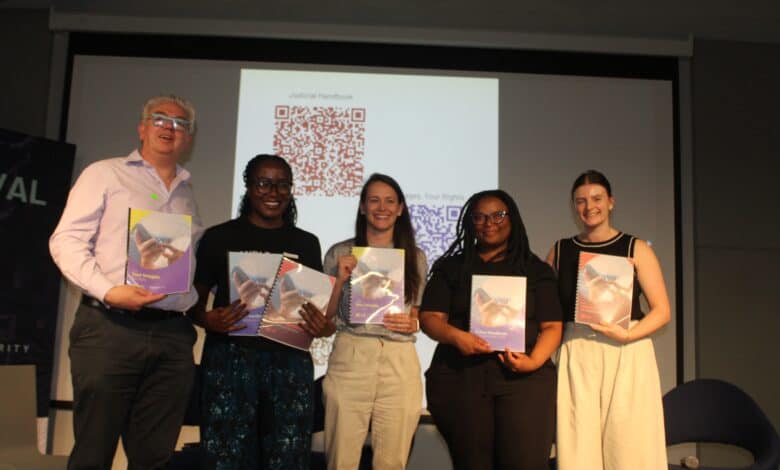
New toolkits designed to tackle online harm were officially launched during Moxii Africa’s Media Freedom Festival at the Goethe-Institut on October 15.
Held annually for the past eight years, the three-day festival forms a key part of the local information ecosystem.
Read more: Bramley SAPS hosts Gauteng mass aerobics event in Marlboro
It serves as a platform for dialogue, collaboration and advocacy, bringing together policymakers, journalists, academics, civil society members and the public.
Moderator Lister Namumba-Rikhotso officially launched three resources: The Judicial Handbook for Navigating Online Harms, Your Images, Your Rights, and the Police Handbook for Navigating Cyber Crimes.
Together, the toolkits equip the judiciary, survivors and members of the SAPS to recognise, investigate, adjudicate and respond to digital abuse. The initiative covers offences ranging from harassment, hate speech and cyberstalking to extortion, data breaches, financial cybercrime and non-consensual intimate image (NCII) sharing.
High Court of South Africa attorney Sophie Smit explained the vision behind the Your Images, Your Rights handbook.
“We are working with the term non-consensual intimate image sharing and moving away from terms such as ‘revenge porn’ because this implies that the person within the image did something to deserve their image being shared and that the content was created for entertainment purposes, and neither of those is true,” said Smit.
“We want to use NCII as a term to take the focus off of the content and move the conversation from what the victim did or didn’t do.”
Also read: Bryanston post-summit roundtable discusses how AI is changing businesses globally
The handbook aims to raise awareness about NCII and its human rights implications, outline remedies prioritising dignity, safety and access to justice, and empower survivors through legal processes.
Legal practitioner Phenyo Sekati highlighted the practical role of the Police Handbook for Navigating Cyber Crimes.
“This handbook is a first step of many to equip officers at the station with necessary information, such as guidance on how to deal with victims who come forward about the harms and abuse they face online,” Sekati said.
The publication was developed to help SAPS members understand various forms of digital harm and implement effective responses.
ALT Advisory associate Claire Dehosse noted that the Judicial Handbook for Navigating Online Harms consolidates existing legislation.
“Online harms rarely fit neatly into one piece of legislation,” Dehosse said. “Within that, it’s also honest about the limits of our existing laws, identifies where existing legislation might be ambiguous, or where it was never designed for online harms in the first place.”
Dehosse added that the handbook keeps victims and survivors at the centre of the narrative, setting out engaged rights while exploring both psychological and offline effects.
Follow us on our WhatsApp channel, Facebook, X, Instagram and TikTok for the latest updates!