
Incentive drives action as Knockout Chaos 1 sets new tone for local boxing
A new format that rewards early finishes brought urgency to the ring and sparked debate about the future of incentive-driven boxing in South Africa.
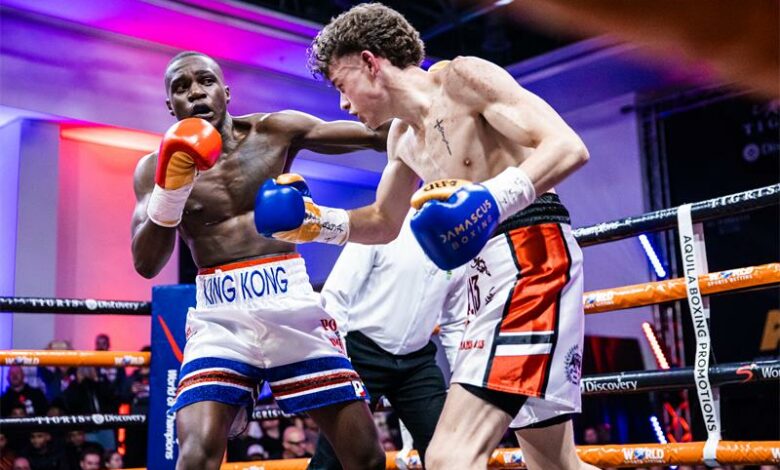
What played out on April 25 was more than just another fight night.
It carried a sense of experimentation and urgency, which set it apart from the usual boxing card. Aquila Boxing Promotions’ Knockout Chaos 1 delivered eight bouts, five stoppages, and a crowd that remained fully engaged from start to finish. Central to that difference was the introduction of the ‘Knockout Clock’, a performance-based incentive system designed to reward early finishes. Fighters could earn bonuses, starting at R30 000 for a first-round stoppage, with the amount decreasing in each subsequent round. The structure left little room for caution. Every exchange mattered, and hesitation came at a cost.
Ambassador for Aquila Boxing Promotions Kevin Lerena pointed out that veteran cruiserweight Thabiso Mchunu was the fighter who made the strongest statement of the night. Mchunu stopped his opponent in the first round, securing the only opening-round finish on the card.
Read more: Knockout chaos set to deliver high-octane boxing action in Sandton
Rising prospect Tiisetso Matikinca maintained his unbeaten record with a decisive second-round stoppage, further strengthening his reputation as one of the division’s promising talents. The momentum continued throughout the evening. Simphiwe Bongco and Gary van Staden both delivered second-round finishes, while Kaine Fourie closed out his bout in the third round after steadily wearing down his opponent. In total, five stoppages from eight fights reflected a card that prioritised urgency and aggression.
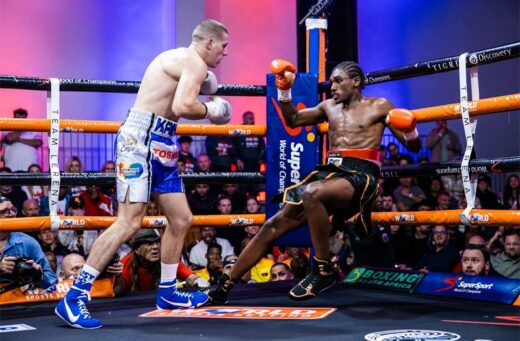
The main event, however, unfolded at a more measured pace. Keaton Gomes controlled his six-round contest against Youssouf Mwanza, securing a clear unanimous decision. The bout offered a tactical contrast to the earlier fights and demonstrated that discipline and strategy still had a place within the high-pressure environment.
By the end of the night, R125 000 in performance bonuses had been distributed across the card, reinforcing the event’s high-risk, high-reward approach. As of April 28, organisers confirmed that all bonuses had been paid in full to the fighters. In boxing, disputes and delays around payments have historically created tension between fighters and promoters. Prompt payment not only builds trust; it strengthens the credibility of new event formats that rely heavily on financial incentives.
Also read: From knockout to comeback, boxing champion’s gym gets a second life
Knockout Chaos succeeded because it simplified the formula. Create clear rewards, increase urgency, and the action follows. Saturday night demonstrated that the concept can work in practice. Whether the format becomes a long-term fixture on the local boxing calendar will depend on consistency and sustainability. Incentives can drive excitement, but they also raise questions about fighter safety, financial viability, and competitive balance over time.
Follow us on our WhatsApp channel, Facebook, X, Instagram and TikTok for the latest updates and inspiration!