However, after the Department of Water and Sanitation (DWS) Minister Senzo Mchunu’s October pre-election meeting with stakeholders on the Vaal River Barrage, there remains uncertainty about plans to deal with Emfuleni’s wastewater problems at the treatment works of Sebokeng, Rietspruit and Leeuwkuil.
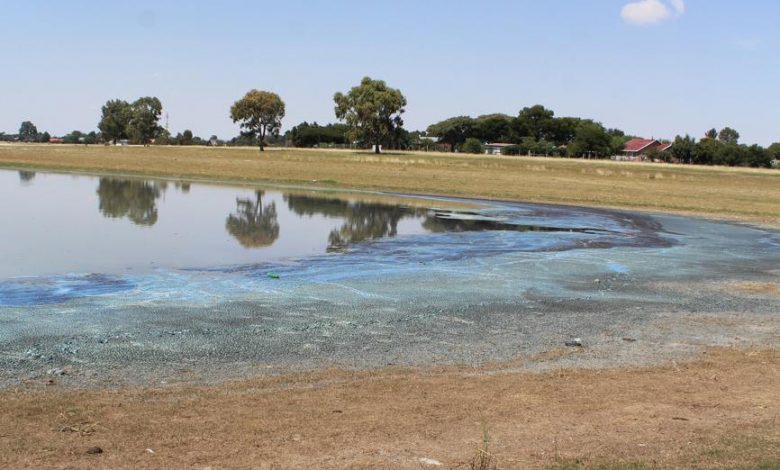
Last week an aborted meeting with several Emfuleni stakeholders at the Vaal Dam DWS offices left many people in the lurch of how DWS and Rand Water will manage stakeholder participation and oversight of maintenance and upgrade operations on Emfuleni’s wastewater infrastructure. Vereeniging’s recent Peacehaven water and sanitation disaster, and the fish kills on the Barrage, were up for discussion. Also plans for the wastewater treatment works of Leeuwkuil, Rietspruit and Sebokeng, had key stakeholders in attendance, to the likes of community members of Sebokeng, Bophelong, Proudly Three Rivers (PTR) and the Golden Triangle Chamber of Commerce (GTCOC). The meeting yielded no results because of disruptions, caused by protestors who had been preventing operations at the Sebokeng wastewater treatment works since 2017. SAVE’s Mike Gaade described the meeting as a disappointment. Moreover, there are concerns about the DWS’s plans to create a single catchment management area (CMA) spanning the Vaal and Orange rivers. The long-awaited proposed Vaal CMA plan was unexpectedly shelved by DWS at the start of 2021.
It is vitally important for the Vaal Catchment Management Agency (Vaal CMA) to be established. It is a key river system, responsible for water to Gauteng – a province that drives South Africa’s economy, according to Andrew Barker, of the Klip River Catchment Forum.
“The Orange-Senqu River Commission is operational with significant international support and takes care of the Orange River. It is functional and needs to develop on its own. Since 2000 we have been waiting for the Vaal CMA, but DWS has been unable to set it up,” he explained. Mariette Lieferink of the Federation for a Sustainable Environment (FSE) who serves on the forums of the Klip, Rietspruit and Blesbokspruit has concerns about the fact that Rand Water’s Marc de Fontaine, who manages the Vaal Barrage Management Area’s forums, has indicated that DWS now needs to take charge of each forum’s water quality monitoring reports by municipalities, industries and other governmental departments. “DWS also needs to ensure that legally binding minutes of meetings are kept and sent to stakeholders for scrutiny long before quarterly meetings,” she says. In October Rand Water polled forum members to determine if they favoured ongoing Zoom webinar meetings. Since the onset of the Covid-19 pandemic these meetings reported higher attendance figures than before and excellent public participation by proposed developers in the sub-catchments. However, some communities, especially in former townships and informal settlements, are excluded because of a lack of access to internet facilities. Since 2000 Rand Water has been responsible for the technical online management of data of all the Vaal Barrage forums, and those of the Vaal Dam. It is a service provided by Rand Water to DWS and all stakeholders.
In many respects the forums of the Upper Vaal Management Area, are amongst the best-run and managed systems of their kind in South Africa.
It is uncertain how the forums are set for change after the local elections. It would certainly be a breakthrough for local authorities if councillors, in the various forums’ areas of oversight, started attending meetings. Forums offer political leaders the opportunity to serve local residents in their respective municipal wards.
*About the author: The author is an extraordinary professor in the Faculty of Humanities at North-West University’s Vanderbijlpark campus.
At Caxton, every story is written by humans. We use AI only to perform quality checks - never to generate the news. Happy reading!