NWU research reveals troubling state of the Vaal River
While the river still supports biodiversity, rising pollution levels are placing the ecosystem under strain. Through macroinvertebrate testing and citizen science initiatives in the Vredefort Dome, researchers and local communities are working together to monitor water quality and protect this vital resource.
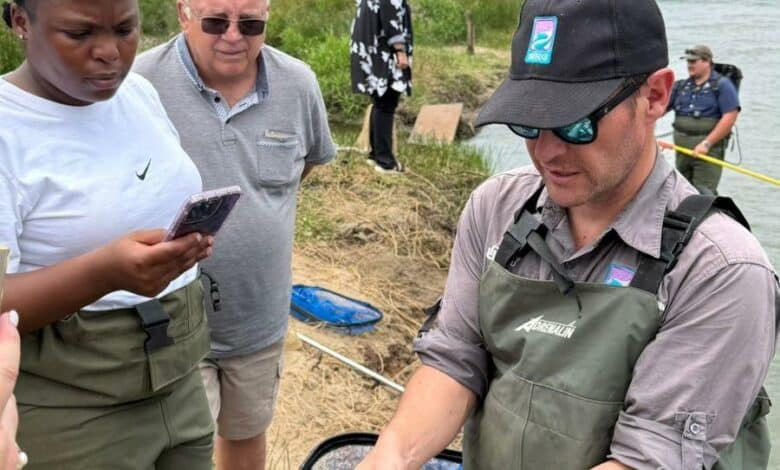
The Vaal River – one of the most important water sources in South Africa – is currently “surviving but not thriving”, according to North-West University (NWU) researcher Professor Wynand Malherbe, who is studying the ecological health of the river in the Vredefort Dome area.
Although the river continues to sustain aquatic life, increasing levels of pollution are placing severe pressure on the ecosystem.
The phrase “surviving but not thriving”, originally coined by a journalist from the Parys Gazette, captures the delicate state of the river, Malherbe explained.
“The river is highly impacted by pollution, but the animals are still surviving,” he said. “The biodiversity is still present, but in many cases the abundance of invertebrates and fish has potentially decreased.”
Scientists measure the health of a river not only by the clarity of the water but by the life it supports. Aquatic organisms such as fish and macroinvertebrates serve as biological indicators of ecosystem health.
One of the most effective ways in which researchers and students assess water quality is through macroinvertebrate testing, which examines small aquatic organisms such as insect larvae, snails, and crustaceans living in the river.
The practical fieldwork provides students with hands-on exposure to the river ecosystem, enabling researchers to determine whether the water quality can support healthy biodiversity.
“Invertebrates have many different life forms and life cycles,” Malherbe said. “Some live all their lives in water, while others, such as dragonflies, do so only partly.”
Because different species have specific environmental requirements, their presence or absence can reveal whether water conditions are healthy.
“If invertebrates that prefer good quality water are present, it indicates healthy conditions,” Malherbe explained. “If organisms that tolerate poor conditions dominate, it tells us that the water quality is poor.”
Citizen science steps in
The Water Research Group (WRG) and the Unit for Environmental Sciences and Management (UESM) at the NWU support citizen science initiatives to protect the Vaal River.
Although the university has only recently become involved in monitoring activities along this section of the river, researchers regularly conduct outreach programmes encouraging communities to take an active role in protecting aquatic environments.
Citizen science programmes allow volunteers and residents to gather environmental data, helping researchers identify pollution sources and ecological changes that may otherwise go unnoticed.
The initiative will focus particularly on the Vredefort Dome, a UNESCO World Heritage Site, where the Vaal River forms a central ecological and tourism resource.
Despite the environmental pressures facing the river, Malherbe said one of the most surprising findings from his work is the resilience of the ecosystem.
“The most surprising thing is that the river is still surviving even though a significant amount of pollution is entering the river,” he said.
However, scientists warn that resilience should not be mistaken for long-term sustainability.
Local communities living along the riverbanks play a crucial role in ensuring the long-term health of the ecosystem.
Malherbe said community involvement helps residents understand how everyday activities – from land use to waste disposal – can affect the condition of the river.
“Encouraging communities to be involved ensures they understand their role,” he said. “It also helps them understand how their activities can influence the river both negatively and positively.”
Citizen science programmes can also help shape environmental policy and management decisions.
Government monitoring systems often operate at a broader scale and may miss localised environmental problems. Community-based monitoring can detect specific pollution sources or environmental degradation that requires intervention.
“It provides information and data on the riverine environment,” Malherbe said. “Citizen Science monitoring can highlight issues that need addressing, such as point sources of pollution or overall resource degradation.”
Looking ahead, NWU researchers plan to assist in establishing a miniSASS monitoring programme in the Vredefort Dome area.
The miniSASS system allows communities to measure river health by examining aquatic macroinvertebrates and is widely used as a citizen science tool across South Africa.
Malherbe said the proximity of the NWU to the Vredefort Dome places a responsibility on the university to contribute expertise and support conservation efforts.
“The role of the WRG and UESM will be to assist and set up citizen science monitoring in the Vredefort Dome,” he said.
The monitoring programme is expected to take place twice a year, providing valuable data on the state of the Vaal River while empowering communities to help protect one of the most vital natural resources in the region.