Community health education through the political model of disability
" In that partnership lies the promise of healthier communities."
SEDIBENG.- Community health education has long been trapped within a narrow understanding of health.
Society is taught to think about health only when sickness appears.
Prevention, social well-being, dignity, participation and empowerment are often pushed to the margins. In the same way, disability is still widely interpreted through the language of illness, deficiency and medical treatment.
The challenge before us is to create a new understanding.
A disabled person is frequently viewed as someone who is sick, broken or in need of fixing. This perception not only misunderstands disability but also limits the possibilities for meaningful inclusion. From a disability activist perspective, the challenge before us is to create a new understanding that brings together community health education and disability rights in a way that promotes human dignity and social justice.
For decades, disability discourse has been dominated by the medical model. This model views disability primarily as an impairment located within an individual’s body or mind. The role of professionals under this framework is to diagnose, treat, rehabilitate or cure.
The medical model has undoubtedly contributed valuable knowledge, technologies, therapies and support mechanisms that many disabled people rely upon. However, when taken as the sole explanation of disability, it reduces disabled people to patients and overlooks the barriers created by society.
In response, disability activists developed the social model of disability.
This model argues that people are disabled not simply by impairments but by inaccessible environments, discriminatory attitudes, exclusionary institutions and unequal opportunities.
According to the social model, a wheelchair user is not disabled by the wheelchair but by buildings without ramps.
How do we move beyond this divide without abandoning the strengths of either perspective?
A deaf person is not disabled by hearing loss but by the absence of Sign Language interpretation. The social model shifted the conversation from personal tragedy to social responsibility and became a powerful tool for political activism and social transformation.
Yet both models have limitations when isolated from one another.
The medical model often ignores social oppression, while the social model can sometimes underestimate the realities of pain, chronic illness, rehabilitation and health care needs experienced by many disabled people. Disability activists therefore face an important question: how do we move beyond this divide without abandoning the strengths of either perspective?
The answer lies in what can be called the political model of disability.
This model does not reject medicine nor dismiss the importance of social barriers. Instead, it recognises that disability exists within relationships of power.
It understands that disability is not only a medical condition or a social experience but also a political reality shaped by decisions about resources, priorities, access, representation and participation.
From a political disability perspective, community health education should not merely focus on preventing disease. It should focus on empowering communities to understand how health and disability are influenced by social conditions, economic inequality, public policy and political choices.
Health education should teach people that disability is a normal part of human diversity and not a sign of failure, weakness or permanent sickness. It should encourage communities to see disabled people as active citizens rather than passive recipients of care.
The political model recognises that health practitioners and disability activists are not enemies occupying opposing camps. Too often, there is unnecessary tension between those defending medical interventions and those advocating for disability rights.
In reality, disabled people need both accessible health care and accessible societies.
A person with a spinal cord injury may require medical treatment, rehabilitation and assistive technology while also needing equal access to education, employment, transport and community life.
One reality does not cancel out the other.
Many people still assume that every disabled person is constantly sick.
Community health education can become the bridge between these perspectives. Health practitioners possess knowledge about prevention, treatment, rehabilitation and wellness. Disability activists possess knowledge about lived experience, inclusion, accessibility and social justice.
When these forms of expertise are brought together, communities receive a more complete understanding of health and disability.
Such a partnership can challenge harmful stereotypes.
Many people still assume that every disabled person is constantly sick.
Others assume that all disability issues fall outside the responsibility of the health sector.
Both assumptions are problematic. Some disabilities involve health conditions that require ongoing support, while many disabled people are healthy and active members of society who simply require accessible environments and equal opportunities. Community education must communicate both truths simultaneously.
The political model of disability therefore encourages a shift from charity to citizenship. Instead of asking how society can take care of disabled people, communities should ask how disabled people can participate fully in shaping society. Instead of viewing disability as a burden, communities should recognise disabled people as contributors to economic, social, cultural and political development. Health education programmes should include disabled people not only as beneficiaries but as educators, planners and leaders.
This approach is particularly important in communities affected by poverty, inequality and social exclusion. Where services are limited and information is scarce, misconceptions about disability often thrive.
Community health education grounded in the political model can challenge prejudice while promoting prevention, wellness, accessibility and inclusion. It can demonstrate that accessible clinics, inclusive schools, reliable transportation, clean environments and responsive public services are not separate issues but interconnected elements of community well-being.
Ultimately, the political model of disability offers a practical synthesis between the medical model and the social model.
It places disabled people at the centre of decision-making.
It acknowledges the importance of health care while insisting that health alone cannot define a person’s worth or determine their place in society. It recognises the reality of impairments while confronting the social and political barriers that transform impairments into exclusion.
Most importantly, it places disabled people at the centre of decision-making rather than at the margins of policy debates.
As communities rethink the meaning of health education, the political model provides a pathway forward.
It invites health practitioners and disability activists to work together around a shared goal: building communities where health is understood not merely as the absence of sickness and disability is understood not as sickness itself, but where both are approached through the principles of dignity, participation, equality and human rights.
In that partnership lies the promise of healthier communities and a more inclusive society for all.
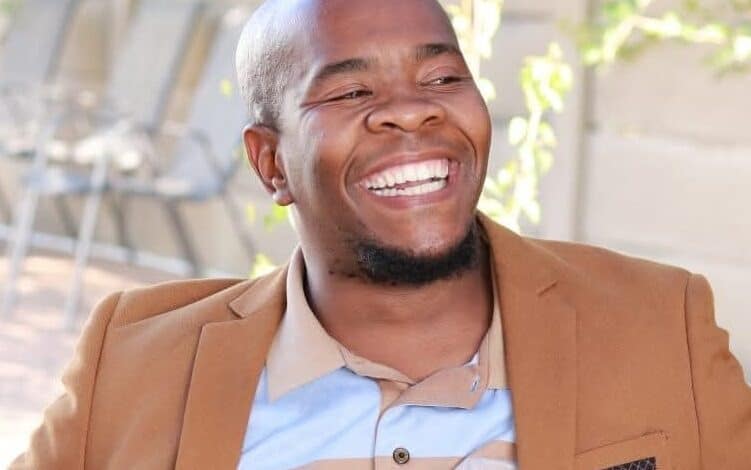
Lucky Tumahole is a Disability Advocate and Political Writer. He writes here in his personal capacity.