COMING from KwaZulu-Natal’s lush, well-treed, evergreen coastal belt the Western Cape vegetation always seems rather foreign to me.
Compared to my reasonable layman’s knowledge of things botanical where I live, I really don’t know too much about the famed and incredibly diverse Cape Floral Kingdom or about its most striking daughter, the fynbos region.
ALSO READ: Invasives and natives – An urban invasion
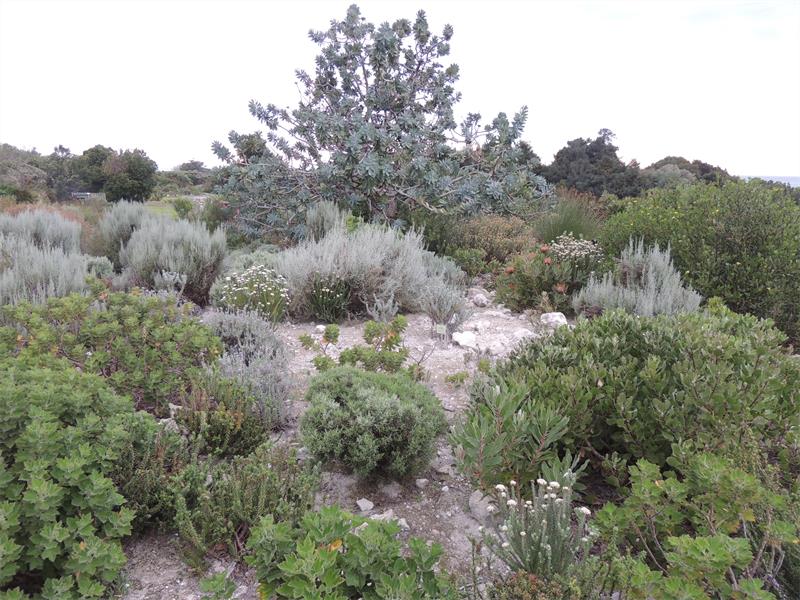
Recently, on a visit to the Cape I was privileged to visit the Harold Porter Botanical Gardens in Betty’s Bay, where wonderful garden beds, displays and educational posters helped me to learn more about these floral wonders. I also delved into my ‘Sappi Tree Spotting Guide for the Cape from Coast to Kalahari’ for added information.
I was interested to note that the Cape Floral Kingdom, one of six floral kingdoms worldwide, is the smallest but has the largest plant diversity. Incredibly, of its amazing 9 000 or so recorded plants more than 6 000 are found nowhere else on earth.
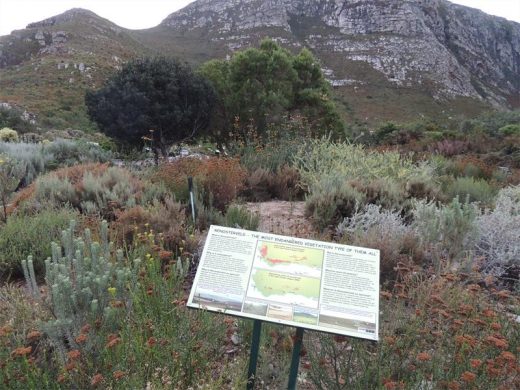
As well as fynbos, this floral kingdom boasts the very rare and endangered renosterveld, succulent Karoo, thicket and some forest. However, fynbos is the most dominant, sweeping up from the coast to carpet the jagged Cape fold mountains in a swath of pastel colours, about 100 to 200km in width, stretching from Clan William to Port Elizabeth.
So what is this fynbos about which the Capetonians talk so lovingly? The more I read about it the more complex the subject seems. Basically, fynbos means fine bush, a good name for this scrubby, treeless, predominantly fine-leafed vegetation type, usually found in our winter rainfall area. Plants that dwell here are tough, having adapted over the eons to their dry, hot, windswept, fire-prone and nutrient-poor conditions.
They have adapted well to fire. In fact, as long as burnings don’t occur too often or the fire isn’t fuelled too hot by alien invasive trees, fire is the fynbos’s friend. It cleans it up, burning and recycling dead plant material into much-needed nutrients. Fire also triggers regrowth and the germination of many types of seeds.
Fynbos is colourful, forming a bright tapestry of multi-coloured flowers set against a leafy background of all shades of green, ranging from lime to grey-green and olive.
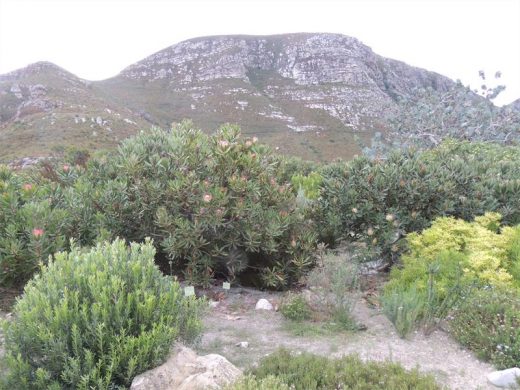
Most eye-catching of the fynbos family are probably the many species of magnificent proteas and their cousins the pincushions and cone bushes. Three other types of plants – restios, ericas and a variety of bulbous, tuberous and various flowering species – make up the rest of the fynbos community.
Restios, also known as cape reeds are tufted grass-like plants with papery bracts. The bright ericas are particularly eye-catching as they have evolved an amazing array of colours and interesting shapes to attract the birds, bees and the many other pollinators that call the fynbos region home.
The more I read about fynbos – and about South Africa’s the other fascinating biomes – the more I realise how precious is our incredible South African flora. We really do need to love and cherish our green heritage and, as individuals, do all we can to safeguard it for future generations. Just appreciating what we have and trying to learn a little bit about it would be a good start.
Of course one of the biggest threats facing our fynbos and other natural vegetation is the rapid spread of alien invasive plants. They are taking over vast tracts of land, pushing aside the indigenous species that should be there.
Thirsty invasives are clogging up our waterways, robbing our fauna and flora of water. They are also increasing the intensity of fire, damaging or destroying indigenous vegetation that would normally benefit from regular, cooler burnings.
We all need to boot out any invasives we might be harbouring on our properties and support conservancies and other civic initiatives involved in eradicating these harmful plants.
HAVE YOUR SAY
Like our Facebook page, follow us on Twitter and Instagram
For news straight to your phone, add us on BBM 58F3D7A7 or WhatsApp 082 421 6033