Vulture viewing hide now open
At the opening, Mike Neethling spoke eloquently about the Oribi Cape vulture colony.

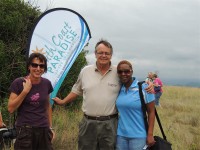
A LOVELY morning communing with nature and the Oribi Cape vulture colony marked the opening of a valuable new South Coast tourist attraction.
However, two people were sadly missed. The late Barry Porter, the former chairman of Birdlife Trogons birding club and one of the finest naturalists the South Coast has ever known, was among those who first came up with the idea of building a vulture hide. The idea was to site it overlooking the vulture restaurant, maintained by Oribi farmer Mike Neethling on Mike’s private land.
After Barry’s death, the Trogons members, led by chairman Andy Ruffle, ran with the project. At the celebration last week, it was a proud moment for all the club members when Barry’s son, Warren Porter, cut the ribbon, officially opening the Barry Porter Vulture Viewing Hide.
Also missing from the proceedings was the late Steve Piper, a renowned and highly respected ornithologist who, Mike explained, had been so involved in monitoring the now-thriving Oribi Cape vultures. The opening of the hide would have been a proud moment for him.
Birdlife Trogons is not the only organisation that has turned the idea of the vulture hide into a reality. Speaking at the opening ceremony, on behalf of Ugu South Coast Tourism, Howard Kelly described the excitement he had felt when board members had first considered the proposal to fund the building of the hide. Speaking on behalf of chairman Joy Crutchfield, chief executive Justin Mackrory and other members of the tourism team who attended the opening, he congratulated the Trogons on the success of their wonderful project. His organisation was proud to be a part of it.
An emotional Andy thanked everyone, including his fellow club members and the tourism team, who had worked to turn Barry’s dream into a reality. He also thanked Mike for giving nature lovers access, through the hide, to the vultures and for allowing the hide to be built on his private land.
Mike spoke about the ambivalence he had felt about the building of the hide. On the one hand the Cape vultures and all other vulture species faced many man-made threats, including the thriving muti trade that led to the killing of many of the birds. However, education about these wonderful creatures was the only way to make people passionate about them and it was only a widespread passion for vultures that would keep them safe.
He explained that strict rules were in place to ensure that the new hide did not compromise the safety or the well-being of the vultures. Visitors would only be allowed to visit the hide in the company of Birdlife Trogons members and visits would have to be pre-booked and supervised.
As usual, Mike spoke eloquently about ‘his’ beloved vultures, emphasising the interconnection between all creatures, great and small, including man. Like every other living thing, vultures had a vital role to play in maintaining the environmental balance.
Guests were fascinated to hear about the research being conducted on the Oribi colony. This included the ringing of 35 birds and the equipping of five young vultures with radio transmitters. Sadly, two of the five had been electrocuted within the first year. However, Mike also had some good news. Eskom had committed itself to redesigning the type of power line that had led to the death of the birds and, eventually, to replacing the existing lines with this safer option.
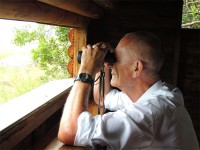
The official business completed, guests enjoyed a stroll across the veld to see the vulture restaurant and then the cliff where the vultures were breeding. On cue, the vultures made an appearance and fascinated guests were able to watch them land and take off from the cliff face. Everyone then returned to Leopard Rock Restaurant for refreshments.