Women’s club explores the Wild Coast
Guest speaker, Clive Dennison, had many fascinating stories to tell.
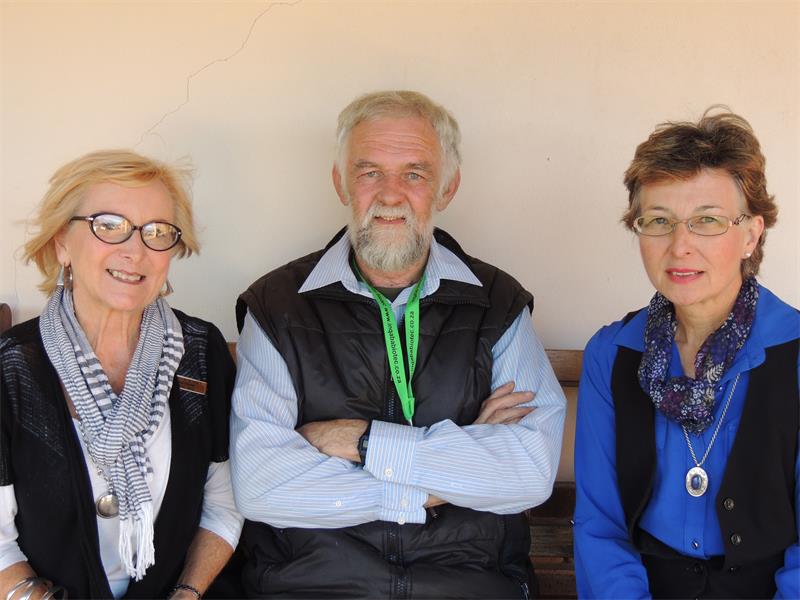
FOR Tuesday Rostrum members and their guests, the June lunch meeting was an exhilarating flight of discovery along an untouched stretch of shoreline that lives up to its name.
The journey, along the Wild Coast, was a photographic one, presented by Clive Dennison, emeritus professor of biochemistry at the University of KwaZulu-Natal. In recent years he and his wife, Edith, have taken up microlight flying and Edith has photographed the entire length of the Wild Coast from the air. It was her stunning images that formed the basis of Clive’s fascinating presentation.
Many at the luncheon had seen some of the Wild Coast’s scenic splendours from the ground. However, seeing the coastline and its hinterland from the air, as a series of aerial photographs forming a single, continuous entity, gave everyone a new understanding of what a treasure this largely undeveloped and extremely beautiful piece of South Africa is. The presentation also served to emphasise the importance of preserving this unique treasure from unwise development.
Tuesday Rostrum’s photographic journey started at Munster, from where the Dennisons take off on their excursions into the former Transkei. To take the photographs they need to have the sun behind them so they always fly the route in a southerly direction.
Soon the armchair travellers were flying across the Umtamvuna River, over the Wild Coast Sun Hotel and Casino Resort and along the coastline they had come to explore. By the time they crossed the Kei River and reached the end of the journey, they were mesmerised by the breathtaking beauty they had encountered along the way.
The fascinating geography and the resulting spectacular scenery of the Wild Coast and its hinterland has to be seen to be believed. Rivers have carved deep, tree-filled gorges, steps, rapids, waterfalls and rock pools into the rugged terrain through which they twist and turn on their way to the sea.
The coastline itself is made up of majestic estuaries and wide river mouths, picture-perfect beaches, rocky bays, islands and sheer cliffs and even waterfalls that fall straight into the sea. From time to time, the camera picked up little settlements and tourist nodes along the way, but so much of this amazing land is empty. The vegetation is varied, too, with extensive biodiversity – rich grasslands rolling down to the beaches, large mangrove forests, woody outcrops and densely-treed gorges and valleys. As Clive pointed out, the Wild Coast is a botanical treasure chest containing many rare, endemic and exquisite trees, shrubs and flowers.
As he proceeded with his presentation, Clive pointed out landmarks like the legendary old hotels, popular holiday resorts and well-known trading stores. He also highlighted the best fishing spots and the magnificent Eastern Cape game and nature reserves like Mkambati, Dwesa, Cwebe, Hluleka and Silaka.
It is not just the topography that makes the Wild Coast such a fascinating place. From all accounts, it has more than its fair share of interesting characters.
On his photographic journey Clive made quite a few stops to introduce his audience to some of the historical and contemporary characters who have contributed their chapters to the Wild Coast’s rich and fascinating history.
Clive and Edith have taken over Brevitas, a small publishing house. As well as Clive’s book, `Footsteps in Paradise’, a history of the Wild Coast, they had a selection of their books on the Wild Coast and East Griqualand on display. For many of those who had accompanied Clive on his photographic journey, it was good to know that the Wild Coast’s story is being well documented.