Tent Travels: Tread carefully on this fragile land
As we wind up our virtual travels through the Transkei I leave you with these thoughts.
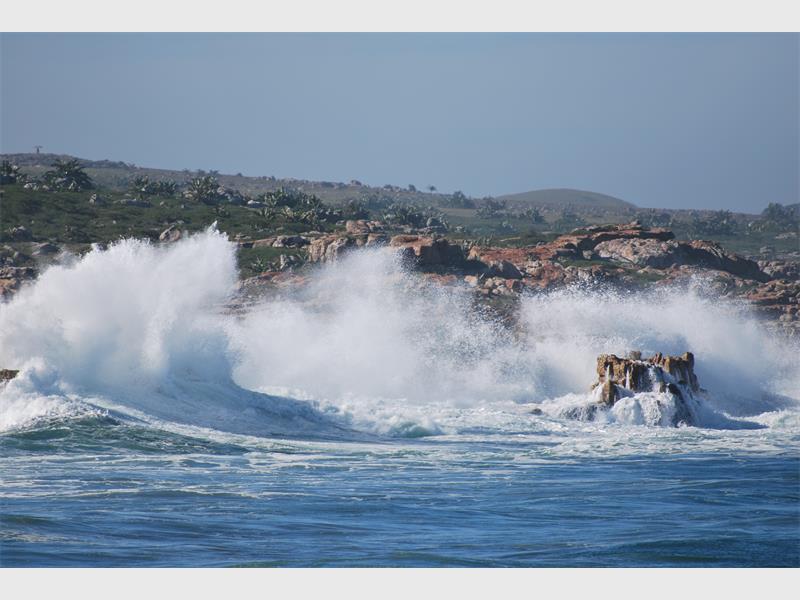
IN contrast to the Wild Coast’s rugged, wreck-strewn shoreline and treacherous sea, there is something immensely fragile about the land.
Undulating Transkei hills – electric green in summer, honey-coloured in winter – tumble onto the beaches or meet the waves as sheer cliffs. Rainbow-hued homesteads perched on the wind-blown, grassy slopes seem vulnerable somehow and the hills have a thin-skinned look about them. In places their bones show through – as the ridges of grey, weathered rock that provide havens from grassland fires for the gnarled trees.
Further inland the hills grow into rugged mountains, this dramatic terrain quite as magnificent as the more gentle coastal sweep. And the rivers have carved deep, forest-filled gorges, rocky steps and waterfalls into the Transkei’s soft flesh. Where they eventually find their way to the unspoilt beaches they rest tranquilly as green-fringed lagoons and ever-changing estuaries. At many river mouths, chunks of land have come adrift. These rocky islands seem to guard the river portals of this broken shoreline.

The wild spirit of some shy creature that should never be tamed abides here on the Wild Coast and yet – echoes of the congested `civilised’ world already seem to threaten it. A few sprawling, careless constructions are starting to mar the land. In places the red earth’s surface is scarred by tracks and paths and ad hoc roads. During the wet months erosion takes its toll, reopening the wounds.
It remains to be seen whether the free spirit of the Wild Coast will eventually be tethered, whether the unique sense of place will be lost to the trappings of unwise development and our ever-increasing homogeneous civilised world.
Conservationists acknowledge the fragility of this exquisitely beautiful land and have reason to be concerned about the treasures it shelters. Its botanical diversity is internationally renowned. At its heart is an area that has been recognised as part of one of the world’s 34 floral hotspots.

In summer, the rains transform the precious grasslands into multi-coloured flower gardens that are a botanist’s delight. Here, species still wait to be discovered and named. Some of the indigenous forests sheltered by the deep river valleys have already been plundered for timber but, in a world where pristine, natural forest is receding, it is heartening to know that so much of it remains untouched here.
The botanical wonders, dramatic scenery and unique sense of place are not the only gifts this still-wild haven has to offer. There are also the people of Pondoland, their rich cultural life and their fascinating history. Like the fragile environment their traditional way of life is also threatened and deserves to be protected.
There is, however, an ugly side to this cultural diversity. In some families there is desperate poverty. Many of the bright-eyed children who wave at cars know what it is like to go to bed hungry.

Development – a scary word – is needed on the Wild Coast. However, in this wild and beautiful place, it must proceed with caution. Conservationists are alarmed at proposals to build a road through the centre of the floral hotspot and to mine the untouched dunes for heavy minerals. They believe the best option for the Wild Coast is a robust eco-tourism industry. Again, wisdom should prevail. Eco-tourism in name only could do as much damage as mining or road making.
Already the Wild Coast is opening up to tourism. It is not the no-go area it used to be. While the coastal network of roads is still poor in places there are some tarred or good gravel roads to popular resorts. And security, once a great concern, has improved dramatically. The area offers a good selection of accommodation, from up-market hotels and lodges to self-catering establishments, back-packer set-ups and camping grounds.

The increasing number of nature lovers who are discovering the wonders of the Wild Coast are supporting a fledgling eco-tourism industry that might well be the saving of this unique, untrammelled placed.
Ultimately, only time will tell what is good for the Wild Coast. And it is really up to its people to decide on what would be best for their land, their society and their future generations.
I hope they choose wisely.