Umzimkulu river mouth plan in the pipeline
Before the recent crisis Ugu District Municipality had been dealing with salinity issues by opening the uMzimkhulu River mouth.
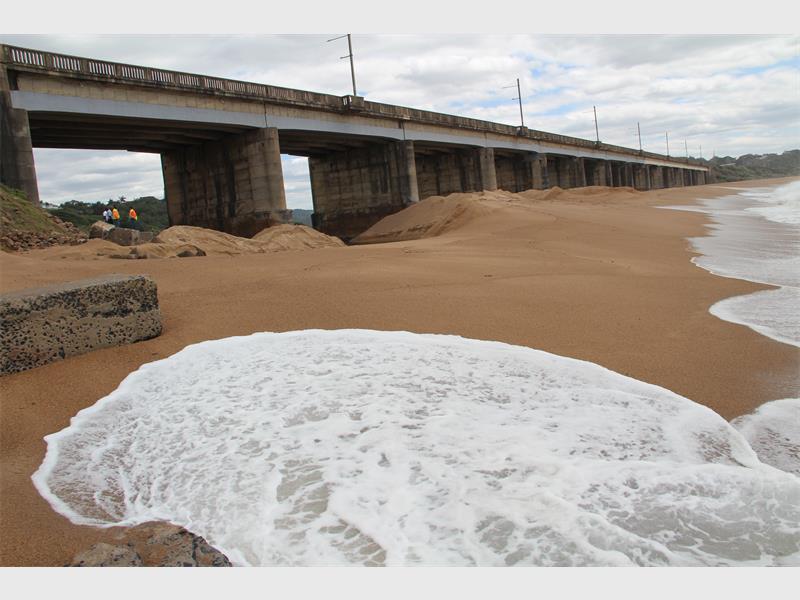
THE effects of floods and drought on the uMzimkhulu River and the arguments for and against the artificial breaching of its mouth have long been contentious issues.
And now questions are being asked about the management of the river mouth regarding the high saline content in the Ugu District Municipality water supply. Many people have asked whether better mouth management would have prevented the build-up of salt in the uMzimkhulu River, from where much of the Ugu water is obtained.
However, according to Ugu spokesman France Zama, the municipality had in fact been dealing with the salinity issues before the present crisis by breaching the river mouth whenever it closed. This had enabled Ugu to flush the build-up of salt out of the water. The problem now was that the mouth could not be breached.
“The previous breachings were implemented with the consent of the provincial environmental affairs department, which reports to Ezemvelo KZN Wildlife,” he said. Ezemvelo officials had been there to monitor every breaching. As far as the present crisis was concerned, many interventions were being implemented to ensure the reduction of salt levels.
The north bank of the uMzimkhulu River falls within the Umbango River Conservancy area and members monitor the river regarding pollution, sewage spills and illegal dumping. Three years ago the conservancy asked the KwaZulu-Natal Department of Environmental Affairs for advice regarding the artificial opening of the river mouth. Members explained how the pillars of the bridge caused the build-up of sand that closed the river and that when this happened, problems ensued.
These included the flooding of Port Shepstone Country Club and concerns that spilled sewage and pollution trapped in the river could harm aquatic life and pose health problems, The conservancy believed the frequent closing of the river prevented fish swimming upstream to spawn. Boats weren’t able to launch from the river, even when the mouth was open. Sand mining was hampered and the low level Batstone’s Drift bridge was in danger of flooding when the mouth closed.
Even then, the conservancy was worried about sea water being trapped behind the closed mouth and entering the Ugu water supply.
The conservancy had discovered that it was not the local or district municipalities’ responsibility to open the mouth or to dredge the river.
However, a businessman who mined sand upstream had proposed to keep the river mouth open at his own expense, stockpiling the sand and disposing of it when it was free of salt. The conservancy asked the department for response to this suggestion.
The suggestion did not, however, meet with environmental affairs’ approval at all. It was pointed out that the river was no longer an approved launching site so there was no reason to keep the mouth open for this purpose or because the mouth closure would hamper mining. As for the dredging proposal, environmental affairs said the department was not supportive of dredging in estuaries and could not therefore support the idea.
However, a spokesman said the development of a mouth management plan, applicable in emergencies only, would be a likely way forward.
“Emergencies are defined in law as a situation that has arisen suddenly and that poses an imminent and serious threat to the environment, human life or property,” he explained.
Now it looks as if this solution is soon to be implemented. According to Mr Zama, Ugu District Municipality had recently finalised a mouth management plan that was expected to be approved by council by the end of this month.
Bearing in mind that the Ugu District had been declared a disaster area, the municipality would implement all measures available to solve the salt water crisis. It would be guided by the mouth management plan and other procedures that needed to be followed to open the mouth, Mr Zama assured Ugu residents.
DID YOU KNOW?
Click on the words highlighted in red to read more on this and related topics.
If you are reading this on your cellphone and there are telephone numbers provided in the text, you can call these simply by clicking on them.
To receive news links via BBM, add us using the pins 58F3D7A7 OR 58F25573. The South Coast Herald is also on Facebook, Twitter, WhatsApp and Instagram – why not join us there?