Bilharzia suspected in Glenmore lagoon
Concerns have been raised over the visibility of signage at a lagoon which may contain bilharzia parasites.
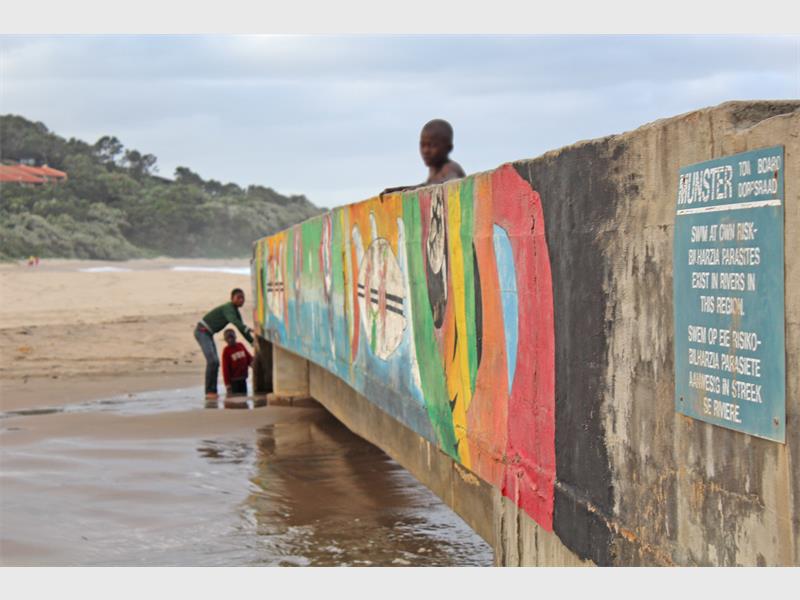
LOCALS have long suspected that the Glenmore beach lagoon is infested with bilharzia, but a UK visitor claims to be a victim.
He is now blaming Ugu Municipality for being lax with its signage.
Lester Joffe (60) said he would think twice before visiting the coast again after he claims he had to be treated for bilharzia after swimming in the lagoon.
“There is no adequate warning,” he said. “Signage on one side has faded badly and only warns people not to jump off the bridge. The other sign, which does warn people of bilharzia parasites, is hardly visible and is written only in English and Afrikaans.”
Mr Joffe said the warnings were also obscured by graffiti.
Children from surrounding communities swim in the lagoon without being aware of the dangers. I had to seek medical care, but what about those who can’t afford this type of treatment? – Lester Joffe
When the Herald visited the lagoon on Saturday, young boys from the nearby Latshoda village were swimming there. None were aware of the threat of bilharzia and said they could not read the signs.
However, they said that some of them had become sick, but did not know why.
“My brother got sick from swimming here. That is why he is watching over our belongings now, he doesn’t want to come anywhere close,” said one of the boys.
The boy said he had a rash on his private parts and struggled to urinate. He had not been to a clinic.
Ugu spokesman, France Zama, said the municipality was not aware of any cases of bilharzia parasites in the lagoon.
However, Councillor Dave Watson had contacted them with regards to the signage not being visible.
“Our environmental health services department will conduct investigations in order to test the validity of these claims,” he said.
“The municipality has contacted the Provincial Communicable Disease Control to investigate as well. Once a findings have been made, a comprehensive report will be issued by end of the week.”

Symptoms of bilharzia
Many people don’t have any symptoms, or don’t experience any for several months or even years.
You probably won’t notice that you’ve been infected, although occasionally people get small, itchy red bumps on their skin for a few days where the worms burrowed in.
After a few weeks, some people develop:
- a high temperature (fever) above 38C
- an itchy, red, blotchy and raised rash
- a cough
- diarrhoea
- muscle and joint pain
- abdominal (tummy) pain
- a general sense of feeling unwell
These symptoms often get better by themselves within a few weeks. But it’s still important to get treated because the parasite can remain in your body for many years and lead to long-term damage to organs such as the bladder, kidneys and liver.
The infection can be easily treated with a short course of medicine, so see your GP if you think you might have it.
(Medical information taken from the NHS UK website)
HAVE YOUR SAY
Like our Facebook page, follow us on Twitter and Instagram
For news straight to your phone, add us on BBM 58F3D7A7 or WhatsApp 082 421 6033