7 Safety tips to reduce drownings this summer
The biggest dangers that people face on the beaches this summer are rip currents.
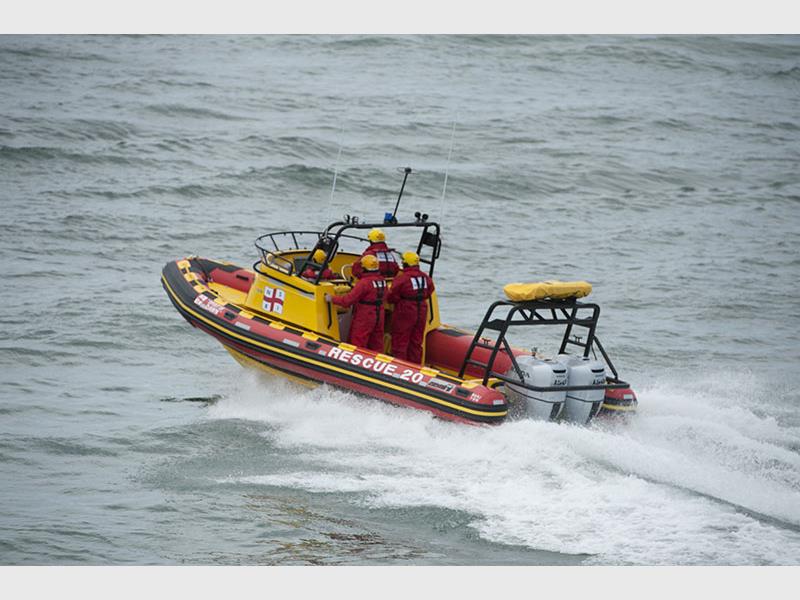
NATIONAL Sea Rescue Institute and Lifesaving SA are working with all rescue services in an effort to reduce the number of drownings in South Africa this summer.
The top seven safety tips for the summer holidays are:
1 Swim only at beaches where and when lifeguards are on duty. If lifeguards are not on duty do not swim.
2 Swim only between the lifeguards’ red and yellow flags.
3 Don’t drink alcohol and swim.
4 Don’t swim alone.
5 Competent adult supervision for children and barriers which prevent access to water are vital.
6 Know what rip currents are and how to survive them.
7 Don’t attempt a rescue, call a lifeguard or dial 112 from any cellphone.
Have a plan in place to prevent panic:
• Make sure you have emergency numbers saved in your cellphone. Dial 112 from any cellphone in any emergency.
• Put the local Sea Rescue number in your phone (https://www.nsri.org.za/emergency-numbers/)
• Check the wind, weather and tides before you go to the beach.
• Tell someone where you are going and when you are due back; make sure they know your route.
• When climbing on rocks or fishing from rocks – never ever turn your back on the sea.
• If you are paddling or if you are on a boat, download NSRI’s free SafeTrx app (https://www.nsri.org.za/safetrx)
• Check that your craft and equipment are in good working order and carry the correct safety approvals and certifications and safety gear.
• Wear a life-jacket at all times.
• Store your communication devices, cellphone and VHF radio, with fully charged batteries in watertight plastic sleeves.
• Carry red distress flares, a signalling mirror or CD disc, a referee’s whistle, a waterproof torch and wear the correct brightly coloured gear, a hat and sunscreen and keep well hydrated.
Teach your children about rip currents:
• Rip currents are the greatest cause of drowning accidents along our coast.
• A rip current looks like a calm patch of water but is actually a river of water flowing fast out to sea against the incoming waves.
• If you are caught in a rip current you’ll be swept out to sea faster than you’re able to swim towards the shore.
• Don’t panic or try to swim against the current.
• As tough as this sounds, let the current take you out to sea.
• Raise one arm in the air and wave and scream to alert people on the shore that you’re in trouble.
• At the first chance you get, swim parallel to the beach until you’re free of the rip, then use the incoming waves to aid your progress to get back to shore.
The biggest dangers that people face on the beaches this summer are rip currents. Visit https://www.nsri.org.za/2015/09/beware-of-rip-currents/ for more on rip currents.
(Information from Craig Lambinon, National Sea Rescue Communications)
HAVE YOUR SAY
Like our Facebook page, follow us on Twitter and Instagram
For news straight to your phone, add us on BBM 58F3D7A7 or WhatsApp 082 421 6033