UPDATE: Eyes turn to Craigieburn waste water treatment plant as lettuce infestation spreads
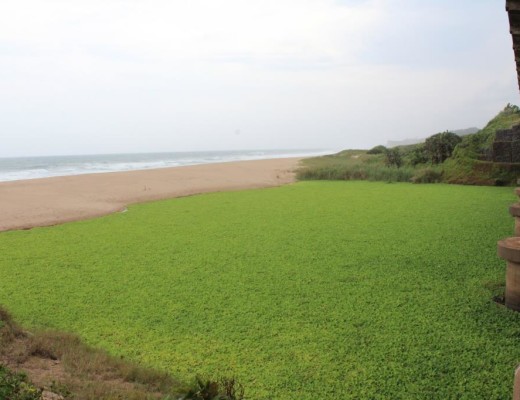
The water lettuce infestation is quickly becoming an environmental disaster
UPDATE, May 30:
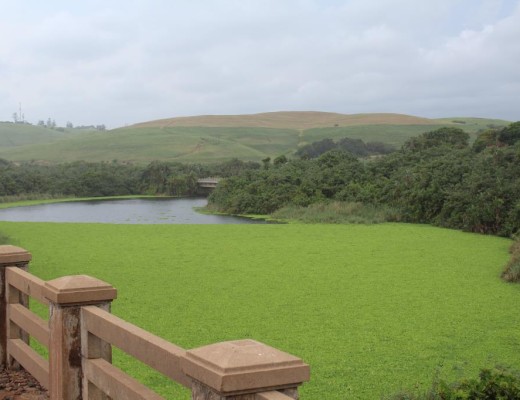
ANOTHER month has passed in what has, according to locals, become one of the worst water lettuce infestations the South Coast has ever seen.
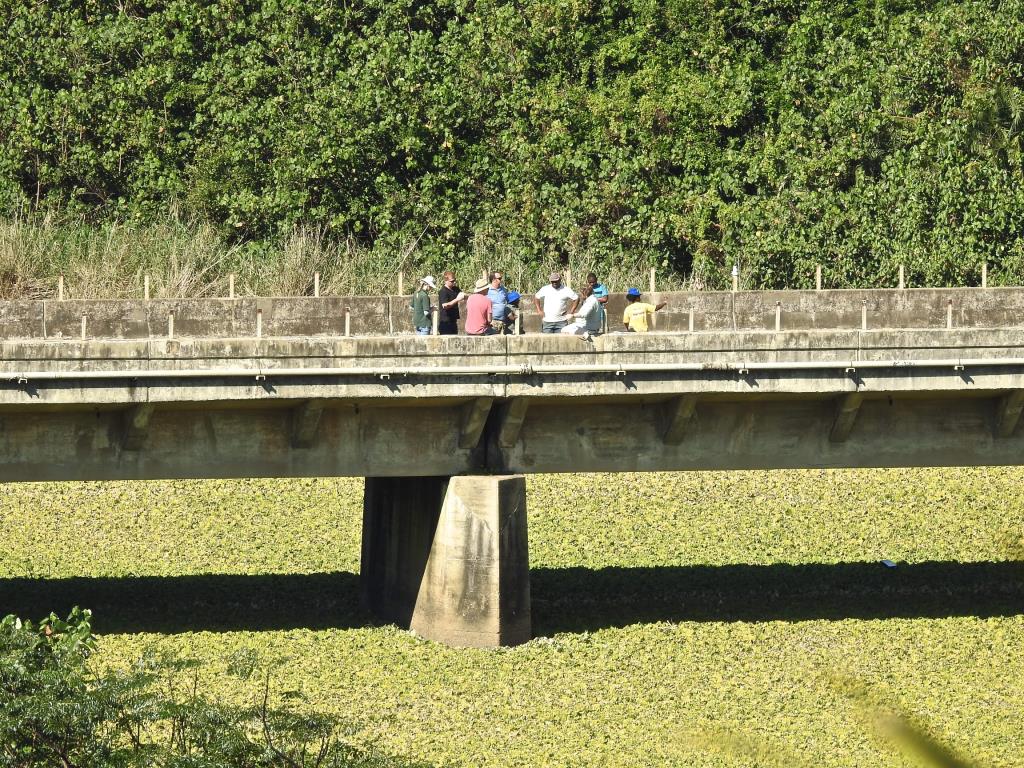
On Wednesday, May 24 a site meeting was held at the Mahlongwana River, which was attended by members of the national Department of Environmental Affairs, various metro departments such as Natural Resources, Parks and Health as well as the Conservancy itself.
The Conservancy took to social media to update concerned parties on the matter and explained that the weevils – which were first introduced to the river some months ago – are doing an excellent job.
Concerns initially were plentiful, especially as weevils – Neohydronomous affinis – have never been introduced into an infected river this close to the ocean. “Much of the water lettuce was in distress which could be seen by the yellowing of the leaves and holes in the plant.”
In order to make a major impact on the plants, it is suspected that the weevils could take up to two full seasons. “On the other hand, large and sudden die-offs have occurred elsewhere so there is no standard method of knowing what to expect.”
What was further shared during the meeting was the concerning fact that the water lettuce had spread upriver towards places from which it had previously been eradicated.
This, according to the Conservancy, suggests that the weed has seeded. It was advised that the waste water treatment plant upstream had to be strictly monitored so as to ensure that the effluent released was of an acceptable quality and meets both Metro and Water Affairs’ standards.
“If this was not done and high levels of phosphates, rather than nitrates, were being released, it would then prevent the bio-control – the weevils – from eliminating the weed.”
YOU MAY ALSO BE INTERESTED IN: ‘Lettuce’ chokes Banana Beach
Concerns were raised towards the big ‘what if’ moment when the weed would begin to sink to the bed of the river.
“There would be so much biomass in the river that this would bring additional problems and could not be permitted to happen.”
Locals who were formerly keen on having the river breached would be displeased to read that this could not, however, be done. “Environmentally speaking, if the river was breached the water would flow out but the major portion of the weed would not, as the outflow current would not be on the surface and the weed would be left within the system.”
There were also legal concerns raised during the site meeting. “Neither the Metro nor the DEA would support the breaching of the river and both felt it unlikely that the national DEA would approve the breaching.”
As a result, an operation is expected to commence this week in which between 40 and 50 percent of the weed will be mechanically removed ’as a matter of urgency’, the Conservancy said.
It was advised that the relevant parties will commence with the hand removal of the weed at the beach area as this was the most accessible area. The weed, once removed, would be placed in the inter-tidal zone and so flow out to sea.
Crookes Bothers were kind enough to agree that workers access the river area through its grounds on the southern bank.
However, workers would need to be careful when accessing this area as there are various protected plant species on the banks. The banks are also very steep which makes it very difficult for machinery (which would require further permission to be granted) to access the river.
Locals will, however, be pleased to read that steps are being taken to eliminate the mosquito problem which has occurred as a result of the water lettuce infestation in Widenham.
Fears of bilharzia were also ruled out some weeks ago when tests confirmed that the disease was not present in the river.
UPDATE: February 22
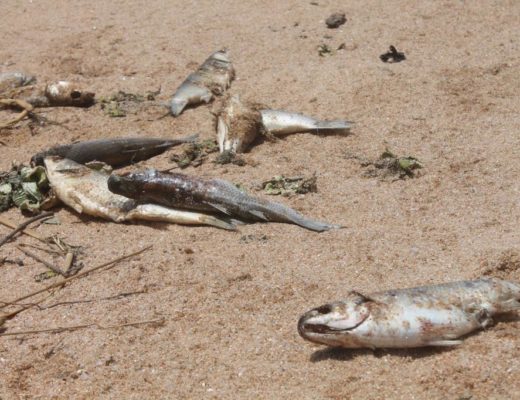
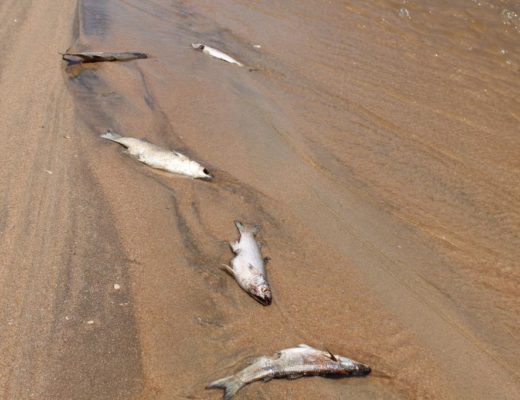
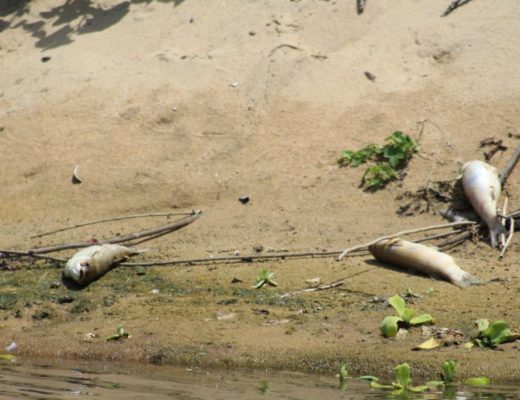
COUNTLESS fish gone belly-up, a booming mosquito population and now, the fear of bilharzia in the beleaguered Mahlongwana River in Widenham.
The cause – water lettuce which has grown wildly out of control.
Bilharzia, also known as snail fever and schistosomiasis, is a disease caused by parasitic flatworms.
Strangely though, this would suggest that the river was contaminated with raw, untreated sewage which had spilled into the river, causing the growth of the water lettuce.
YOU MAY ALSO BE INTERESTED IN: Malaria threat to coast?
Disgustingly though, and not for sensitive readers, the bilharzia infection cycle begins when fresh water becomes infected with the eggs of parasites through the faeces and/or urine of infected humans.
The eggs, when ‘released’ into a water source, hatch and worms reproduce inside the water snails – tiny larvae are then released into the water and can survive for up to two full days.
According to the Clansthal Conservancy, the water is yet to be tested to determine whether or not bilharzia is indeed present. However, locals are advised not to enter the water at all.
Symptoms may include abdominal pain, diarrhoea, bloody stool, or blood in urine.
YOU MAY ALSO BE INTERESTED IN: Estuary under threat
Upon investigation near the beach it was found that multiple dead fish – identified as mullet – had floated downstream and various birds were enjoying the feast.
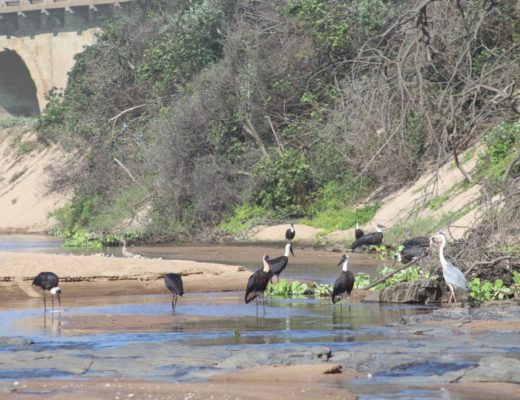
A concerned local who was present explained that the birds eating the fish was actually also a concern as the fish might be infected and this could result in the birds dying.
It was feared that the birds could possibly also spread disease.
Meanwhile, the recently-released weevils are apparently doing the trick in slowly eating away at the water lettuce and Clansthal Conservancy says that results should be visible within the coming weeks.
Chief Executive Officer of Conservation KZN, Rob Crankshaw stated: “Special research has been undertaken by the Agriculture Research Council to ensure that the weevils – Neohydronomous affinis – will not also attack local South African plants.”
YOU MAY ALSO BE INTERESTED IN: E.coli in Uvongo lagoon
Optimistically, Mr Crankshaw added: “The weevils have been introduced to the upper reaches of the river with good results, one area is already clear. On Friday we introduced more weevils to the main lagoon area of the river and results should be seen within a few weeks. The weevil has not been introduced in rivers so close to the sea before so we are hoping for the best.”
The Department of Water and Sanitation is yet to comment on the matter.
ORIGINAL STORY:
MILLIONS of people have died in Africa because of the little anopheles mosquito. Now there are very real fears that we are unwittingly creating the ideal environment for these malaria carriers to breed right on our doorstep.
Thankfully, we are not there yet. But, Widehnham residents, are mosquitoes bugging you more than usual? Guess what, your river might just have been polluted, causing the sudden boom.
Countless aquatic species indigenous to the Widenham River are at risk of dying following the massive and swift growth of water lettuce.
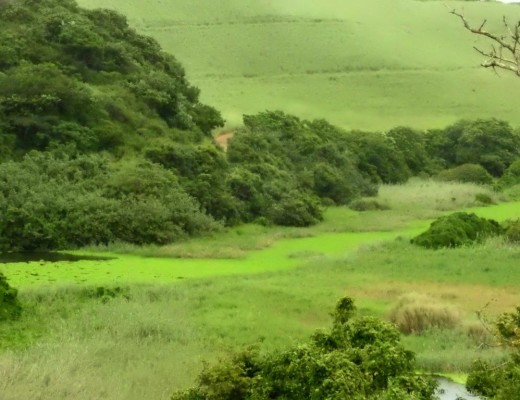
The cause of the growth of the water lettuce has not yet been established. However, the eThekwini Municipality has been notified of the growth.
The process, also known as ‘eutrophication’, if left unchecked, could result in an entire river being consumed by the plant.
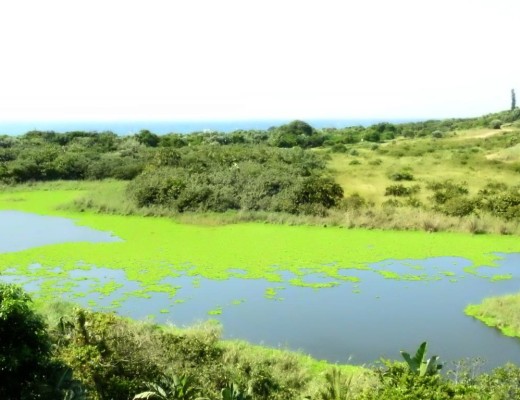
As a result, sunlight is unable to ‘feed’ native aquatic plants and oxygen is drained from water. Water toxicity level increases as a result of dying fish and the stench could also become unbearable.
A sudden boom in the mosquito population is also to be expected as they are commonly found in plant-infested waters.
But these are not the only concerns locals have.
Should the growth of the water lettuce be linked to raw sewage spillage into the river, the water would also have to be tested for E.coli.
YOU MAY ALSO BE INTERESTED IN: E.coli in Uvongo lagoon
Another concern is that a water lettuce is a suitable breeding habitat for malaria-carrying mosquito larvae and, despite good malaria control efforts, it should be noted that KwaZulu-Natal provides conditions that are suitable for malaria transmission.
YOU MAY ALSO BE INTERESTED IN: Protect yourself while travelling
In order to maintain its growth, the water lettuce would continue to drain oxygen from the river.
The presence of this plant in the Widenham River is of particular concern as it is found in waters rich in nutrients. These typically come from raw sewage spills, waste water works discharged before being adequately treated, or fertiliser overflow from farms.
Commonly used control methods to eradicate water lettuce infested waters from infestations include biological, physical and chemical controls.
However, these methods depend on the conditions of the area, including the extent of the infestation, local climate as well as the proximity of the water lettuce to nearby indigenous wildlife as well as the human population.
eThekwini Municipality is yet to provide comment on the matter.
HAVE YOUR SAY
Like our Facebook page, follow us on Twitter and Instagram
For news straight to your phone, add us on BBM 58F3D7A7 or WhatsApp 082 421 6033