A few things you need to know about asthma on World Asthma Day
This year, the National Asthma Education Programme is focusing on raising awareness and educating school pupils and university students about asthma.
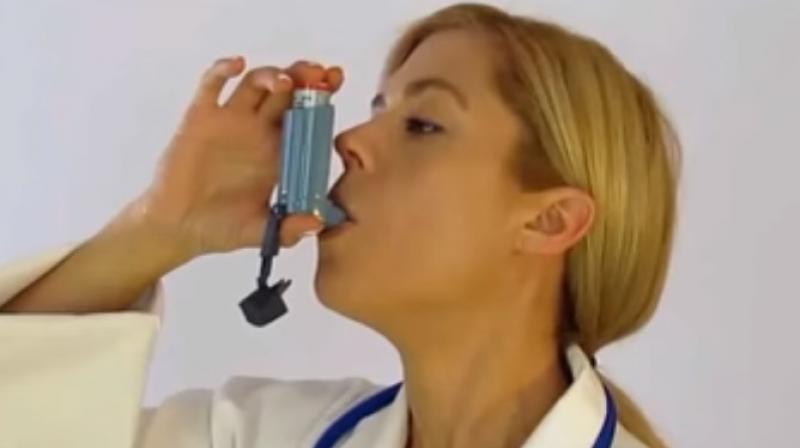
World Asthma Day is on Tuesday, May 1. The theme of World Asthma Day 2018, is: “Never too early, Never too late. It’s always the right time to address airways disease.”
This year, the National Asthma Education Programme (NAEP) is focusing on raising awareness and educating school pupils and university students about asthma.
The National Asthma Education Programme (NAEP) is a non-profit organisation that aims to disseminate impartial information about asthma diagnosis and treatment to health professionals; and they have compiled a few facts on Asthma:
• Asthma is a common condition affecting about 15% of children and 1 in 20 adults.
• It is twice as common in maless than females.
• It is a long standing chronic condition;
YOU MIGHT ALSO BE INTERESTED IN: Diabetes is a particular challenge for women
• It is variable, with different severities but all asthma can be well controlled.
• It is not curable but can be controlled by proper medication.
• Contrary to common belief, exercise is good for asthmatics.
What is asthma?
• Asthma is caused by an inflammation of the airways (breathing tubes).
• The swelling of the airways, which is the result of inflammation, causes the airways to be narrowed.
• During an acute asthma attack the airways are further narrowed by the contraction of the airway muscles. This is referred to as bronchospasm.
• Both the airway inflammation and muscle contraction is best treated by breathing medicine into the airways.
• Asthma can be controlled to the extent that people do not have attacks.
About asthma Medicines
• People with asthma need medicines to treat the bronchospasm; these medicines are referred to as Relievers. Examples of Relievers include Asthavent, Ventolin, Venteze and Berotec.
• Medicines that treat the inflammation are referred to as Controllers. Examples of controllers include Budeflam, Beclate, Flixotide, Ventzone, Inflammide and Singulair.
• If a Reliever is required more than twice a week then the asthma is not under control and further medical advice is required.
Asthma: general information
Classic symptoms include coughing, wheezing, tightness of the chest, and increased effort during breathing, increased respiratory rate and inefficient gaseous exchange. There are no conclusively proven reasons for asthma and there are no obvious reasons as to why there is an increase of incidence. Many believe that asthma is a psychosomatic disease. Medical experts now agree this is a myth, although they concede that stress can exacerbate the condition.
There is also the question about genetics. If both parents are asthmatics, the chances are high that your child will have it too. However, two non-asthmatic parents can easily have an asthmatic child because the condition appears to be linked to the environment. If children are not being correctly diagnosed, it could mean that diagnosis might be missed resulting in under treatment and problems in later life.
The vast majority of asthma sufferers are undiagnosed, yet if they keep the condition under control, they can enjoy a better quality of life. They do not have to be inactive or incapacitated.
Risk factors for asthma
Risk factors may include personal characteristics (both inherited or acquired), or environmental characteristics. With regards to age and gender, asthma can develop at any age and has to be considered in every child presenting with wheezing. Males tend to predominate in the youngest age group; the genders are equally represented from age 12 – 14, with females predominate through the rest of the age range.
Family history also plays a role, and asthma in a child is more likely if one parent has asthma, and even more likely if both parents have asthma. Identical twins are more likely than non-identical twins to both develop asthma. Although some studies suggest racial differences in prevalence of asthma, socio-economic and environmental differences must be taken into account when conclusions are made in this regard.
Asthma was more common in urban areas, as compared to rural communities and in more affluent than in poorer communities, though the South African demographics are rapidly changing. Inhalation of cigarette smoke during pregnancy has been linked with abnormal lung functions, airway hyper-reactivity and allergies in the newborn. Tobacco smoke is also an important trigger factor for asthma attacks.
Viral infections are important triggers for asthma attacks, thus, it is recommended that people with asthma have a flu vaccine every year. About half of all asthmatics have evidence of allergy to aero-allergens, and there is increasing evidence that early exposure to inhaled allergens (house dust mites, moulds, cats, cockroach, pollen) in the genetically predisposed infant may lead to asthma. The increase in the prevalence of allergies when born in a specific month of the year can also be attributed to early exposure to the prevailing allergen at that specific time.
HAVE YOUR SAY
Like the South Coast Herald’s Facebook page, follow us on Twitter andInstagram
For news straight to your phone, add us on WhatsApp 082 421 6033