Local newsNews

How trauma on the road is affecting truck and bus drivers

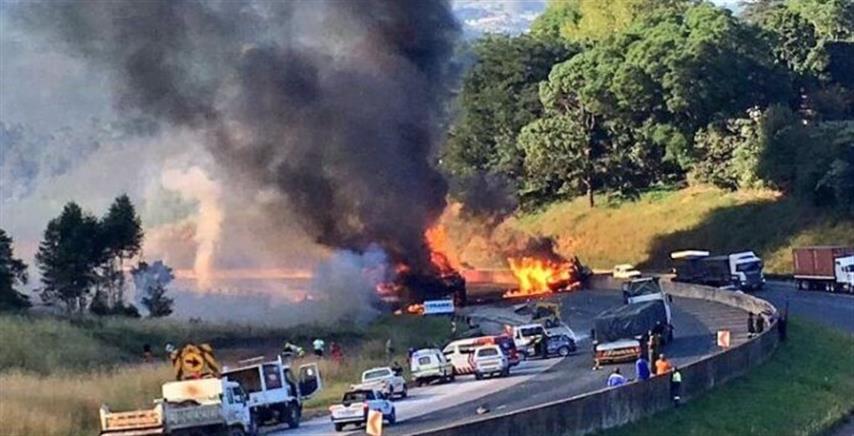
Incidents of civil unrest and the burning and looting of trucks have emphasized the trauma that truck drivers are confronted with.

We all experience trauma at some stage in our lives. It may be the loss of a loved one or being involved in a traumatic incident such as a road crash, hijacking smash and grab etc. This may have a very negative impact on how we continue to live our lives and respond to negativity and stressful situations.

On the Arrive Alive website they have made available a rather comprehensive section of content on trauma counselling after road crashes. It is important though to also consider how trauma on the road is affecting  professional truck and bus drivers.How can we assist fleet managers in addressing trauma and ensuring that drivers are still able to share roads safely with other road users? We approached some of our experienced driver instructors with a few questions:Recent incidents of civil unrest and the burning and looting of trucks have emphasized the trauma that our truck drivers are confronted with. Are there any measures that can be taken in training to reduce this impact?

YOU MIGHT ALSO BE INTERESTED IN: 13 Ways to avoid being hijacked in your driveway

The amount of training needed, and the techniques used to manage trauma related to looting incidents will vary considerably within the area of operation and of course with the driver involved.

Photo off Arrive Alive website

In most cases, incidents like such may cause personal distress and impede job performance for up to a month. However, some drivers may be more deeply affected and experience more significant impairment, developing a psychological disorder called Post-Traumatic Stress Disorder, or PTSD, characterized by the reactions we’ve mentioned. However, in PTSD, these effects can last for years and can be extremely debilitating.

While fleets are concerned with wellness programs to address issues such as diabetes, HIV, smoking, obesity, and driver fatigue. They might want to apply this thinking also to address Post Traumatic Stress Disorders elicited by such events.

Effective driver training means training must now include a special module dealing with Protest Action which would cover aspects such as Effective Route Planning, Monitoring News Broadcasts, Constant Liaison with The Company’s Control Room and also Communicating with fellow Truck Drivers.

Drivers must also be given Standard Operating Procedures on how to deal with Unrests, What Actions to Take, How to Protect Life and Limb and When to Abandon Ship (when crowd control is completely out of the question. )

Emergency Telephone Numbers for police, fire and ambulance must be kept on his person and aspects of Self Defence may be taught.

Depending on the Situational Analysis, Ramming Through Tactics and Offensive Driving can also be applied.

How would trauma experienced impact on the driving ability and behaviour of a truck driver? What would he be doing differently or fail to do?

  • Depending on the character trait of each driver some may become timid, reserved and withdrawn, whilst others may over-compensate by becoming aggressive and defensive, the latter being extremely dangerous on the road.
  • Road rage could become common and reckless behaviour may manifest itself as a driver now aims for survival.
  • The trauma experienced, can mean dealing with PTSD, regularly facing trauma triggers, and battling exhaustion through it all—without professional help to identify or manage these mental-health problems.
  • This isn’t just dangerous to the truckers; it can be a safety hazard for anyone on the road. The most common symptoms of PTSD include difficulty sleeping, difficulty staying awake, panic attacks, and problems concentrating.
  • These symptoms would systematically increase the risk profile of a driver.

For more on this story visit Arrive Alive.

HAVE YOUR SAY

Like our Facebook page, follow us on Twitter and Instagram

For news straight to your phone, add us on WhatsApp 082 421 6033

At Caxton, we employ humans to generate daily fresh news, not AI intervention. Happy reading!

Support local journalism

Add The Citizen as a preferred source to see more from South Coast Herald in Google News and Top Stories.

Sugan Naidoo

Senior reporter Sugan Naidoo is a true son of the South Coast soil. He was to the newspaper industry born, his late father working at the South Coast Herald back in the days when black and white photographs were still being used. Sugan has been with Caxton for close to three decades, having started as a weekend photographer, straight out of school. He soon showed his skill in hard news reporting and has, over the years, added to his repertoire, with motoring now one of his important beats. He is always willing to go the extra mile, especially if it's to test drive a new vehicle. He supports the Proteas, Springboks and Manchester United.

Back to top button