Some facts and figures about southern Africa’s ultimate opportunist
Wily and cunning, the black-backed jackal has survived, even flourished against all odds.
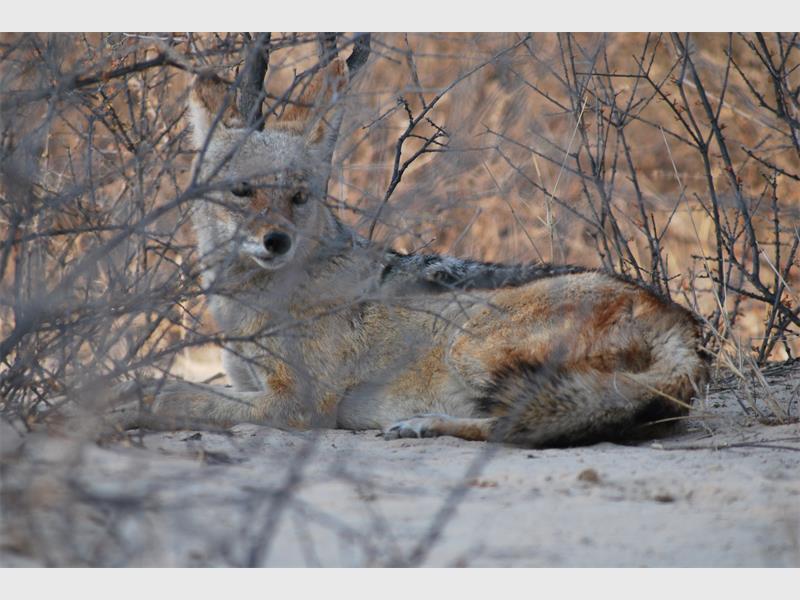
WE were driving back to Nossob rest camp in the Kgalagadi Transfrontier Park one evening and were nearly at the gate when we notice two black-backed jackals making their way through the grass.
ALSO READ : Kgalagadi Transfrontier Park meerkats will melt your heart
The female was heavily pregnant and was moving more slowly than the male. From time to time, he would look back to check on her progress and stop and wait for her. My husband and I remarked on just how solicitous the male seemed to be.
After dark that evening when we wandered over to the hide in the camp, which overlooks a spot-lit waterhole, we were delighted to see the little pregnant female there. She seemed to be catching flying ants but would stop every so often and give a yodeling call.
The male would answer her, his calls coming from closer and closer until he burst into the spot-lit area and ran towards his pregnant mate. Their joyful and loving reunion only lasting a few seconds then, perhaps reassured that his mate was alright, the male melted back into the surrounding darkness. After that the female seemed so more relaxed and content. What a heart-warming little encounter it was to the watching humans
Here are some fascinating facts about our commonly seen black-backed jackal.
* Widely distributed in southern Africa, the black-backed jackal is one of two species that occur in southern Africa. The side-striped jackal is harder to see as it is only found in the far north and east of our sub region.
* Being plentiful in most parks, our black-backed jackals are sometimes over looked but if you make an effort to observe them you will find them thoroughly fascinating little creatures. Wise and wily they are the ultimate opportunists, never missing a chance to grab a free meal.
* Keep an eye out for them when watching lions on a kill. It is amazing how quickly they can dart in and grab a bite to eat, often without the lions noticing. They are also good at dodging an angry swipe of a big cat’s paw.
* They have survived generations of persecution by stock farmers, surviving and multiplying by using their wiles to overcome threats like traps and poisoned bait.
ALSO READ : Brown hyena facts and figures
* They are skilled little hunters of small creatures like rats and mice. Wild fruit, birds’ eggs, reptiles, beetles, locusts and termites are also on their menu
* Jackals mate for life and defend their territory together.
* They are seasonal breeders, giving birth to their young – usually three cubs – in early summer. They often take over old ant bear holes which they expand into good-sized dens. Often sub-adults from previous breeding seasons will help to feed the pups. The young start to forage with their parents at about 14 weeks.
* The strange high-pitched yaps and wails of the black-backed jackal are an integral part of the night symphony at most of our game and nature reserves.
* Although mostly nocturnal in areas where they come into conflict with man, the jackals are often out and about during the day in game reserves.
Resources: The crowded Desert by Wilf Nussey
A Natural History guide to the Arid Kalahari by Gus and Margie Mills,
Mammals of southern Africa – a field guide by Chris and Tilde Stuart.
HAVE YOUR SAY
Like our Facebook page, follow us on Twitter and Instagram
For news straight to your phone, add us on WhatsApp 082 421 6033