World Teachers’ Day: Teachers should practice what they teach
Teachers do one of the most important jobs in society.
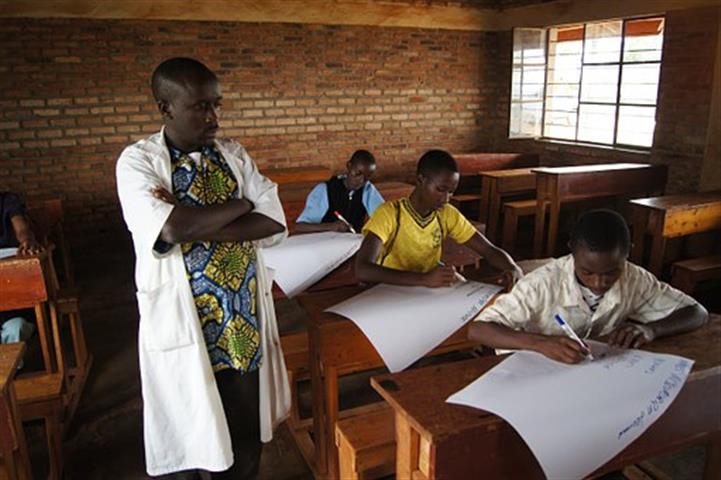
Today (Friday), October 5 marks the annual United Nations’ World Teachers’ Day to celebrate one of the world’s most critical professions – teaching.
Ahead of this important occasion, Dr Naresh Veeran, from the Embury Institute for Higher Education, suggests that teachers need to be learners too.
ALSO READ: 10 Steps to saving for your child’s education
The United Nations’ Educational, Scientific and Cultural Organisation’s (UNESCO) theme for the 2018 commemoration is ‘the right to education means the right to a qualified teacher’, and Veeran argues that qualification doesn’t end with achieving a teacher’s degree or diploma.
The right to a qualified teacher
UNESCO explains that the 2018 theme was chosen “to remind the global community that the right to education cannot be achieved without the right to trained and qualified teachers.” It points out that there is a global teacher shortage, estimating that to reach the 2030 Education Goals of universal primary and secondary education, the world needs to recruit almost 69 million new teachers.
Furthermore, UNESCO notes, “The international community, in adopting the Education 2030 agenda, has committed to ensuring that ‘teachers and educators are empowered, adequately recruited, well-trained, professionally qualified, motivated and supported within well-resourced, efficient and effectively governed systems.’ This directs the focus to the fact that “teachers’ rights must also be protected, such as the right to contribute to education policy development, the right to professional freedom, as well as the right to decent working conditions and adequate remuneration.”
The role of continuous education
“Teachers’ knowledge and skills need to be continually upgraded to ensure they are well prepared and equipped to tackle the educational demands and needs of today’s learners,” Veeran says.
He explains that the National Policy Framework on Teacher Education and Development (NPFTED) was established in 2007, creating the foundation to launch the Continuing Professional Teacher Development (CPTD) system.
Veeran motivates that “CPTD aims to ensure that teachers can improve their knowledge and skills but, importantly, it also keeps teachers motivated in what they do and reminds them of the role they play in the bigger journey.”
The official CPTD system recognises that “teachers have a responsibility to engage in lifelong learning, supported by a qualitative and varied offer of professional development”. It requires teachers to participate in professional development practices, such as attending workshops and further studies, to achieve at least 150 points in a three-year cycle.
Lifelong learning benefits everyone
Alan Tuckett, Professor of Education at University of Wolverhampton, writing for the World Economic Forum, says, “Report after report from multilateral agencies reinforces the value of lifelong learning – from UNESCO’s 1972 Learning to Be, through to the OECD’s Programme for the International Assessment of Adult Competencies (PIAAC) study in 2013. The UN acknowledged the importance of adult learning in facing the world’s development needs by including lifelong learning in the fourth of its 2015 Sustainable Development Goals: ‘Ensure inclusive and equitable quality education and promote lifelong learning opportunities for all.’”
Tuckett goes on to argue that research demonstrates that lifelong learning benefits people’s health, wealth, civic engagement, family prospects and quality of life. It benefits individuals, companies, governments and, thus, societies.
Veeran adds that continuing teacher education ensures teachers are focusing on relevant knowledge and skills development, which will improve the quality of teachers. This will then be reflected in learners who are better equipped for the workplace and adult life, which will ultimately help in solving South Africa’s key challenges of poverty, unemployment and inequality. It will also ensure teachers and learners alike are better equipped to deal with the reality of the Fourth Industrial Revolution.
“Teachers do one of the most important jobs in a society, so it makes sense to ensure that we give them the best support possible. This, without a doubt, includes opportunities for continuous professional development,” he says.
Article supplied by UNCESCO a United Nations’ Educational, Scientific and Cultural Organization – a specialised agency of the United Nations (UN) based in Paris.
HAVE YOUR SAY
Like our Facebook page, follow us on Twitter and Instagram
For news straight to your phone, add us on WhatsApp 082 421 6033