Spider’s ‘X ‘ marks the spot
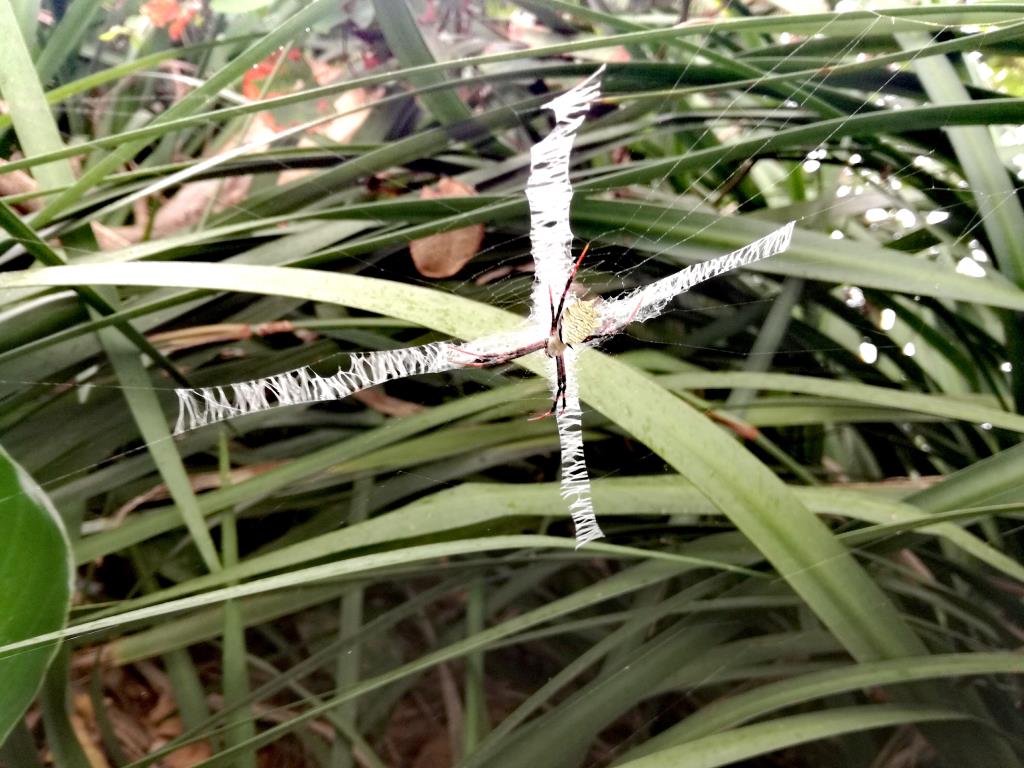
What makes these spiders so interesting is their zigzag 'X' pattern within the circular web.
Spiders aren’t loved by many – we all know that – but for some, they are rather fascinating.
Last week, Mail staff discovered an unusual looking web in the garden just outside our office at the Scottburgh mall. A spider web had been spun in the shape of a cross.
After doing some research and getting feedback from our local nature fundi, Peter Vos, it was concluded that this was a Golden orb-web spider of the genus Argiope. This type of genus contains many dozens of species worldwide and maybe half a dozen local ones according to Mr Vos.
YOU MAY BE INTERESTED IN: Borer beetle from Asia could spell doom for South Coast trees
In order to determine this exact species, one would, unfortunately, need to have a very good macro lens.
What makes these spiders so interesting is their zigzag ‘X’ pattern within the circular web.
This spider, however, had made a perfect ‘X’ shape while other spiders of the same species make just a single stripe. “It’s called a stabilimentum and has been found to reflect ultraviolet light,” explained Mr Vos, “Many insects and some birds and mammals can see UV light. There are two theories about stabilimenta – it’s an insect (prey) attractor and/or possibly acts as an alerter for large birds or mammals.”
The webs are typically spun low to the ground where anything larger than a rat might blunder into it, break the web and maybe trample the spider underfoot. Unless it intends eating the spider, as some birds and mammals do, the ‘big beast’ might see the web and avoid being covered in sticky silk. There may be some truth in both theories.
Although the Golden orb-web spiders are quite big (body length 20 – 35 mm, depending on age and species) and often very colourful, they’re actually quite harmless to humans.
YOU MAY BE INTERESTED IN: Nature journalling is an engrossing hobby
Mr Vos explained that these spiders are very reluctant to bite, hate being on human skin or away from their web and run off and drop to the ground to hide.
“As all other spiders are, they are venomous, but if they’re provoked to bite, the poison is weaker than a wasp,” added Mr Vos.
Should you come across one of these in your garden, if you look carefully around the web, you may just spot one or two tiny males lurking around hoping to mate – and not become lunch for the female in the middle.
HAVE YOUR SAY
Like our Facebook page, follow us on Twitter and Instagram