Tiger shark migrates 6500km from Mozambique to Indonesia
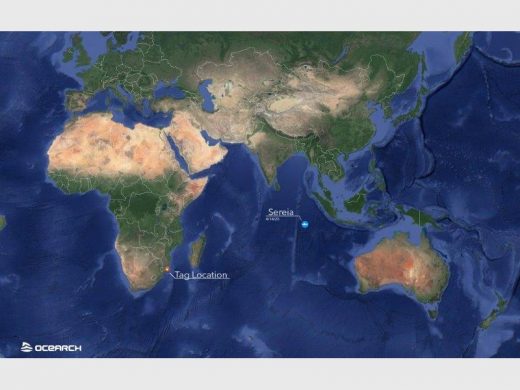
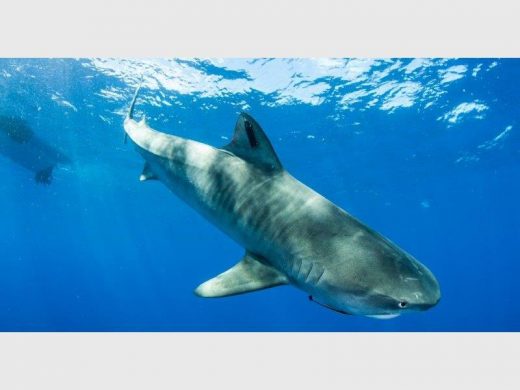
The 3.15m mature female, named Sereia, was tagged on the African coast in Mozambique in November 2018 and was detected via satellite in April 2020, about 500km off the Indonesian coast.
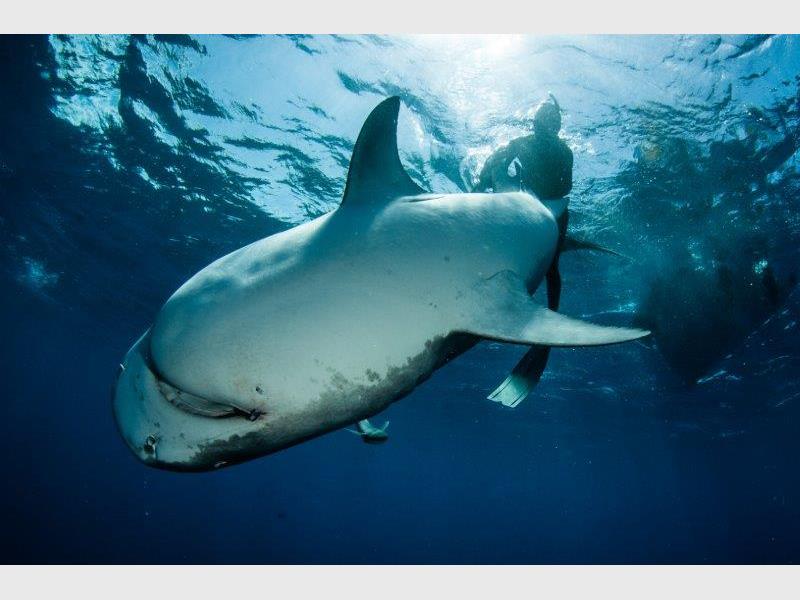
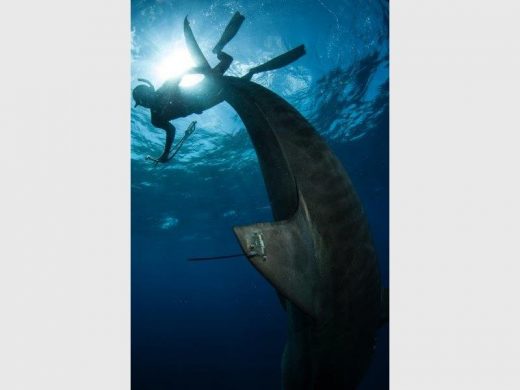
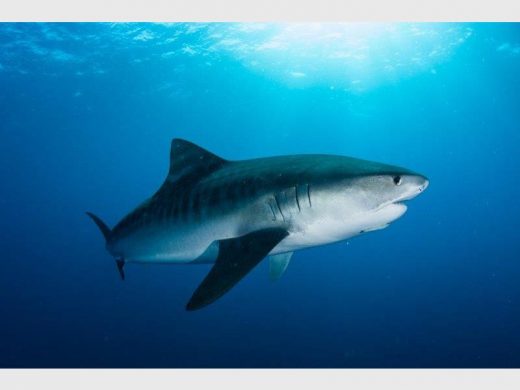
A tiger shark on the OCEARCH Tracker, tagged by collaborating scientists at Biopixel Oceans Foundation and the Oceanographic Research Institute, has confirmed that the species is capable of crossing the Indian Ocean.
ALSO READ: 26 years later … recaptured tagged sharks sets new record
The 3.15m mature female, named Sereia, was tagged on the African coast in Mozambique in November 2018 and was detected via satellite in April 2020, about 500km off the Indonesian coast.
This equates to a transoceanic journey of more than 6500km. Sereia now has the longest confirmed migration for the species on record.
“We had no idea a shark from Mozambique would end up off the coast of Indonesia,” said Dr Ryan Daly (Salt Rock) of the Oceanographic Research Institute in Durban South Africa.
Dr Daly is also a research associate at the South African Institute for Aquatic Biodiversity.
“This is incredibly important because it confirms that tiger sharks are roaming throughout the Indian Ocean and we need to take this into account when thinking about improving conservation for them in the region,” he adds.
Sereia is one of 21 sharks tagged by the Biopixel Oceans Foundation and the Oceanographic Research Institute in Mozambique as part of a project to lay down a baseline understanding of tiger shark movements and habitat use in the west Indian ocean.
Prior to starting the project, very little was known about the residency patterns and migration dynamics of tiger sharks in this region.
The tags for Sereia and other tiger sharks in the project were deployed in the Ponta do Ouro Partial Marine Reserve which neighbours South Africa.
Researchers hope that by studying the trans-boundary movements of tiger sharks in this area that it will help for implementing congruent management plans on both sides of the border.
Sereia’s groundbreaking journey also sheds light on another important question the study aims to answer regarding the range tiger sharks are capable of covering.
Prior to Sereia’s journey, most of the other sharks tagged in the study remained close to the African coast, with a couple venturing as far as Madagascar.
Sereia’s most recent detection at the end of April shows she may have turned around, but the magnitude of her migration still opens up a whole new line of questioning.
“We have been interested in the connectivity of tiger sharks from different locations in the western Indian ocean, however, this shark moving across the Indian ocean puts the question of connectivity into a much larger scale, especially if she does make it all the way to Indonesia or Australia,” said Biopixel Oceans Foundation and James Cook University researcher Adam Barnett, who was also OCEARCH’s lead scientists during the Eastern Australia Expedition.
“An interesting aspect of this large scale movement is understanding not just where this shark is moving too, but why. I hope everyone keeps following her on the OCEARCH Tracker with us to see if she really does push further east.”
(Issued on behalf of John Kanaly, OCEARCH Communications Manager)
HAVE YOUR SAY
Like the South Coast Herald’s Facebook page, follow us on Twitter and Instagram