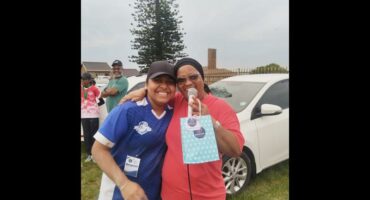
Women encouraged to undergo regular cancer screenings to promote early detection
According to Cansa, breast and cervical cancers are the leading cause of death among South African women.

The Cancer Association of South Africa (Cansa) is encouraging women to take care of themselves by knowing their bodies, the signs of cancer and taking up their right to cancer screening to promote early detection.
“Women generally put others first, and we want them to realise that they too have the right to prioritise their health,” said Gerda Strauss, Cansa’s Head of Service Delivery.
ALSO READ: How your diet affects your gut…and your health
“We know that we’re living in unprecedented times with Covid-19 taking centre stage in our lives, however the cancer risk does not go away due to the pandemic, and women still need to go for regular cancer screening as early detection saves lives.”
Ms Strauss went on to explain that some women, especially the elderly or those with underlying conditions such as high blood pressure, heart disease or diabetes, may be reluctant to get screened as they’re more at risk due to Covid-19.
Clinical breast examinations and pap smears can be done by appointment at Cansa Care Centres which have put protective measures in place against the spread of the coronavirus.
According to the National Department of Health’s Breast Cancer Control Policy, women are entitled to an annual clinical breast examination when visiting primary health care centres, and to three free pap smears per lifetime, starting at the age of 30 years, with a 10 year interval between each smear.
Those who are HIV positive should be screened for cervical cancer at diagnosis and subsequently every three years if the screening test is negative and at yearly intervals if the screening test is positive.
“To the health care professionals across the country, it takes five critical questions, referred to as the high five, to save lives,” said Dr Manala Makua, Chief Director Women, Maternal and Reproductive Health.
“Women must be asked the following: Do you perform breast self-examinations regularly? Have you noticed any changes in your breasts? Have you experienced abnormal vaginal bleeding? Have you ever had a pap smear? Do you have a family history of cancer?”
ALSO READ: CANSA launches telecounselling service in seven languages
Women are asked to do regular monthly breast self-examinations. To get an idea of how to do a breast self-examination, click HERE.
According to Cansa, breast and cervical cancers are the leading cause of death among South African women with breast being the most diagnosed cancer, with a lifetime risk of 1 in 25, according to the 2016 National Cancer Registry (NCR).
Cervical cancer is the second most commonly diagnosed (excluding basal cell carcinoma) among women.
The estimated life-time risk among all women in South Africa is 1:35 as per the National Cancer Registry, 2016.
“We also encourage women to familiarise themselves with the risk factors and symptoms of early stage cervical changes – although women may only present with symptoms at a later stage in the disease – so that they may be aware,” said Ms Strauss.
Cervical cancer can be effectively treated if detected and diagnosed early.
“Let’s adopt lifestyle behaviours that can help lower risk for breast and cervical cancers by being physically active, maintaining a healthy weight, avoiding alcohol and tobacco, eating balanced meals, avoiding sexual activity at an early age and engaging in sexual activities with different partners or risky sexual behaviour, which increases the chances of getting HPV,” she added.
ALSO READ: Businesses donate face masks and sanitiser to Khanya Hospice
“Women should also avoid exposure to known cancer causing agents.”
For more information or to get in touch with a member of Cansa, visit www.cansa.org.za or contact your nearest Cansa Care Centre, call Cansa’s toll-free number at 080-0226622 or email: info@cansa.org.za.
Besides numerous social media accounts, Cansa offers multi-lingual support on WhatsApp: 072-1979305 for English and Afrikaans and 071-8673530 for isiXhosa, isiZulu, siSwati, Sesotho and Setswana.
HAVE YOUR SAY
Like the South Coast Herald’s Facebook page, follow us on Twitter and Instagram