Careers in Focus: A day in the life of a quality assurance auditor
Nisha has a post grad diploma in management and completed courses in lean sigma quality systems and total quality management.

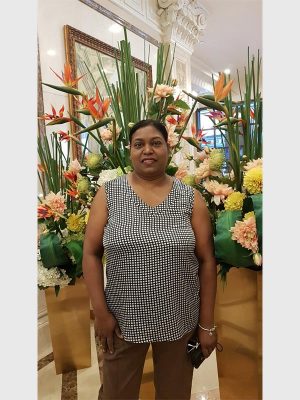
Nisha Postum is a quality assurance auditor from KwaZulu-Natal.
She attended Strelitzia Secondary School in Isipingo and completed her national diploma in medical technology, specialising in clinical pathology.

Nisha has a post grad diploma in management and completed courses in lean sigma quality systems and total quality management.
She is a certified South African national accreditation system (SANAS) technical auditor for ISO systems for medical laboratories.

She gives an idea of what her job entails, as well as how she got into this field which allows her to travel the world.
Question: What are your main responsibilities and what is a typical day in the life of a quality assurance auditor?
Answer: To assess compliance in the study protocol, country specific and international requirements for conduct of human clinical studies. Ultimately to ensure that the rights, safety and well-being of the human participants in clinical trials are protected. A typical day is spent analysing documents, data and protocols to ensure compliance at various laboratories nationally and internationally. With the Covid-19 pandemic and travel restrictions, much of my work is now conducted online.
Question: How long have you worked as a quality assurance auditor?
Answer: I’ve been in this industry for 13 years.

Question: How did you become interested in this field?
Answer: I worked at a private pathology laboratory first conducting blood testing assays then as part of the job, I was conducting periodic quality control internal audits to improve processes. I was given an opportunity to help the organisation set up systems in preparation for an international organisation for standardisation (ISO) certification. I then had this opportunity to move to my current company to conduct good clinical laboratory practice audits for laboratories that conduct testing for clinical studies.
Question: What kind of education, training and qualifications does your job require?
Answer: Subjects at school level should be science-based courses (mathematics, physics, chemistry, biology and an advantage would be computer science) in order to study for any medical science qualification. Any laboratory medical science qualification and auditing experience, management experience, ISO accreditation experience.

During completion of your tertiary education, decide what therapeutic field you would like to work in – for example my field of interest is HIV, TB and infectious diseases which is a major issue in developing regions like Africa, South America and Asia. Try to get internships during your vacation and or volunteer with companies and NGOs.
Question: What skills, abilities and personal attributes are essential for success and would best suit this work?
Answer: You must have a passion for this job and be detail orientated. Time management and the ability to multitask, confidence to present critical findings, emotional intelligence and humility are all key attributes and skills.
Question: What is the ballpark salary range for this career?
Answer: The clinical research field has lots of different roles, quality assurance GCLP auditor is a specialised role where you can earn a salary starting from R800 000 to R1.8 million per annum. However, there is a wide spectrum of functions within the field such as data managers, regulatory specialists, biostatisticians, specialised laboratory scientists in manufacturing drugs, all of which have different salaries.

Question: What do you like most about your job and what are some of the challenges that you encounter?
Answer: I love the travel aspect of my job because I usually extend my trips to include some touring and sightseeing in the countries that I do audits in and get to meet new people and experience new cultures.
Working through interpreters in foreign countries can be challenging especially when the interpreters are not well versed in laboratory technology.
Question: What advice would you give readers considering this type of job?
Answer: This is a very rewarding job, you get to be part of a global solution whether it’s a new drug that will become available on the market or new treatment plan, it is fast paced, requires you to be focused and provide accurate detailed reports, with lots of travel, that will challenge you to ensure a work-life balance.
Question: Is there a specific quote or motto that motivates and inspires you?
Answer: Treat others as you would like yourself to be treated.
(Submitted by Navie Green-Thompson)
HAVE YOUR SAY
Like the South Coast Herald’s Facebook page, follow us on Twitter and Instagram