Paws in war: Mercy dogs
They were often sent out after major battles, to seek out wounded soldiers; and trench warfare suited their use because of their agility in small spaces.
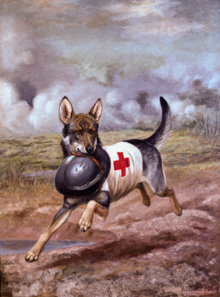
When I came across this painting done by the great Alexander Pope, I realised afresh what pivotal roles dogs have played in the lives of mankind throughout the ages.
A mercy dog (also known as an ambulance dog, Red Cross dog, or casualty dog) was a dog that served in a paramedical role in the armed forces, most notably during World War I.
They were often sent out after major battles, to seek out wounded soldiers; and trench warfare suited their use because of their agility in small spaces.
They carried emergency first-aid supplies strapped to their bodies that could be used by wounded soldiers whom the medics could not reach due to enemy fire.
How comforting it must have been, when lying in a field far from home, mortally wounded and desperately alone, to see this brave canine soldier running towards you?
They were also able to guide medics to soldiers who were badly injured and who needed extensive care. Many mercy dogs were trained by the National Red Cross societies to serve in the country in which the specific society operated, teaching the dogs the language of the region to enable the animal to respond to instructions in that language.
As many as 20,000 dogs are estimated to have served as mercy dogs in World War I and World War II, and they have been credited with saving thousands of lives. These dogs were also used by the United States in the Korean War.
(Reference: Wikipedia)
HAVE YOUR SAY
Like the South Coast Herald’s Facebook page, follow us on Twitter and Instagram