
Indian indentured workers: 150 years in Port Shepstone
These archival entries offer a glimpse into the lives of people who travelled thousands of kilometres to an unfamiliar region.
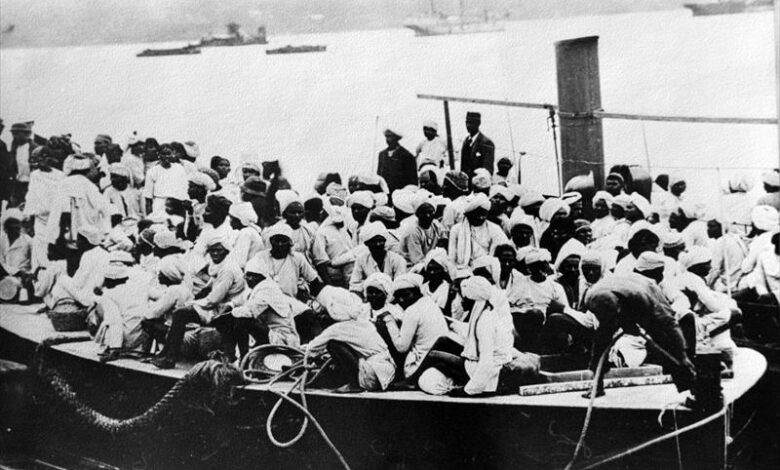
On November 16, 1860, the SS Truro arrived at Port Natal (present-day Durban), carrying the first Indian indentured workers from Madras. The Belvedere, which had sailed from Calcutta, arrived 10 days later. Their arrival marked the beginning of an organised system of indentured labour in Natal, which continued until 1911.
It is recorded that 152 184 Indians came to Natal, primarily to meet the growing demand for labour in the sugar industry following the abolition of slavery. Many left their families and villages in search of better opportunities, but faced harsh working conditions, exploitation and hardship.
Their labour contributed to the development of agriculture, railways, roads, sugar mills, forestry, coal mines and other sectors. They established families and communities that became an integral part of South Africa’s history.
The South Coast, from the Umzimkhulu River to the Umtamvuna River, was the last area of Natal annexed by the British, on January 1, 1866. Indigenous communities lived here long before, and their histories are a central part of the region’s shared heritage.
150 years in Port Shepstone
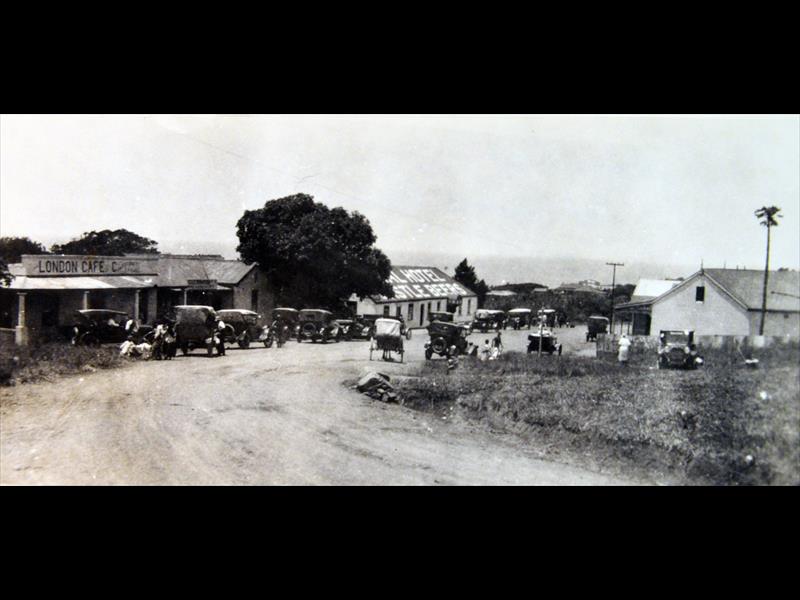
The Port Shepstone Twinning Association, a local NGO, undertook archival research into indenture in the district. The research identified 1876 as the earliest recorded year of worker allocations to local employers, making 2026 a 150-year milestone for the community.
The earliest arrival was Dowlutia Jhingoor, a 19-year-old Muslim woman who arrived aboard the St Kilda from Calcutta in July 1876. She was allocated to Brothers, Umzimkulu Sugar.
She was followed by Abboo Ramasawmy, aged 38, who arrived from Polur in North Arcot aboard the Dunphaile Castle I in June 1878. He was allocated to Umzimkulu Estates, Barrow Green and Est Esperanza Sugar. He died in December 1886, aged 46.
Matadeen Aungnoo, aged 26, arrived aboard the Glenroy III in March 1881 and was allocated to JG Caldwell. He died in 1897.
One can only speculate about their possible isolation and loneliness and their relatively early death.
The remarkable revelation flowing from the research was the identification of a total of 3 307 individuals. They were allocated to 21 employers between 1876 and 1911. Of these, 612 returned to India after completing their contracts, while around 30 deaths were recorded.
Barrow Green, Colonel JJ Bisset’s farm, employed the largest number, about 2 776 workers, followed by Ruthville Estate with 151. Others worked for smaller farmers and families.
The records also reflect the movement of indentured workers who had initially been allocated elsewhere but later settled locally, as well as those who subsequently moved away from Port Shepstone.
These archival entries offer a glimpse into the lives of people who travelled thousands of kilometres to an unfamiliar region, facing uncertainty, separation from their families and the challenges of beginning a new life. Behind each name is an individual story, many of which have yet to be fully explored.
1882 saw the first groups of indentured workers
In 1882, fifty-one indentured workers arrived aboard the Mars IV and Coldstream I from Madras, and the Silhet I from Calcutta. Walter Bisset employed 31 of them, while the remaining 20 were employed by HT Bru-de-Wold, a Norwegian.
He was an influential figure in the Natal colonial military. He later took command of the newly established Umzimkhulu Mounted Rifles, a unit formed partly in response to the arrival of Norwegian settlers.
The workers came from various parts of India, including Chingleput, North Arcot, Malabar, Nellore, Bangalore, Ganjam, Cochin, Agra and Lucknow. The registers recorded their Hindu, Muslim and Christian classifications, as well as the community descriptions used in colonial records.
The group comprised 33 adult men, 12 adult women and six children. Two individuals were recorded as having been born aboard ship, a reminder that women and children, too, were part of the indenture system.
The next recorded group of indentured workers arrived only in 1887, by which time farming activities in the district were rapidly developing. From then onwards, there was a steady influx of indentured workers.
The human cost
The registers reveal the dangers workers faced. A Barrow Green worker who arrived in November 1897 died the following year after falling into a vat of boiling sugar juice. Recorded deaths during the indenture period reflect those by natural causes, accidents and violence.
Two workers were executed in 1904 and 1905 respectively. The circumstances remain unknown and warrant further research.
Completing an indenture contract did not bring an end to hardship. Under Law 17 of 1895, Natal imposed an annual £3 poll tax on former indentured Indians who chose neither to re-indenture nor return to India, but wished to remain in the colony.
Failure to meet this obligation could result in imprisonment or deportation. The tax placed an additional financial burden on an already impoverished community and became a significant source of resistance.
Poonamah Ponusamy arrived from Pondicherry in 1898, aged 18, and was assigned to the Umzimkhulu Sugar Company. After completing her indenture in 1903, she struggled to support herself. Unable to pay her taxes, she was declared indigent in 1906 and arrangements were made for her return to India. At just 26, she was sent back destitute.
The remaining workers, supplemented by the later arrival of passenger Indians and local migration, form the basis of the Indian community in Port Shepstone. (Passenger Indians, mainly traders, came of their own accord and at their own cost).
From indenture to community building
The majority remained workers or small-scale farmers and established communities across the South Coast, including White City, Albersville, Marburg, Louisiana, Band Farm, Langalibalele, Izotsha, Oatlands, Paddock and Hibberdene.
Education became an important means of advancement. In 1926, the community established the Port Shepstone Hindu Education Society. Community contributions and local leadership helped establish eleven South Coast schools.
Preserving our shared history
The association’s research has brought to light an inadequately documented part of South Coast history. The registers provide names, origins, arrival dates and employers. Ancestor birth certificates provide reference numbers that will enable current generations to trace their roots.
The recently established Port Shepstone 1860 Legacy Committee offers an opportunity to extend this research and preserve the history of the workers and their descendants.
It is hoped that further research will go beyond the statistics to recognise the individuals, families and communities whose labour and contributions form part of our shared South Coast history.
(Submitted by Gulshera Khan, Port Shepstone Twinning Association. Photos courtesy of 1860 Heritage Centre)
HAVE YOUR SAY
Like the South Coast Herald’s Facebook page, follow us on Twitter and Instagram


