
Every patrol matters for Bazley snare removal team
Every snare found is geolocated, photographed and removed to build a clear picture of where snaring activity is taking place and where patrols need to be concentrated.
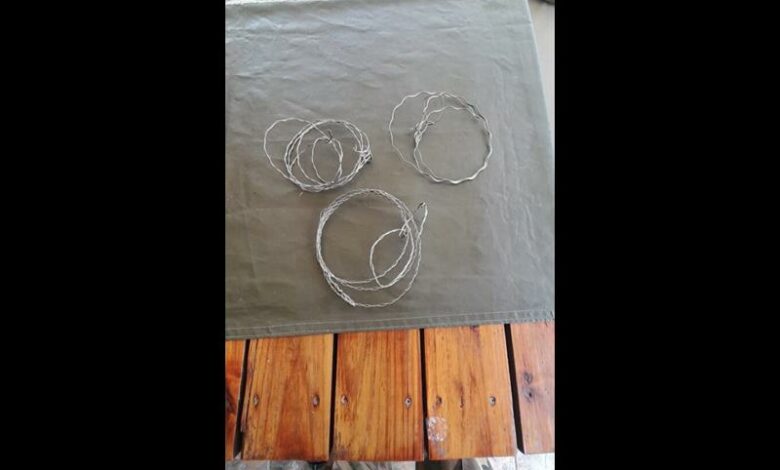
The Bazley Residents’ Association (BRA) reminds the public that conservation does not happen only in game reserves; it happens in the natural areas around villages, where animals remain vulnerable to snaring.
Over the last two years, the dedicated group has found and removed just over 200 snares from the KZN South Coast – from the Bazley area, stretching from the Ndesingane River in the north to the Ifafa River in the south.
Every snare found is geolocated, photographed and removed, allowing BRA members to build a clear picture of where snaring activity is taking place and where their patrols need to be concentrated.
Snares have been found along river mouths, streams, and sugar cane drainage cuts, to name but a few examples.
Roughly a month ago, another heartbreaking case was witnessed by the team when they came across the body of a young bushbuck caught in one of these traps. She was estimated to have been about three or four months old.
Her lifeless body was removed and laid to rest in a glade beside the river.
BRA explained that week after week, they go out into the bush, walking through difficult terrain and carefully checking places where snares are known to be set. Yet, despite their dedication, it is impossible to find every single one.
During the week the little bushbuck was discovered, the team removed another eight snares from the surrounding area.
The group also explained that snaring taking place in and around Bazley is now a serious concern. The animals caught and killed are not necessarily being taken simply for the personal consumption of the person setting the snare. Snaring forms part of a broader and potentially lucrative illegal trade in bushmeat and wildlife.
Those involved are often highly skilled in bushcraft and familiar with the terrain. They continually vary where and how snares are placed in an effort to avoid detection. This makes the work of the snare team particularly challenging.
Areas that have been cleared cannot simply be regarded as safe indefinitely. They need to be revisited and monitored because new snares may be placed after a patrol has passed through.
It is a constant process of searching, recording, removing and returning.
In terms of wire snares, these are described by the team as crude, indiscriminate and devastating, as they do not choose their victims. A bushbuck, duiker or any other animal moving through the vegetation can become trapped.
And because snares can be extremely difficult to spot, they may remain hidden for weeks or even months. That is why every patrol matters.
* Precise locations and names of BRA members have been omitted for their safety and anti-poaching efforts.
HAVE YOUR SAY
Like the South Coast Herald’s Facebook page, follow us on Twitter and Instagram