
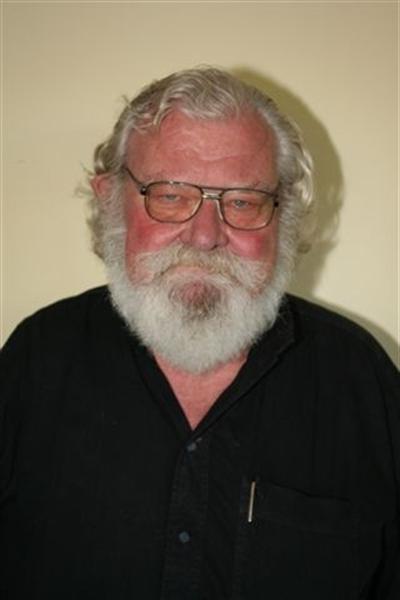
THERE are few names that have the same ring as Clive Walker’s in the South African belfry of top conservationists. He is a man of many talents: a watercolour artist, an author of more books and papers than you could shake a stick at, an educator, a game ranger, a raconteur and, probably most important of all, just a plain mensch.
I am happy to say that I have known Clive for 30 years and over those years we have become friends as well as collaborators and colleagues in the world of conservation. I wonder just how many campfires and ‘lemonades’ we have shared around southern Africa? (“Hey, Bwana, pull up a log, have a lemonade!”). And now Clive has written his autobiography, ‘Baobab Trails’, named after his favourite trees and his favourite pastime.
‘Baobab Trails’, subtitled ‘A Journey of Wilderness and Wanderings’, is Clive’s story, starting when he was 14 and his first meeting with an elephant and then a baobab in the Kruger National Park. It was the beginning of a passion for both giants, a passion that took Clive into the bush of South Africa and beyond to Botswana, Zimbabwe (then Rhodesia), Mozambique (then Portuguese East Africa), Namibia (then South West Africa), on to East Africa and further still to India and Nepal. It’s a great tale of people (many of Africa’s and the rest of the world’s conservation greats) and places (think of a piece of wild Africa and Clive has been on trail there), and of course animals, lots of animals.
Clive has a South Coast connection too, they have a holiday home here, so we still get to share the occasional lemonade. If you love Africa and adventure, Clive Walker will give it to you, get someone to put ‘Baobab Trails’ in your Christmas stocking.
Now to some high adventure of my own. I was sitting here quietly typing away early one morning when an olive sunbird flew in the study door, cruised over my desk and behind my laptop and straight into the window (my desk is right in a corner window). It sat on the sill, gave me a dirty look, a tweet or two and then flew back out of the door. Why do they do this, why always sunbirds, is it just us?
Staying with birds, remember that the vulture viewing hide at Oribi is open for business. The hide is a project of Birdlife Trogons, the local branch of Birdlife South Africa, and it is known as the Barry Porter Memorial Hide after Barry, a former chairman of Trogons and a conservationist known and dear to all of us. The hide gives one an opportunity to get up close and personal with Cape griffon vultures as it’s set in a colony of these magnificent birds. To visit the hide one needs to make arrangements through Andy Ruffle of Trogons, 039 695 0829, or go to their website birdlifetrogons.blogspot.com. And that’s all for now, cheers!
Baobab Trees: A Journey of Wilderness and Wanderings, Clive Walker, Jacana, Johannesburg, 2013, available at Ramsgate Stationers.



