THE Tankwa Karoo, straddling the Western and Northern Cape border, is one of the newer, lesser known but most intriguing of all our national parks.
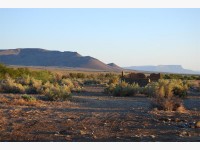
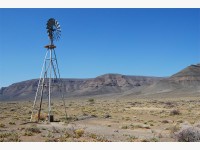
It was still in the development stage when we visited it a couple of years ago and setting up a tent at Pyper se Boom, one of the isolated sites scattered around the park, involved some really extreme camping. There was absolutely nothing there except for a broken down mud dwelling, a lonely windmill and a few stringy exotic trees that provided us with a little shelter from the blistering heat.
There are some comfortable chalets and cottages available in the park and I’ve heard that a couple of well-appointed camping sites have now been established, although the informal, undeveloped ones like Pyper se Boom are still in use. A few basic facilities would have been welcome when we were there but our camp site’s splendid isolation – not another tent in sight – its 360 degree view of the Tankwa plains and the amazing silence more than made up for the lack of home comforts.
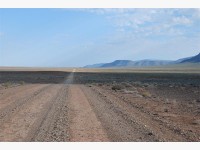
The flat, rugged Tankwa Karoo National Park, ringed by distant mountain ranges, is situated within the succulent Karoo biome and boasts an amazing array of rare and endangered plants plus many endemic birds. In the dry season, when we were there, it was not a pretty place but it had a stark beauty all of its own.
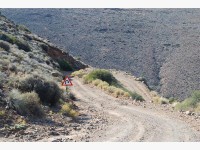
Driving up the steep, rugged Annaga Pass we were amazed by the varied vegetation carpeting the rocky red and orange mountain sides. Spiky green bushes, fat succulent plants, a fine-leafed, silvery ground cover and wispy plumes of a lemon-coloured grass – myriad little plants had found unique ways of dealing with the problem of staying alive in such a rugged, arid place.
Adding drama to this natural rock garden were the red-leafed aloes spilling over the rocky ledges, the clumps of pincushion euphorbias and the stocky, succulent, thick-trunked botterbome, strange little shrubs that look like miniature baobabs. And the view from the top of the pass was simply awe-inspiring.
This more verdant part of the park offered a dramatic contrast to its flatter, more arid plains. The landscape there, coupled with the incredible heat, was almost scary. The overpowering heat, the aridity and the starkness of the land has left a strong impression but my favourite memory of this fascinating national park must be an evening at Pyper se Boom, after a long, hot day:
Although the sun is sinking and a little breeze begins to stir, the fearsome heat has not yet dissipated. Our little patch of shade and our glasses filled with icy cold wine are more than welcome as we watch the setting sun turn the surrounding plains a dusty red.
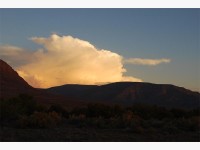
Then a little cloud appears, announcing its presence with the rumble of thunder. It turns a brilliant gold as its belly swells with the promise of rain. A few drops fall but not even enough to cool the baking ground. By nightfall the temperature is still in the high 30s – and the cloud had disappeared.
In this arid, sun burnt world, however, the lost little cloud is a reminder that the rains will eventually return to bless the parched earth and to wake up the flowers. I long to revisit the Tankwa Karoo again, after good rains have fallen and the wild flowers are in bloom, to see for myself this miraculous renewal of life.