SPRING is in the air, this late September morning, and the rolling farmlands of the KwaZulu-Natal Midlands are starting to green up.
We are on the way to see the Mandela Capture Site and the striking sculpture, a monument crafted by artist Marco Clanfanelli, to mark the spot where the ‘Black Pimpernel’ was finally arrested. The date was August 5, 1962 and Nelson Mandela, who had been on the run for 17 months, had just paid a visit to African National Congress president Chief Albert Luthuli.
And so, this unassuming spot, this patch of veld near Howick, was imbued with historical significance, deserving of a great piece of art to tell its story.
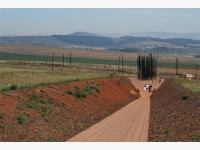
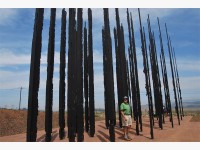
As we approach the capture site, we see the monument, a cluster of irregularly shaped, vertical iron columns set against the peaceful Midland landscape. It looks like an abstract work but, even from here, it is a work of great beauty.
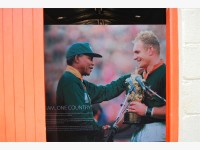
The capture site complex is amazingly unassuming and yet it has a quiet dignity. A few tin-roofed buildings have been erected near the moment, their simplicity at one with their surroundings. We take a walk through the museum building, reading the Mandela quotes and admiring the magnificent blown-up photographs of the famous statesman. The museum somehow embodies the humility and simple humanity of the great man who, even as we admire the exhibits, is gravely ill. Knowing that the end is fast approaching for our beloved Madiba makes this visit to his capture site even more poignant.
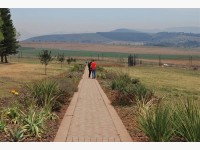
Leading to the sculpture is a long, paved, flower-lined walkway, symbolising the great man’s long walk to freedom. For quite a way, the monument still looks like an abstract work of art. Then, suddenly, amazingly, as we stop at a designated spot, the irregular notches, lumps and bumps on the columns merge to become a stunningly beautiful portrait of Madiba.
The artist has captured something special about Mandela – a slight smile, his strength of character, a far away look in his eyes. A look of a visionary.
We walk right up to the columns – some of them nearly 10m high – and Mandela’s face has completely disappeared. We stroll around the columns, seeking in vain for the missing portrait. From here, there is no way of understanding how it was constructed. Returning to the spot from where the portrait is best seen, we are again awestruck by the artist’s genius.
We gaze for a long time at this fitting monument to a man of steel, a man who has sacrificed everything for what he believes, a man who has achieved what he wanted. A man who, one day soon, will earn the peaceful rest he so deserves.
I have no way of knowing, then, that Mandela will be called to his final rest just a few months after our visit to the capture site, but as I retrace my footsteps along the long walk, I feel I have already said my goodbye to the great man.