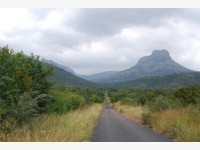
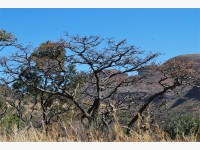
AFTER all the arid parks we have visited on our virtual Sanparks tour, let’s head for greener pastures. Well slightly greener pastures; let’s take a look at lovely Marakele National Park. This Limpopo natural treasure, set in the heart of the Waterberg mountains, falls within the transitional zone between South Africa’s dry western section and its rain-rich east.
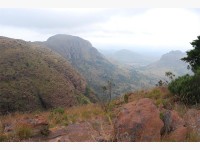
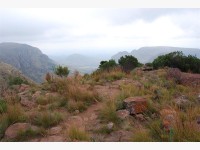
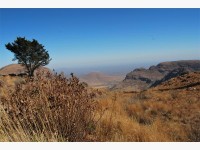
At times the park can be lush and green and dripping with moisture, as it was when we spent a couple of days there during the summer months. It rained while we were there then, a fine summery drizzle, and low clouds swathed the mountain tops in swirling mist. Our other two visits to this lovely park were at the end of winter when the vegetation was tinder dry.The golden winter grass shows up the amazing copper, maroon and red tones of the rocky mountains, whereas in summer the lush vegetation subdues the park’s ruddy complexion.
Whenever you go to Marakele, though, you will find it breathtakingly beautiful. Most of the larger mammals are resident in this park and, it being a transitional area, the birdlife is amazing, But it is the magnificent scenery that is Marakele’s main drawcard. It is a gorgeous national park.
The main section is all mountains and deep valleys, wetlands and streams. Bontle camping ground is situated in the smaller, flatter, section consisting of grassy, game-filled plains and patches of woodland. The distant mountains provide the perfect backdrop to the classic ‘out of Africa’ scenery.
Bontle, such a well-appointed, attractive and comfortable camping site, is in itself an attraction. People who camp there regularly rave about it and this is not surprising. Mature trees offer plenty of shade – and a wonderful variety of interesting birds. Best of all the camp is right on the edge of a golden plain, only separated from it by a row of wooden posts. An interesting array of game, including rhino, constantly wander through the long grass, past the camping area to a nearby waterhole. Ostriches patrol the camping ground and kudu tiptoe through it. During one of our visits, a single wild dog ran right past our campsite one evening. What a thrill! When we stay at Marakele we can spend hours in camp, relaxing in a comfortable camping chair, game and bird watching – and even doing a little tree hugging.
However, there is plenty to lure us out of our chairs. The park has an extensive network of roads and 4×4 tracks, offering a huge variety of scenery in both the plains and mountain section. One of the popular drives is along a steep, winding road up to the Lenong viewpoint on the highest peaks in the park and one of my happiest Marakele memories is of a visit to this lofty place.
It is during our summer visit to the park and Marakele is looking its prettiest. On the final curve before we reach the top of the mountain and the Lenong viewpoint, we are delighted to encounter three klipspringer on the road.
I am totally charmed by these agile little antelope which, with their course, hollow, insulating hair and their tiptoeing, springy gait, are so perfectly adapted to the rocky, mountainous terrain where they are found. They are stocky little fellows, only about 60m tall, with big, liquid bambi eyes, neat little horns and spiky yellow-grey coats. They have a fairly wide range but, because their chosen habitat is often inaccessible, you don’t often get to see them.
They slowly cross the road in front of our vehicle then show off a bit with a graceful rock-hopping demonstration. They nimbly leap from pinnacle to pinnacle with such ease and grace then, for a minute or two, they stand absolutely still like little statues, giving us a chance to capture them on camera before they dart away.
We proceed up the last steep section of road to the viewpoint. Although it is a fairly warm day, it is chilly up here as the wind has an edge to it and is laden with misty moisture. We find ourselves a sunny nook where we enjoy a leisurely lunch break, keeping our binoculars handy as there are all sorts of interesting high-altitude birds flitting about. We are disappointed that there is no sign of the resident Cape vultures.
After lunch we take a walk around the rocky, sparcely vegetated mountain top enjoying a 360 degree view of the Waterberg mountains. We spend quite a while here, feeling on top of the world as we admire the row upon row of magnificent, moulded rocky mountains stretching out all around us. We are just about to leave but we change our mind and decide to linger a little longer over another cup of coffee.
We’ve just taken our first sip when we spot a single vulture above our heads. Suddenly, from nowhere, the sky around the mountain top is filled with the huge birds and we are treated to an amazing flypast by these princes of the skies.