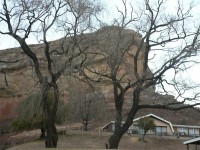
ALTHOUGH it is probably best known for its golden rock formations and curvaceous landscapes, Golden Gate has the distinction of being South Africa’s only grassland national park.
This lofty protected place is situated in the foothills of the Maluti mountains in the north eastern corner of that friendly province, the Free State. Fragments of indigenous afromontane forest grow in the kloofs and gorges, finding refuge there from fire and frost. Temperatures can drop to as low as minus 15 degrees Centigrade and the park is sometimes blanketed in snow. There are also stands of those foothill slope survivors, tough, fire-resistant protea bushes and gnarled ouhout.
Mostly the park consists of rolling grasslands, representing amazing biodiversity. In winter they are bleak and brown but come the summer rains and these highland grasslands turn emerald green. It is a joy to walk them, then, and to take a closer look at their wealth of plant life. More than 60 different species of grasses are to be found within the park’s boundaries and there are more than enough highland flower species to keep the flower people occupied for hours.
Many creatures that have adapted to the high life are to be found in Golden Gates. Magnificent herds of eland and black wildebeest are among the interesting antelope species that are at home here. The bearded vulture and bald ibis top the list of much-sought, high-altitude avian residents.
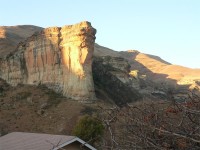
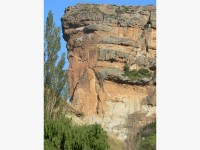
Mostly, though, it is the crystal mountain air and the magnificent scenery that attract its many fans to this accessible, well-appointed and well-run national park. The most striking features are the sandstone cliffs and rock formations that turn a golden colour as the sun sets. Golden Gates gets its name from its two massive sandstone ‘gates’ on either side of the road. The magnificent Brandwag buttress, near the hotel must be one of the most photographed rock formations in South Africa.
The origins of these striking cliffs and rocks go right back to 200-million years ago when the area was a soupy swamp and a layer of muddy red sediment was laid down. Four million years later the swamp had turned into a desert and another layer, of yellow sandstone, was added. Volcanic activity between 160-million and 100-million years ago was responsible for the topping, a cap of basalt.
Over the eons rivers and streams have carved this layered land into the dramatic natural sculptures we see today. As for the black streaks on the rock faces that visitors often ask about – they are formed by water leaching the manganese dioxide out of the basalt cap.
The popular national park provides the outdoors brigade with all sorts of activities, including walks and longer hikes, canoeing, horse trails, abseiling and game driving. For the birders, there is ample twitching opportunities including a vantage point overlooking the vulture restaurant.
All sorts of accommodation options are available, ranging from the Highlands Mountain Retreat luxury camp, the Noordt Brabant Guest House (a historic farmhouse), and the well-appointed Golden Gate (formerly Brandwag) Hotel, to a self-catering Basutho Cultural Village Restcamp and the rondavels and camping ground at Glen Reenen Rest Camp.
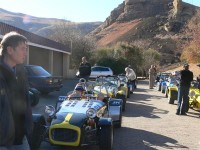
Bill and I and a group of local car enthusiasts spent a weekend at the hotel in 2007 when we attended the celebrations that marked the Lotus Seven sports car’s 50th anniversary. As campers we felt the relative luxury of a hotel stay was well earned after we’d motored all the way from Uvongo to Golden Gate in ‘Little Yellow’, Bill’s cute but not very comfortable Lotus Seven.
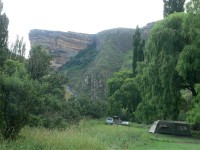
Often, we have stayed in the attractive and comfortable Glen Reenen camping ground although usually for only one or two nights on the way to somewhere else. We really should plan a longer visit as there is just so much to see and do. My favourite memory is of an afternoon we spent on a windy ridge, overlooking the vulture hide:
On previous visits we have not been lucky so I hope the rather arduous climb to the top of the ridge is worth the effort. We find a sheltered spot out of the wind and look down on a couple of ravens pecking at the paltry remains of a carcass. We are just about to retreat down the hill when two large birds glide into view. We can’t believe our luck. They are a mature and an immature bearded vulture, listed as endangered and a rare sight in Southern african skies.
From our vantage point we are looking down on them. They inspect the vulture restaurant, then slowly circle higher and higher. Soon they are so close to us we don’t even need our binoculars to see them properly. Eventually they pop over the ridge, fly right over our heads a couple of times then head off into the wide blue yonder. Such beautiful creatures! They leave us with a sense of wonder.