
SO just the other day I was boasting about the radical time I am having down here on the KwaZulu- Natal South Coast so of course, besides writing about it, I got chatting to some rather interesting tourists.
Yes, I am still officially Tilley the Tourist despite having proclaimed this my home, I am however still a nomad, an adventurer and a wild child. So with my ‘at home on the coast’ hat, I met this bunch of camera snappy happy people who were flipping through the Southern Explorer map with googly eyes. So you can imagine it took all my psychic ability to figure out that they were tourists. Ok, let me help them. Here is the conversation:
Me: Hi, how are you?
Them: Suspicious
Me: I mean no harm, I come as a friend.
Them: Open glares and nervous fiddling of cell phones.
Me: You speak English?
Them: Nod
Me: Oh you think because you are in South Africa you can’t talk to strangers.
Them: Nod
Me: Trust me, it’s ok. I am a South African and I am alive and real. It is safe to speak to strangers.
Them: Looking for fastest way out.
Me: So what you looking for?
Them: Easing up… Somewhere to go.
Me: What do you feel like doing?
Them: Shipwreck hunting.
Me: Is that like submarine racing? ‘Cos that’s extreme.
Them: No we heard about shipwrecks off this coastline that happened during the 1800s and early 1900s and how Europe has influenced the cultures down here. Or maybe even earlier. We came to find out.
Me: Haven’t seen a shipwreck around here. Must be undercover. Let’s find a museum… Let’s go hunting history.
Oh hang on, let’s check out the tourism website first on our handy little pieces of technology that you were playing with earlier on – go to www.tourismsouthcoast.co.za and let’s see what they have to say first. So settling in around a cup of coffee overlooking the ocean, so we googled. Imagine what the early sailors would have said when they barely had a telescope in hand? Wow, and did we find a lot of information.
So to quote the website. In 1552, The São João was the first cargo ship to be wrecked along South Africa’s coastline, carrying pepper, Chinese porcelain, cowrie shells, carnelian beads and other merchandise. The ship, with around 600 people on board, ran aground off what is now known as Port Edward, near the Kuboboyi River. One hundred died attempting to get ashore, the rest made a temporary camp, near ‘Tragedy Hill’ (since named for a massacre in 1831 of the local Nguni clan by a Zulu war band).
In 1554 The Sao Bento was wrecked on Msikaba Island in 1554. A survivor from the Sao Bento gave a detailed account of the walk from the Msikaba River to the Mtamvuna River. Some 150 people lost their lives in the violent storm on 24th April 1554 that drove the ship onto the island, but some 322 people did manage to get the mainland. They made a camp on the south bank of the river and the shelter was ‘a superb lodging made of rich carpets, pieces of good cloth and silk, put to very different use from that for which they were made’.
The Nebo which was an old 200 ton steamship and used as a cargo vessel between Sunderland and Durban, struck Aliwal on May 20 1884. She was carrying building materials for the Amanzimtoti railway bridge when she met her end. Reports claim a pinnacle was the reason for her sinking but this coral head has never been reported again.
Another report claimed it was the overloading which caused the ship to capsize. Nebo now sits upside down and has been heavily demolished.
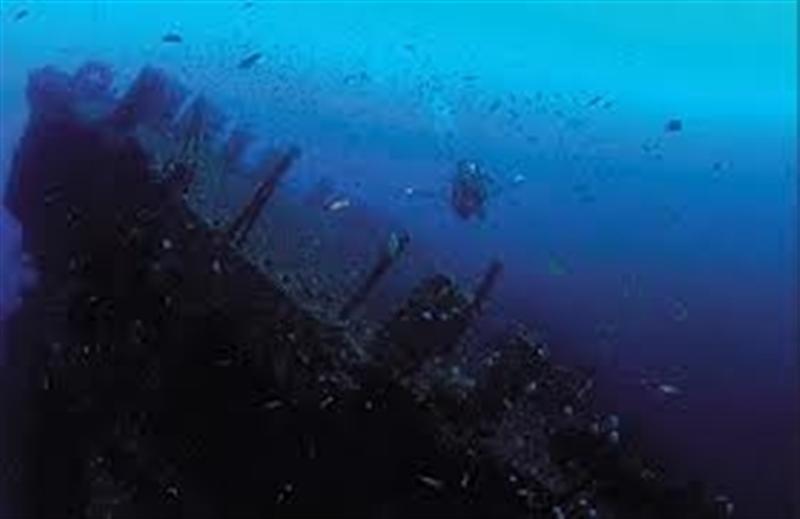
The Produce, a 119m long Norwegian bulk carrier, weighing in at 15000 tons passed by the KwaZulu-Natal South Coast. She was travelling south from the port of Durban carrying a cargo of molasses when she struck, and ripped open her hull, on the northern Pinnacles of the nearby Aliwal Shoal during rough seas on the 11th August 1974 (Note to self: that’s only 40 years ago, that’s younger than me and she’s a wreck so what does that make me?).
The crew made a brave attempt to turn the ship around to return towards Durban but the ship was irrevocably doomed and started to sink. The event was witnessed from ashore and a rescue party was launched by local fishermen who managed to heroically rescue all the crew in treacherous conditions, thereby averting any casualties. The ship split in half and quickly came to settle about 500m north of Aliwal Shoal where today she provides an excellent opportunity for a most interesting dive.
The rusting framework now provides an established residence for a myriad of varied fish species, including her famous yet shy school of dark brindle bass each measuring over 2m in length. The vessel lies on her starboard side on a sand bed at approximately 30 metres, with her bridge section lying merely about 14 metres below the surface. The stern is largely intact although 30 years have inevitably taken their toll on the wreck.
I turn to my tourist friends. They said ‘read it again’. Clearly they can speak English but reading is a bit challenging, which is ok considering they are Chinese. I personally can’t do the picture writing of the Mandarin speaking folks either. I said, let’s go one better. Let’s go to Aliwal Shoal and dive the wreck and look for some ‘produce’. They might not have gotten my extremely hilarious and clever pun, but they were decidedly excited. Hi ho, Hi ho, it’s off to dive we go!
So until we meet again, get your people to call my people. 0800 FINDME. Erratum: marketing@tourismsouthcoast.co.za
Signing out,
Inspector Clueless with a map, Tilley the Tourist.



