
BY the time we completed border formalities the scorching afternoon had melted into a liquid Kariba evening, all watery blues and pinks and mauves. It was 2002 and we had travelled through Swaziland, Mozambique and Malawi to Dar es Salaam in Tanzania. Homeward bound, we had driven through Zambia and were now entering Zimbabwe via the road across Kariba Dam wall.
I had so enjoyed exploring countries north of the Zambezi. However, crossing back over this mighty river, via the massive dam wall that harnessed it, was an unexpectedly emotional experience.

Bill is a born and bred Zimbabwean and both my children were born there. It was my home for ten years, before 1982 when we immigrated to South Africa.
After we first left Zimbabwe we visited it regularly, but we hadn’t been back for many years. Returning to the country that will always be my second home made me realise that absence hasn’t weakened my strong affections for it. And entering Zimbabwe via Lake Kariba was the clincher. It triggered so many happy memories of the holidays we had spent exploring this huge man-made lake as a family.
Built in the late 1950s, the Kariba Dam or Lake Kariba as it is known, harnesses the power of the mighty Zambezi River and is the largest man-made lakes in the world. Its construction was a formidable engineering feat, not helped by massive flooding caused, the Batonka believed, by the angry river-god, Nyaminyami.We have seen Nyaminyami in action and, believe me; he is formidable when he stirs. We have weathered quite a few of his Kariba storms.

The dam is about 280 kilometres long and, at its widest, about 30 kilometres across. Kariba town, perched on its shore near the dam wall, is one of Zimbabwe’s favourite playgrounds and in its heydays attracted visitors from around the world. Lake Kariba and its wild fringe, though, are best seen from a boat.
Good friends of ours in Harare are sailing fanatics and they eventually talked us into trying out a five-day Kariba Yachting Safari with Rex and Evelyn Taylor. `The admiral’, as everyone calls Rex, had a fleet of six Van Der Stadt 22s, forgiving little yachts that were ideal to for complete beginners. And Rex and Evelyn had endless patience with ignorant landlubbers. We spent five glorious days aboard Summer Wind with the fleet, following the wind by day then tucking into one of the many little bays along the wild, game-rich shore, at night. After our first day aboard Summer Wind we all were absolutely hooked .
Our sons, now grown up, were so small then but they soon became proficient sailors. They knew that, when we navigated our way into the bays, late in the afternoon after a hot day on the lake, they had to keep a lookout for hippos and elephants as well as the sharp, petrified stumps of the trees that were drowned when the dam was built.

We did a couple more trips with Rex and Evelyn then acquired our own beloved Mahala, a handsome 22-foot four-berth Kelsall catamaran that could be dissembled and towed between Zimbabwe and our home in Uvongo. Sometimes we sailed on our own but usually when we came up to Zimbabwe most of our yachting friends would find a good reason to down tools and come to Kariba with us for a couple of weeks. And of course we kept in touch with Evelyn and Rex, sometimes joining the admiral’s fleet for a day or two of our floating holiday.

How wonderful were those yachting trips, sailing the length and breadth of that perfectly blue lake, sometimes roaring along with a fierce wind filling our sails, at other times becalmed and enjoying a lunch-time swim in the middle of the lake, far from the shore where crocodiles lurked.
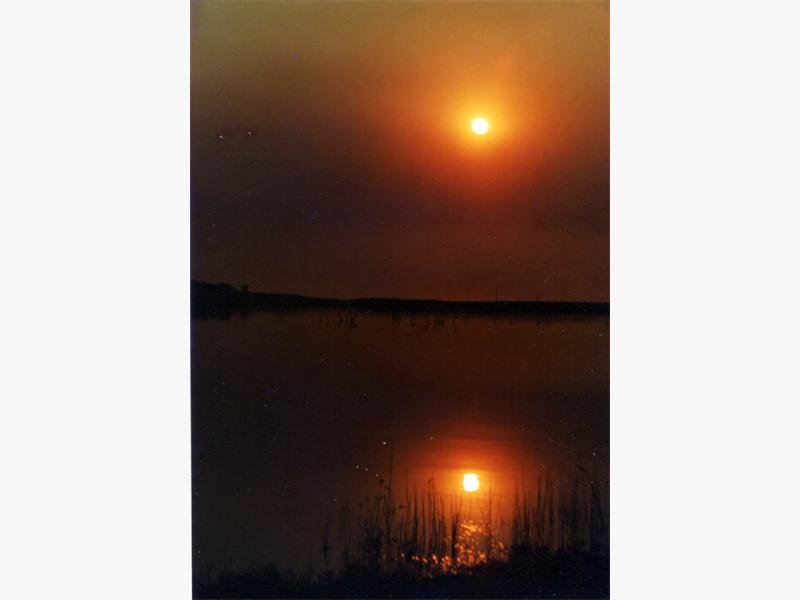
Kariba sunsets need to be experienced to be believed. Watched from our boat tied up in a safe little bay, they were always perfect. Skeins of geese and other waterbirds threaded their way across an ever-changing sky, the soft, pastel colours reflected in the still water. The drowned trees, bone-white by day, turned into gnarled black finger as the sun set and darkness fell. We would light our little paraffin lamps and hang them on the our booms, from where they would cast just enough of a glow to enable us to cook the simple evening meals that tasted so good after a day on the lake. Sometimes, the lamps or a sweep of a torch along the shoreline would show up red crocodile eyes, encircling the bay. Occasionally we heard lions hunting in the distance. Often buffaloes grazing around the boats would wake us and we would sit on deck watching the herd etched against the stars.

It wasn’t only the lake that held special memories for us. The eccentric little town of Kariba was always a welcome sight after five or six days on the water. Facilities aboard Mahala were rudimentary to say the least and hot showers, `proper’ loos, Polly’s famous chicken and mushroom pies and meals at the many lovely lakeside hotels or the country club were real treats. We also enjoyed the reunions with the many friends we had made in the town.
It was fun wandering up to the business centre on `The Heights’, to do our shopping for the next sortie on the lake and to admire the magnificent views. Kariba was a friendly place and shopping was always a sociable activity.
Often driving up to the heights we would have to give way to elephants or troops of baboons. People who lived in the town always made sure their pets were indoors by sunset as leopards were often abroad at night.

While `in port’ our home was a marina at Cutty Sark Hotel. I had lovely memories of sunny breakfasts on deck, watching pied kingfishers hovering and diving for fish. Some evenings we would do sunset cruises to the yacht club for sundowners, then catch the evening breeze home. The town held many attractions but after two or three days it was always good to set sail and wander off again into the blue.
Our lifestyle changed, our boys grew up and Bill and I became more and more hooked on southern Africa’s many wild places. We just didn’t have time for yachting holidays. For some years poor Mahala languished ashore then we found her a new owner and a home on the Vaal Dam, where she is still doing well in regattas.
Still, after all this time, it was lovely to be back in Kariba, reliving all those wonderful memories of our watery holidays. On the surface, nothing much had changed.
Then we started talking to old friends and acquaintances and they had sad stories to tell. Many were packing up and leaving. Others who had looked forward to an idyllic Kariba retirement found themselves trapped by hyper- inflation fuelled poverty and were sinking fast.
Even the tourists had all but left. Going back to Kariba in 2002 reawakened so many happy memories but with Zimbabwe teetering on the edge of chaos, it was a bitter-sweet experience.



