
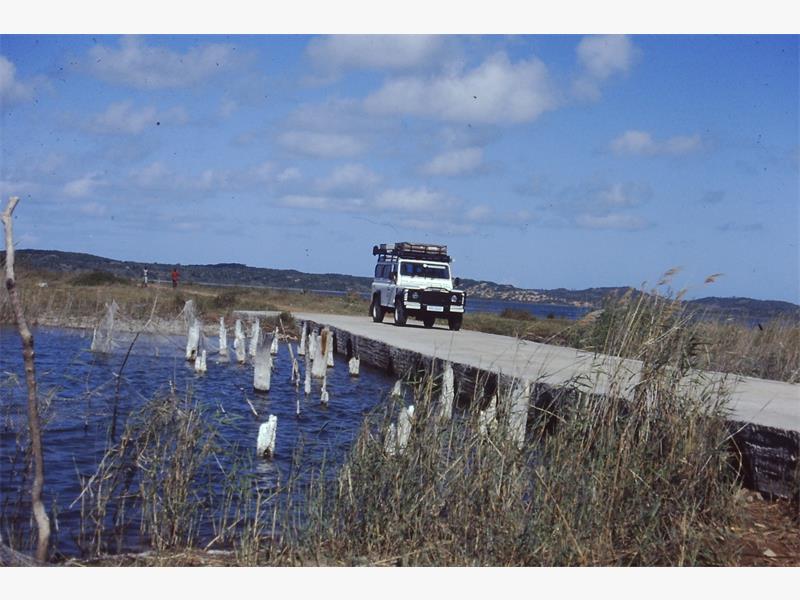
MOZAMBIQUE is all about primary colours – bright yellow sunshine, indigo sea, denim sky and brilliant red earth, all set in lush, emerald green vegetation. Travelling along the main road, heading north through this laid-back tropical paradise of a country, it was like driving along the centre of a multi-coloured African flag. My husband, Bill, who grew up in Zimbabwe, spent many childhood holidays in Beira but I first visited Mozambique in 2002, when we did a meandering two-month camping trip to Tanzania.

As we entered Mozambique from Swaziland via the Namaacha border post, I was enchanted by its foreign feel. It was African, but overlaid with a certain Latin flair. Its stretched-out coastline, much of it magnificently unspoilt, is part of Africa’s eastern seaboard and an ancient international trade route. Many centuries of foreign influence have stamped themselves on Mozambique’s national character. Travelling northward, particularly around Inhambane, we noticed that the Arab influence became more evident, but it is Portugal’s long occupation that has left the most lasting legacy, the country’s lively mix of African and Continental charm.
I also loved its vitality and optimism, industry and the friendliness of its beautiful, gentle people. Then there were its post-card perfect beaches, its tropical seas, its laid-back resorts and all the wild and wonderful places in between. Most of all, I was fascinated by its vibrant cultural diversity. For all its brightness, the country has its dark side – a long history of bloodshed, brutality, slavery and deprivation, culminating in more than 20 years of bitter civil war. When we visited it in 2002, battered buildings, broken infrastructure and the many signs warning travellers not to stray off roads because of land mines were all reminders of that recent war.
For a country that was then emerging from prolonged strife and extreme poverty, its progress was already remarkable. Mozambique’s tourism and other industries were booming. Its towns and cities were being reconstructed and were even expanding. Generally its infrastructure was surprisingly good for a third-world country recovering from years of bitter conflict. Most amazing of all was the lack of bitterness in the people we met and the way they seemed determined to put the war behind them. They were looking joyfully ahead and making the most of their hard-won peace.

It is primarily Mozambique’s beautiful beaches that are rapidly turning Mozambique into an extremely popular holiday destination and although it was interesting from a cultural and environmental point of view, the first part of our journey was mainly a coastal trip to see some of the more popular holiday centres. After we entered the country from Swaziland we paid a quick visit to the capital, Maputo, travelling there along a busy but well-constructed toll road. Though much of the city looked a bit battered, we were surprised to find much construction underway. In one area a veritable millionaire’s row was in the making, with huge mansions popping up like mushrooms.
From there we headed for Praia do Xai-Xai, a pleasant, rather old fashioned beach resort, where we set up our first Mozambique camp under a grove of shady indigenous trees. We woke early, the next morning, to the sound of some-one moving around our campsite. Concerned, Bill peered down from our rooftop tent and was greeted by a young man with a cheery smile, holding a big cardboard box. As he opened it the aroma of freshly baked bread filled the air. We hurried downstairs and bought a still-hot loaf of Mozambique ‘s famous bread (known as pao) and a couple of croissants for breakfast.

What with its lovely seafood, spicy peri-peri dishes and Portuguese specialities, Mozambique has a wonderful national cuisine, but it is the ever-available pao, always freshly made and delicious, that is the food I most associate with Mozambique. From Xai-Xai, it was a short hop to our next beach destination, the Inhambane peninsular. Travelling there, we turned off the main road to take a look at the bleak and beautiful scenery and the fresh lakes – so much a part of the Mozambique coastal plane – around Quissimo.
Back on the main road we started passing through more and more groves of coca-nut palm trees as we approached the Inhambane Peninsular, which turned out to be a really gorgeous place. Inhambane itself, overlooking the bay, was a gracious, rather olde worlde town. Settled by Muslim traders way back in the 16th century and recognised as a Portuguese settlement some two hundred years later, it seemed to have retained many traces of the Arab and Portuguese influences that have shaped much of the country’s history. It was late afternoon when we drove through the town and the pastel buildings seemed to glow in the golden light.

As well as being of historical interest, the Inhambane Peninsular had even then, become something of a tourist Mecca. We have not been back there since 2002 but according to other travellers it is now a major tourist destination and many more resorts have since opened there. When we visited the peninsular we stayed at a well-run establishment at Barra Reef, which offered a range of accommodation options including an attractive camping site. We set up camp in the soft white sand beneath a grove of elegant coconut palms.
Barra Reef was just too beautiful for words . It was travel poster perfect, complete with a snowy-white beach, lazy, perfectly blue sea, waving palm trees and extensive mangrove swamp. The facilities were excellent, too, and included a thatched beach bar, excellent restaurant and a popular dive centre. The resort was almost a cliche but we loved it to bits. Travelling through Africa we are quite prepared to rough it from time to time, but when a bit of luxury comes our way, we make the most of it.
Before heading further north we spent a night at a charming resort at Maxixe, just across the bay from Inhambane. Straddling the main road north, it was a non-nonsense little working town, its main attraction being its busy harbour where we watched the constant flow of ferries and dhows crossing the bay. I believe Maxixe has become more of a tourist centre since then.

It was still early when we reached Vilankulo, another very beautiful seaside resort, so we had a beach picnic brunch their then pushed on to the next major centre, Inhassoro. It was pleasant enough, but a bit disappointing compered to the other lovely places where we had stayed. After a peaceful night there, we packed up early, looking forward to our next adventure.
We’d enjoyed the heavenly beach resorts. Now we were about to visit Beira, Mozambique’s second biggest city and the setting of so many happy holiday memories for Bill. Would the battle-hardened war veteran of a city still retain its holiday charm?



