
THE drought we have gone through this year gives one ample ammunition for pushing indigenous gardens. Quite simply, if it is meant to grow down here it will have survived the dry months far better than if its roots were designed to be in the soil of Europe.
Our own garden, which is almost entirely indigenous, has taken a lot of strain in the drought. There are swathes of dune sand where there was once grass, ground cover and even ferns. Many of the trees (except the strelitzias, and nothing seems to affect them) are looking decidedly unhappy.
This is where indigenous trees come in, because the only exotic trees in the garden, a pair of Australia tree ferns, are also the only trees that have been watered right through winter.
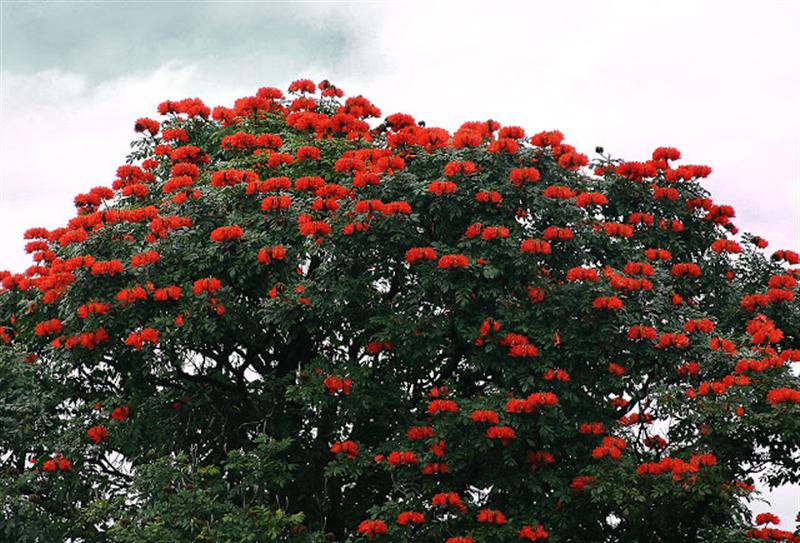
Okay, so I have to confess, we have one other partly exotic tree in the garden apart from the Aussies, and that is a Spathodea campanulata, an African flame tree or a Nandi flame. It’s native to East Africa, creeping southwards, and right through winter it has treated us to a magnificent display of bright red flowers, so it stays (but doesn’t get watered).

Next week, from Monday, September 1, is National Arbor Week, a week for planting and nurturing indigenous trees.
This year’s National Trees of the Year are, common tree, the Heteropyxis natalensis or lavender tree (several Zulu names) which, as the name should tell you, is very much indigenous down here, and the rare or uncommon tree is the Vepris lanceolata or white ironwood, umZane in Zulu, another tree indigenous to our area.
The idea now is to go out and buy one or more of these trees and plant them, in your garden, in your community, in someone else’s community, just plant them.
Staying with things indigenous, the property, that’s all the landscaping and gardens, of the San Lameer Golf Estate between Margate and Port Edward has won two prestigious awards from the South African Landscape Institute.
They are a Gold Award and the Trophy of Excellence Award for the Top Achiever for San Lameer, and that’s out of scores of entries from environmental projects to golf estates around the country.
The awards went to Ben Roberts of Leitch Landscapes, who is responsible for San Lameer looking the way it does and for being able to describe itself as a true eco-estate.
Ben told me, “It is all to do with how we manage our environment here at San Lameer while maintaining an aesthetically pleasing product for our client. It includes how and why we burn, how we deal with alien invaders, our composting programme and the fact we make our own compost, how and when or why we water, that is irrigation systems with rain sensors, our replacement programme of exotic plants with indigenous plants and so on”.
Well done Ben and San Lameer. Cheers!
PS: Meanwhile we’ve had about 30mm of rain, thank you, thank you!
Sources: Trees of Natal, Zululand & Transkei, Elsa Pooley, NFPT, Durban, 1993, and Trees & Shrubs of East Africa, Najma Dharani, Struik, Cape Town, 2002.
I



