TO me, Zambians are the ‘cool dudes’ of Africa – urbane, laid-back, stylish and sophisticated. A rather dry sense of humour seems to be a national trait and they always have a ready smile for strangers.
I’d met – and really liked – quite a few Zambians before visiting their country and my high opinion of them was confirmed when we did a bit of travelling there. As for Zambia itself, I didn’t really know what to expect when we ventured there in 2002. My experience of this intriguing central Africa country was a short walk across the border, many years ago, to view Victoria Falls from the Zambian side.
Our 2002 experiences there left us most impressed. The population of Zambia is highly urbanised. More than 60 percent of the people live in towns and cities. This has left the countryside – well, the bits we saw – generally very empty and much of the natural vegetation remained intact.
It was in Zambia that we discovered a particularly lovely `soul place’, for want of a better word, the South Luangwa National Park. What I call a soul place is a place that is literally good for the soul, nourishing its need for beautify, variety, serenity and bliss. It lives on in memories that can be conjured up at will. South Luangwa fitted the bill perfectly.
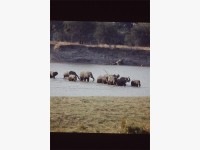
We drove to the park from Malawi, entering Zambia at the duty little town of Chipata, from where the potholed tar road deteriorated rapidly. Eventually the tar gave way completely and became a reasonable if dusty and occasionally corrugated gravel road.. It was getting late by the time we reached Flatdogs, a camp next to the park’s main gates. It was a big, busy camp, a favourite with the overlanders, boasting a bar and restaurant, chalets and a large, busy camping area with good ablution blocks. As we arrived at our campsite, a shady spot under a tree, one of the park attendants pointed to the river where a big breeding herd of elephants was crossing towards the bank where we were putting up our tent. “They cross here every day,” she said.
We watched as the elephants forged their way through the deep water, when necessary using their trunks as snorkels, the big matriarch leading the way. The babies were herded into the centre of the group, the adults occasionally lending them a helping trunk. All the campers stood watching them in wonder as they clambered up the bank then threaded their way confidently through the tents to the thick bush beyond the camp.
We liked vibey Flatdogs but the next morning we took at look at the Wildlife Society Camp and decided to move to this quieter, pretty, well-equipped resort. It really was a slice of heaven. After we’d set up out tent under a shady tree overlooking the river, we could almost have stopped travelling and stayed put there for the rest of our holiday.
Park entry fees for South Luangwe were pretty steep but we discovered that a day pass was valid for 24 hours. We spent one perfect afternoon and the next perfect morning in the park. South Luangwa is famous for its leopards but we were unlucky and didn’t see any of the cats, However, the general game viewing was excellent, with lovely sightings of big herds of elephant, buffalo and the unusual puku antelope plus plenty of other smaller creatures. The birding was simply incredible and the park was scenically beautiful, with dense woodlands, lush riverine bush and large, game-rich grassy areas.
The wilderness experience continued after we left the park. The dense natural vegetation around the camp offered plenty of good game viewing and the camp was was perched on the edge of the Luangwe River, bordering the park. Wild animals wandered into the camp and elephants tiptoed around snoozing campers at night. My favourite South Luangwe birding memory was of the African skimmers, mirrored by the water as they glided along the river, scooping up their supper, every evening.
We took a walk through the friendly village near the camp and were pleased to see good craft shops and other tourism-related small businesses springing up. We were happy to see tourism dollars boosting a small, rural community.
Eventually, we were really sad to leave South Luangwa – and sad to say goodbye to many of our fellow campers. It is amazing how quickly friendships form when you are on the road.
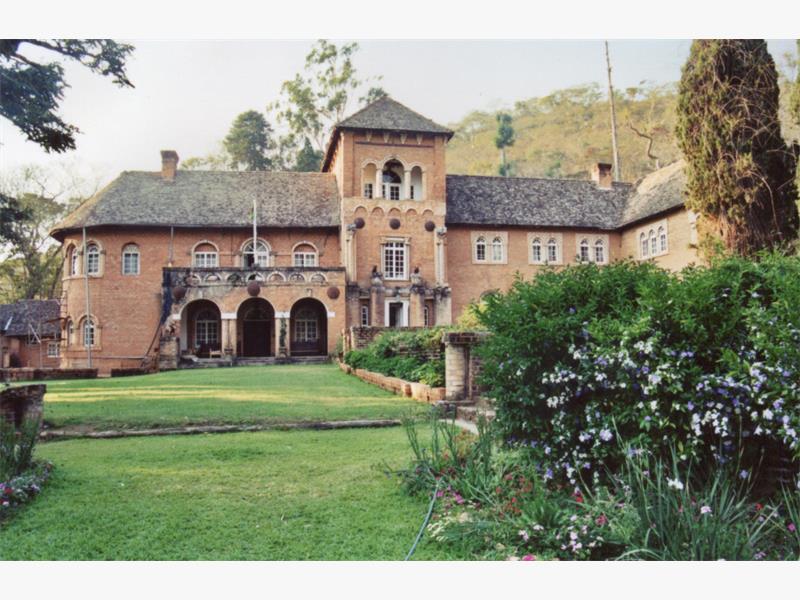
After returning to Malawi to completed the Malawian chapter of our journey, we drove into Tanzania. It was only on our return journey that we ventured back into Zambia and saw a bit more of a country that had already earned our admiration.The last section of road leading to the border between Tanzania and Zambia was pretty bone-jarring but it improved dramatically after we crossed into Zambia and we found ourselves driving on a good tarred through mile after mile of almost untouched brachystegia woodland. That night we camped at an amazing place and one that I’d long wanted to see. Shiwa Nganda, near Mpika, was the strangely English estate of Stewart Gore-Brown who had built himself an amazing red-brick home, part Tuscan villa, part English manor house, on this piece of untamed Africa he initially described as so magical he felt he’d entered a fairy kingdom.
The house, the estate and their owner are the subjects of Christina Lamb’s fascinating book called Africa House, which we’d both read and loved. Shiwa Nganda lived up to the magical, romantic image conjured up in the book and it proved to be a very special place.
Leaving the next morning we stopped to gaze at the lake, ‘Shiwa Nganda, meaning lake of the crocodile, after which the estate was found. It was as beautiful as the book had described it, a purple-blue jewel set in the copper-gold brachystegia woodland, the lovely scene encircled by low blue hills.
Heading south along the Great North Road, through the magnificent, empty Zambian country, we decided that guide books did not do the country justice. Nothing had prepared us for for all this stunning scenery. We soon began to encounter the numerous police road blocks we’d heard about. Our vehicle was usually pulled aside but we soon realised the polite and friendly officers were simply curious and were stopping us for a chat.
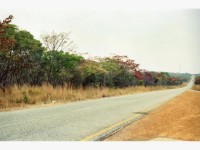
After Mpika the countryside seemed virtually empty of people and we travelled for hours through a coppery tunnel of brachystegia trees, revelling in the panorama of unspoilt nature.
At the slightly tatty but bustling town of Kapiri Mposhi, where our road joined the road to the Copper Belt, we experienced something of a cultural shock – so many people after all that splendid solitude. We passed through Kabwe, another busy centre, and soon found ourselves in the rather slummy outskirts of the capital, Lusaka. The city itself was a surprise, modern and attractive, with wide, tree-lined streets. It reminded me of Zimbabwe’s beautiful capital, Harare. We didn’t linger in the city. Instead we made for Eureka Farm, just 7km out of town and a pleasant, rustic oasis for travellers. After a pleasant night there,we set off to explore the city and to find the Landrover agency as our vehicle was in need of a service.The efficient mechanics gave our poor, hardworking Landy the pampering she needed then we found a little pavement restaurant where we enjoyed a pizza lunch before setting off on the next leg of our journey.
It was a hot day and the countryside was brittle and dry, but, wow, the scenery was spectacular as we descended into the magnificent Zambezi Valley. I know the valley from the Zimbabwe side but the Zambian side is unbelievably beautiful. Eventually the Kariba dam wall came into view and we crossed back over the Zambezi river into Zimbabwe and back into southern Africa, our home region.
We spent a few nights in Kariba then went to magical Mana Pools for a week. This amazing National Park is situated on the Zimbabwean side of the Zambezi River, downstream from the dam wall. From our camp we could look across the water into Zambia. We’d only seen a small slices of this grand African country but it had surprised and delighted us with its incredible beauty. We vowed that someday we’d be back to see more of this bright land, but, sadly,the rest of Zambia is still on our ever-growing ‘to do list’.