
IT had been a while since we’d spent time in a wild place so when we were invited to a wedding in Richards Bay recently we decided to combine it with a short camping trip to explore a bit of our wonderful iSimangaliso Wetland Park.
This World Heritage Site – it earned this well-deserved status in 1999 – is a South African treasure that I believe is generally undervalued by South African travellers and nature lovers. Formerly known as the Greater St Lucia Wetland Park, its new name means `a marvel’ in Zulu and it is a fitting name for this truly marvellous park, a massive green, swampy wonderland on the northern coastal plane of KwaZulu-Natal.

The park stretches all the way from the southern end of the St Lucia Estuary northward to Mozambique. In the near future, this extensive complex should be part of an even greater conservation initiative, a peace park that will be known as the Ponta do Oura-Kosi Bay Transfrontier Conservation area, shared between South Africa, Mozambique and Swaziland.
Already it is a huge and varied patchwork of wilderness. It is about 328 000 hectares in size, making it South Africa’s third largest conservation area. Formally conserved sections of the greater park include St Lucia Game Reserve, False Bay Park, St Lucia Marine Reserve, Sodwana Bay National Park, Maputaland Marine Reserve, Cape Vidal, Ozabeni, Mfabeni, Tewate Wilderness Area and Mkuze Game Reserve.

It also encompasses an amazing variety of different eco-systems, including the massive estuarine lake, its lush eastern and drier, fossil-rich western shores, 280km of pristine, dune-lined coastline and adjoining marine reserve and the vast Mkuze Swamps. Here can also be found inland lakes, some really lovely rivers, grassy planes, mangroves, soggy wetlands, dune, coastal and riverine forests, savannah, thornveld and even mountains.
The sand dunes that line the pristine shore are natural works of art, some 30 000 years in the making. They are the highest vegetated dunes in Africa, some of them exceeding 180m in height. On the harsh, wind-battered seaward side, the vegetation is stunted and scrubby but the hardwood trees in the magnificent climax forest sheltering behind the dunes can reach 20m in height.
The wide variety of habitats within the park boundaries sustains am interesting mix of fauna and flora. Mammals found within the park include elephant, hippopotamus, leopard, black and white rhino, many antelope species, buffalo, whales, dolphins and a host of smaller creatures.

Once a year a little miracle occurs along iSimangaliso’s magnificent shoreline. About 500 loggerhead and 150 leatherback turtles come ashore to the place where they were born, to continue their circle of life by laying their eggs on their natal beaches. Then there are the coral reefs and the amazingly diverse marine life that make the coastal resorts within the park magnets for anglers and divers.
Birders, too, have plenty to chirp about. As can be imagined, this kaleidoscope of habitats make it a twitcher’s heaven – and a paradise for flower people and anyone inclined to hug trees.
Central to this natural wonderland is the estuary itself. Some two million years ago sea levels started to drop, forming this, the largest estuarine lake in the world. Since then this ever-changing body of water has been played upon by rising and dropping sea levels, wind and river erosion, drought and other meteorological events. These geological dramas included Cyclone Demoina that, in 1984, caused massive flooding. And, of course, the hand of man. Good news for the estuary is that many thirsty timber plantations in the area have been cut down and the cleared land is being rehabilitated.

Lake St Lucia is 85km in length and is fairly shallow. Many rivers bring fresh water into the lake and it empties into the sea via a narrow passage. It teems with life, acting as a fish nursery and providing an ideal environment for thousands of hippo and crocodiles, 114 species of fish and an impressive 526 species of birds.
As befits a world Heritage Site there are plenty of amenities for the thousands of visitors who seek out iSimangaliso Wetland Park every year. There are shops, restaurants, craft markets and a good mix of accommodation in and around the pleasant town of St Lucia. Visitors can also stay at various private resorts and lodges bordering the conserved areas or in the comfortable rest camps in the various game reserves that make up the complex.

As well as diving, fishing, bird watching, hiking and game viewing there are some unusual eco-adventure options like whale watching, turtle tours, wetland tours, kayaking, and horse riding.
We had something a little different in mind. While the main thrust of our short visit to the park was a visit to Mkuze, one of the reserves within the iSimagaliso complex, we were looking forward to trying out a recently opened road along a section of Lake St Lucia’s western shores, from the Dukuduku gate near the town of St Lucia to Charters Creek. We love the road and the rehabilitated area along the eastern shores road from St Lucia to Cape Vidal, so we had great expectations for this new, more inland route.
Our expectations were more than met. Our plan was to leave our home on the South Coast before dawn and to get to Charter’s Creek for a late breakfast before back-tracking a short way, leaving the park boundaries and driving to Mkuze via the N2, the town of Hluhluwe and the R22. We thought we’d reach Mkuze early in the afternoon but the new route was so fantastic we spent virtually the whole day exploring the area, only reaching Mkuze late afternoon.
We got to Dukuduku gate at around 9am. When we booked into the park, the staff proved most helpful, offering us plenty of information, advice and an excellent map of the iSimangaliso complex. Soon after driving through the gates we found ourselves wandering through a beautiful landscape of lush, marshy grasslands, dotted with bird-filled patches of swamp forest and sparkling little water courses and ponds. There was an abundance of game , big herds of giraffe a couple of muddy warthogs, shy zebra mingling with their wildebeest friends and a couple of lovely small groups of kudu and nyala.

We took a short coffee break at the attractive uBhejane picnic site then drove along a swampy little network of roads to the magnificent kuMgadankawu boardwalk and hide. Situated in a beautiful, bird-filled patch of lush swamp forest, the attractive boardwalk offered incredible views of the lake, surrounding swamps and pans, the massive dunes forming a striking backdrop . For the entire time that we lingered at this stunning little spot, the incessant calls of fish eagles and trumpeter hornbills provided an uplifting sound track.
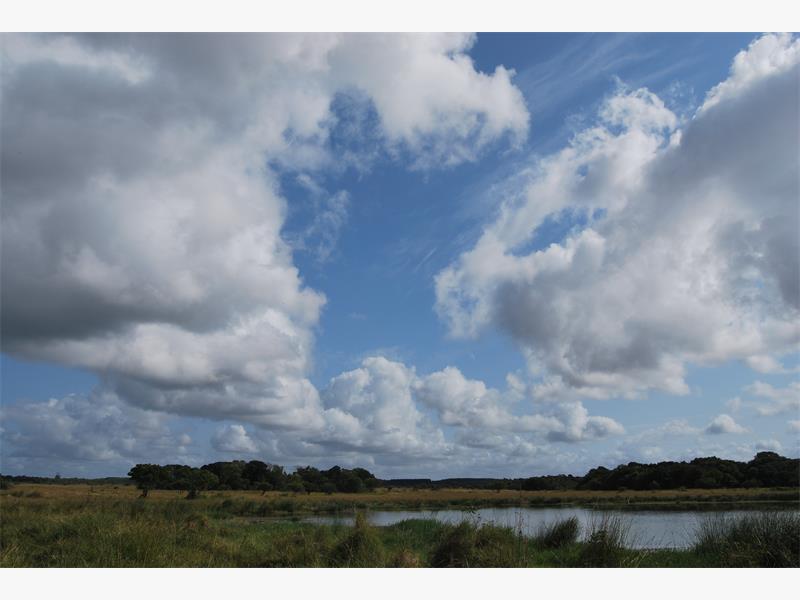
We were more than ready for a late picnic lunch next to the lake by the time we reached the no-frills little picnic spot at Charter’s Creek and, if the facilities weren’t first class the view, of the pale blue lake reflecting the passing fluffy clouds, and the lush green setting just couldn’t be beaten.

It was a slow back road to Mkuze and it was quiet late by the time we’d booked in and set up our camp. We’d had an early start to our action packed day and we were feeling a little weary but the wonderful time we’d had, coupled with the knowledge that we were back in such a beloved place left us feeling exhilarated.



