ONGELUKSNEK? I thought I’d laid that ghost to rest some time ago, but somehow it still bounces back to scare me.
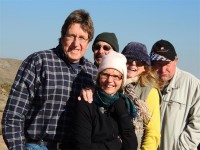
Like a couple of weeks ago when Bill and I and a group of friends spent three chilly but wonderful nights in the little lodge in the Eastern Cape’s Ongeluksnek Nature Reserve, at the foot of this scary pass. We left the South Coast early in the morning and arrived at the lodge about four hours later, having stopped for a late and scenic picnic breakfast, somewhere between the reserve and Matatiele.
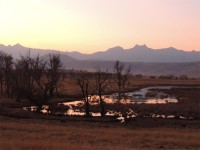
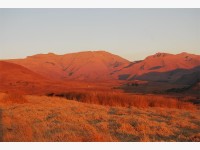
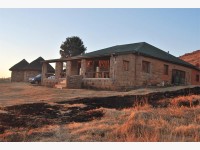
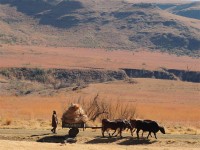
The lodge was lovely, with comfortably furnished bedrooms, a large, well equipped kitchen and a lovely big fireplace in the roomy living area. It was also beautifully situated with a view of the mountains and the wintry landscape of copper, bronze and gold.
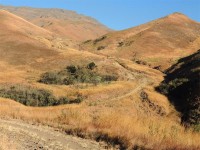
It was much warmer than we’d expected and we soaked up the sun, the mountain air and the gorgeous views from the sheltered verandah. In the afternoon we all took a walk along the road we would be travelling the next day. It runs through the reserve to the South African police post where it transforms itself into the spooky Ongeluksnek pass into Lesotho.
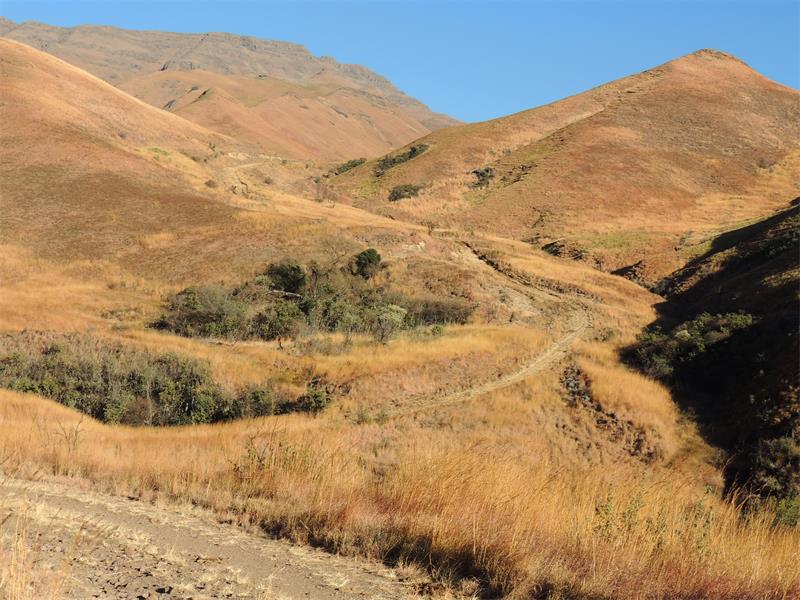
Ongeluksnek – roughly translated as accident saddle – is the most westerly of the three Eastern Cape border posts into Lesotho that are accessible from the town of Matatiele. The pass is also usually the worst of the three roads into the mountain kingdom. Although conditions vary it has a mean streak and can be very nasty, indeed.
Perhaps its bad attitude is because it is haunted by the ghost of the Griqua accident victim whose death is said to have given this saddle through the mountain its sinister name. His grave is still there, under a bridge somewhere, or so I have been told. Perhaps though the derivation of this name is less dramatic. I have also heard that it was named Ongeluksnek because the pass was discovered by accident.
Whatever the origin of its name it was the gateway to their ‘promised land’, the Matatiele and Kokstad area, when a group of Griqua pioneers, under the leadership of Adam Kok, trekked there from Philippolis in the Free State, in the 1860s.
A harsh gateway, to be sure, and what hardships those travellers must have endured as they struggled through the rugged, mountainous terrain of Lesotho to reach the pleasant East Griqualand plains.
I first encountered the saddle of the accident many years ago, on a journey home from the western part of South Africa, when Bill came up with one of his notorious short cut ideas.
Instead of going round Lesotho and home via Harrismith and the boring N2 freeway, why don’t we head for the Free State town of Zastron, spend the might there and take a short cut through Lesotho the next day?
We were travelling in a 2×4 bakkie but Bill assured me it would be fine.
It wasn’t really fine at all. It was incredibly scary. I was horrified when we reached the top of the pass and even Bill was a little quiet.
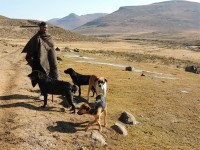
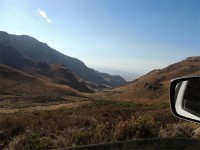
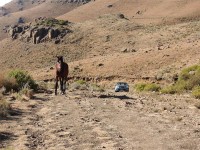
I helpfully pointed out that Ongeluksnek Pass was not a road. It was a donga, a horse trail – and, look, even the horse just ahead of us was scrabbling and struggling over the rocky path. Ignoring my consternation, Bill slowly – very slowly – and bumpily, steered our vehicle down the saddle of the accident. Behind us, when we looked back, the wall of mountains was covered with snow, but I was far too scared to appreciate the beauty.
So much for Ongeluksnek – been there, done that, tick it off and don’t ever try it again. Or so I thought, Then, after acquiring a surefooted 4×4, Bill somehow talked me into trying it out again. I must admit that the road had improved and going up the pass was not too frightening.
We tried it again, with some friends. It had improved some more and our friends didn’t know what all the fuss was about. It was a beautiful route, too. And the ghost of Ongeluksnek had been firmly banished – or so I thought.
By now rather blasé about Ongeluksnek, we were part of a group of 12 vehicles that ventured up the pass a couple of years ago. It was drizzling when we reached the bottom of the pass and thunder rumbled in the mountains above us. Still the weather did not look too ominous and we decided to give the fair-weather-only pass a try.
We never reached the top. We all turned around, muddy and drenched, and literally slid down to the bottom of the pass in the now pouring rain. So much for the vanquished Ongeluks ghost. Then, just two years ago we tried it again, on a beautiful sunny day. The sky was a perfect blue, the pass was lush and green and when we reached the top of the pass, Lesotho was at its luscious summer best. Going up the pass was a cinch!
But, no, I wisely decided that this time, I was not going to say I’d finally laid to rest the ghost of the nek of the accident. It was a wise decision. By the time we tried it again with our friends on our most recent trip, Ongeluksnek had turned nasty again. Bill and I were travelling in our 4×4 and Steve, Daleen, Yvonne and Klasi, in a 2×4 Isuzu. We weren’t sure if a 2×4 would make it but we wanted to give it a try.
As the road got rockier and steeper and more deeply rutted – and sometimes seemed to disappear completely – we kept on expecting 2×4 driver Steve to signal to us that we should turn back. But no, he slowly, patiently steered and cajoled his vehicle higher and higher and higher until he crested the pass. Bill and I weren’t in the Isuzu of course but I believe the other occupants were very, very quiet and they were all rather pale by the time Steve had conquered the saddle of the accident. By then his passengers had changed his name to Sarel!
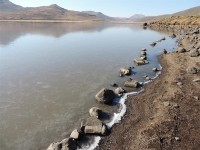
It was absolutely freezing at the top of the pass and we hurried to Lake Letsie to find a sunny, sheltered breakfast spot. I was looking forward to seeing Lake Letsie again. The pretty expanse of water and the extensive wetlands surrounding it have been declared a Ramsar site and, as well as being very beautiful, the area is a magnet for water birds.
Not this time, though. When we reached the lake I was puzzled to see very few water birds on the shore. Then I realised why. The whole lake was frozen solid.
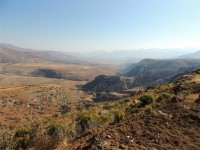
After breakfast we set off again and soon reached the main, tarred road that weaves its way through the dramatic Lesotho mountain scenery to Qacha’s Nek. The road is good but it is a busy one, passing through many villages and some fairly built-up urban areas. However, you always seem to forget just what a wonderful route it is and once again the dramatic scenery took us by surprise. Lesotho is just such a magnificent place, as all our fellow travellers agreed.
What with all the stops to admire the views and to take photographs, it took us most of the day to reached Qacha’s Nek and then to negotiate the slow, very bumpy road back to Matatiele.
From there we took it slowly, driving through the wintry countryside, painted gold by the setting sun, and admiring the wonderful views of the southern Drakensberg. After a short and final break next to a river, to enjoy a quiet and well-deserved sundowner, we drove the last stretch home.
It was good to be back in the in the comfy little lodge, our paraffin lamps lit and a big fire in the grate. We had a quick supper in front of the fire then, not surprisingly, all retired to bed early.
It had been such an adventurous day – and maybe – just maybe – the Ongeluksnek ghost had been finally laid to rest.