FOR Bill and me and our fellow adventurers, our expedition into Lesotho via the notorious Ongeluksnek pass – as described last week – was one of the main objectives of our stay in Ongeluksnek Nature Resesrve.
It wasn’t our only objective, though. We also wanted to explore the nature reserve, and see some of the places of interest in the surrounding area. The reserve is well worth exploring. It is beautifully situated, below the South African police post at the start of Ongeluksnek Pass, and offers wonderful scenery and some interesting birding.
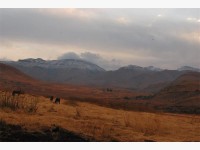
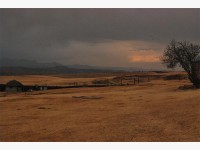
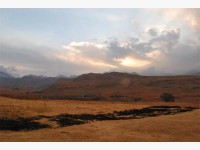
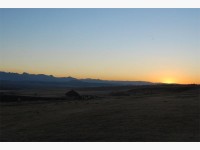
Another mission was to find the bush camp that had apparently only recently been completed.We’d decided to devote the Saturday morning to these explorations so, once again, we were up bright and early and ready for adventure. Bright and early was a good time to be up and about. The scenic setting of the reserve’s comfortable lodge was enhanced by a beautiful sunrise, which painted the mountains and the grassy valleys vivid oranges and reds. The mountains are beautiful in summer when they are lush and green but, oh, these wintry landscapes are incredible, too.
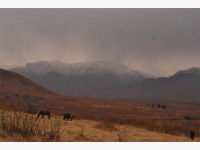
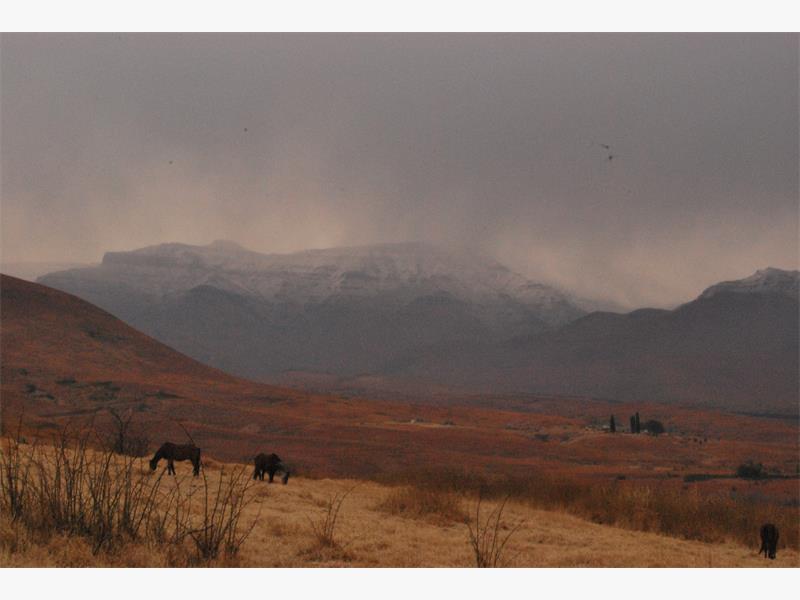
Bill and I took a little walk around the lodge, talking to the reserve’s horses and donkeys that were grazing in the veld next to the lodge, They’d been there all night – we could hear them chomping and clomping around from our bedroom – so they were probably quite chilly but they were friendly and didn’t seem to object to our presence. Like us, they seemed to be enjoying the weak sunshine and the beauty of the crisp winter morning.
Soon our friends were up and about as well and we were all ready to go. We never did find the bush camp but we had a wonderful time trying to find it. This incredible reserve in the rolling foothills of the southern Drakensberg is wonderful to explore and it also offered crisp, clear views of the ‘Barrier of Spears’.
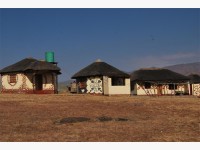
We did however, find the attractive little collection of boma and chalets that is an overnight stop on the four-day Mehloding Adventure Trail. This community-owned trail, from the Ongeluksnek area to the Qacha’s Nek region takes hikers through various little villages and gives them a chance to see a lesser known section of the Drakensberg area. It sounds very interesting.
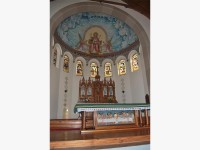
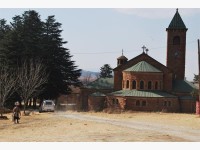
We also took a look at the Mariazell Mission, a fascinating and substantial-sized sanctuary, its beautiful old stone buildings nestling in the shadow of the Drakensberg. This attractive Roman Catholic mission station was built in 1904 as a satellite to the more central and better known Marianhill Monastery.
It is a rather self-sufficient place. We started off by visiting the workshops and having a look at the hydro electric system, which makes use of a fairly small stream to provide a constant supply of electricity to the whole mission station.
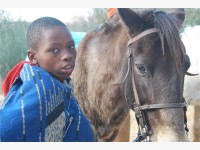
When we arrived there was quite a crowd of people, many of them wearing the traditional Basotho blankets, waiting with their donkeys, horses and oxen to have their mielies ground.
A number of dogs had accompanied their owners. They were amazingly well behaved, stretched out in the sunshine and patiently waiting for their owners to finish their business. There was absolutely no aggression between the different dogs and they were all incredibly obedient. One little whistle from their owners and they would immediately come to heel.
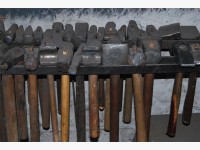
The hard-working mill was installed in the cavernous old stone building that also housed a working and well-equipped blacksmith’s shop. The resident blacksmith opened it for us and kindly showed us around.
We then drove to the mission itself, a lovely, peaceful place – mission stations always have such a special tranquility about them – with a magnificent stone church surrounded by neat gardens and attractive old stone buildings. Beyond these building is the school that is attached to the mission. Although it was school holidays, a group of pupils had just completed a winter school programme and were packed up and waiting for their transport to go home. A teacher kindly showed us around the school and she proudly informed us that many successful people, including Albertina Sisulu and Patrick Lekota were alma maters. The school, has an excellent name and is considered one of the best high schools in that area.
We did a little more searching for the illusive bush camp, then gave up, found a sheltered spot and cooked ourselves an outdoor brunch, made even more delicious by our lovely surrounds.The wind was picking up by then and the temperature was starting to drop.
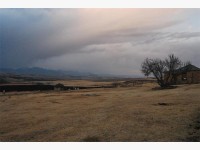
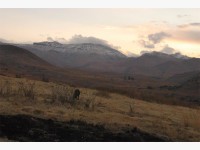
It was decidedly colder by the time were returned to the lodge. Bill and I felt like a walk so we wrapped up warmly and did a bit of exploring of the area on foot. Returning to the lodge after an invigorating ramble, we noticed a big bank of clouds rolling in over the mountains. The clouds got heavier looking and dropped onto the surrounding mountain tops. When we looked carefully, we realised that we were watching a snow storm. When the clouds cleared a little we saw that the mountain tops were covered with snow.
It was pretty cold that night and we were all very grateful for the cosy lodge, its big fire and our delicious supper. Early next morning we were treated to another beautiful sunrise but this time the red mountains were made even more beautiful by their dusting of snow. It was so very beautiful but the beauty was fleeting. Not long after the sun gained some heat the snow had all melted away.
By then, we’d all had our breakfast and were packed up and ready to go. The long weekend had gone far too quickly. Driving back to Matatiele and the main road leading homeward, the crisp morning air showed up the views of the Drakensberg to perfection.
And just before we reached the main road we were lucky to encounter one of the biggest flocks of grey crowned cranes I have ever seen. They were in a field next to the road but they suddenly took off en masse and gave us a farewell fly-past. Perhaps it was their way of reminding us that Ongeluksnek Nature Reserve is definitely worth a return visit.