
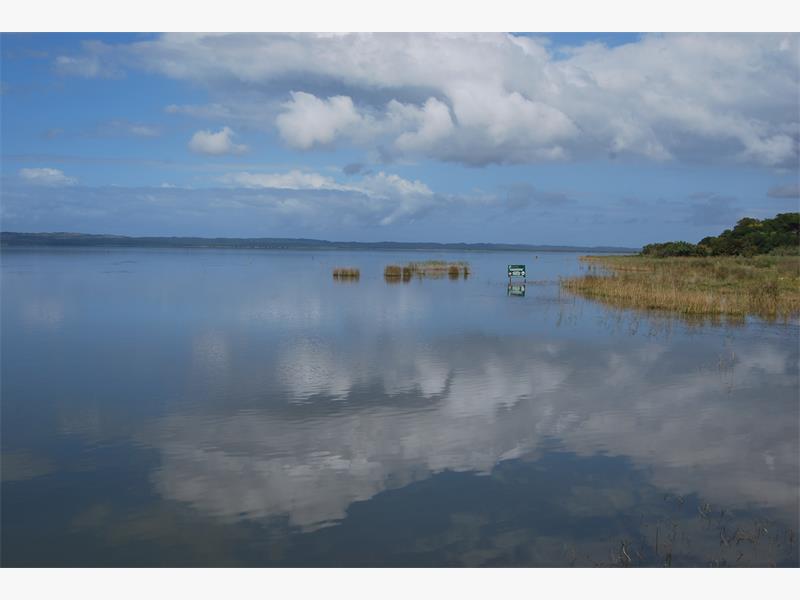
NOT everyone gets excited about the discover of a new moth, but lepidopterists are over the moon about two new moths found in the iSimangaliso Wetland Park in northern KZN.
It is exciting because they are monkey moths, part of the family Eupterotidae, moths known for their hairy bodies, and they have been named, rather grandly I think, Stenoglene perissinottoi and Stenoglene clucki (Renzo Perissinotto is the moth project leader). Apparently a further seven potential new species are being investigated, making the park something of a moth-finder’s delight.
The iSimangaliso Wetland Park was South Africa’s first World Heritage Site, declared back in 1999 after South Africa rejoined UNESCO.
It is a centre of remarkable biodiversity and its success is particularly exciting as the area was ear-marked for heavy metals dune mining back in the 1980s and 90s.

From fresh moths to fresh organic fruit and veggies. We have discovered a new source of naturally produced (read ‘organic’), fruit and vegetables in Ramsgate.
They are grown by the Kumnandi Community Fresh Produce Co-operative, a grouping of small scale black farmers in the rural areas of the lower South Coast.
They really are fresh too. We think just about everything we bought last Saturday morning had been picked that morning and that included all the usual fruit and vegetables you’d expect on a farm stall, but also things like basil, rocket, crinkly lettuce and red onions.
They are at the Ramsgate Town Hall just up Glenmarkie Road (marked) off the old coastal road between the Southbroom traffic lights and the Ramsgate shops until 11am on Saturdays and they really do deserve our support.
And finally those errant cats again.
A while back I wrote about a study conducted in the United States which said that feral and domestic cats together were responsible for killing billions of animals every year.
The study showed that America’s huge cat population was killing about 25-billion birds and mammals every year.
Well, there follows a report from Australia, which says that feral cats, and presumably domestic cats too, pose a threat to more than 100 of that country’s native animals.

The perhaps 20-million feral cats in Australia are killing nearly 30-billion animals a year and have already been responsible for driving to extinction no fewer than 28 species over the past 100 years.
Among the Australian indigenous species that have disappeared forever because of the cats are various species of bilbies, bandicoots, bettongs, potoroos and wallabies and many other small mammals, birds and lizards.
The first mammals with the very Australian names are all marsupials and mostly desert dwellers, small relatives of the more famous kangaroo.
This story certainly serves to illustrate the horrors of introduced alien species and what can happen, whether they are flora or fauna species. As the American experts said in that earlier report, you can help just a little by putting a bell on your moggie, he or she might even enjoy the attention it brings. Cheers!
Source: The Cape Times.




