
ALMOST immediately after leaving our home on the KwaZulu-Natal South Coast, heading to the mountains for a twelve-day holiday, we started to gain altitude. Our coastal plain is narrow. Moving inland our province rises rapidly to meet the Drakensberg, the huge chain of mountains that forms the eastern section of South Africa’s great escarpment.
We had the use of a cottage in the Champagne Valley for a week and we were going to sandwich it between two little camps. Our mountain meander would start with two nights under canvas at Spioenkop Nature Reserve. After a leisurely week of luxury in the cottage we’d round off the holiday with two nights at Highmoor, one of mountain resorts within the uKhahlamba-Drakensberg Park, a huge slice of mountain Wilderness preserved as a world Heritage site.
Heading north on the N2 we soon found ourselves in the KwaZulu-Natal Midlands, a gentle place of pretty farmlands, undulating grasslands, vleis and green hills. Already we’d left the muggy coastal humidity behind us and the air had acquired the crisp tang we associate with higher altitudes. After the turn-off to Estcourt we left the N3 and proceeded along the R74 towards Winterton. It was late summer and as we headed into the scenic Drakensberg foothills the countryside was an unbelievably vivid green. Pastel spring, emerald summer, rusty autumn or stark, tawny winter – all seasons in the mountains are beautiful and all have their special charms.

At Winterton we turned north onto the R600, the exceptionally pretty country road leading to Spioenkop Dam and Nature Reserve. The air was crisp and clear so we had a stunning view of the distant Drakensberg mountains. Adding to our enjoyment of the drive were the Amur falcons, large flocks of these charming little raptors perched companionably together all along the telephone lines.
Some time during our mountain meander we were planning to spend an evening at an Amur falcon roosting site in Mooi River – but more about that later.
It was late afternoon by the time the efficient and friendly Ezemvelo KZN Wildlife staff members had booked us into the nature reserve. We drove down to the camping area to choose a spot. There were actually two roomy camping areas but, with only a couple of other guests visiting the reserve at that time, the one side was closed. The reserve is a popular spot for fishermen, boating enthusiasts and outdoor families and I should imagine both camping areas could be pretty full at times.
There were more than enough shady and attractive sites available and we chose one with a lovely view of the dam.
As we’d only been able to spare two nights at this delightful, camper-friendly little spot, we had just one full day to explore it, but we did manage to cram a great deal into our Spioenkop day. With the area experiencing a bit of a heatwave we set off early to take a look at the reserve and to do a bit of game viewing before it became too hot.

Spioenkop isn’t grand in the sense of our wild and wonderful Kruger National Park and its ilk but it is an absolutely delightful little piece of wilderness, a narrow strip of rolling thornveld, typical of the northern KwaZulu-Natal landscape, set around the sparkling dam, with lovely views of the nearby mountains.
The sweet thorns (Acacia karroo), the dominant trees in the Spioenkop area, were covered in their bright yellow pompom flowers. Not quite as showy as the sweet thorns, the paperback acacias (Acacia Sieberana) also deserved a bit of attention. With their spongy-looking papery bark, they are striking trees and are real bird magnets. Summer being the season of plenty, the rivers and streams were flowing well and the grasslands and boggy wetlands were green and lush.
We spent a couple of happy hours exploring the reserve and were most impressed with the scenery, the birding and the game viewing. It is always good to see big herds of eland, those huge, ghostly, rather mystical antelope that feature so much in San rock art. There were also plenty of impala, red hartebeest, zebra, quite a few steppe buzzards – another interesting species that only stays for summer – and a lone jackal.
Even in our camp the birding was good and there was always quite a bit of assorted game strolling around at any one time.
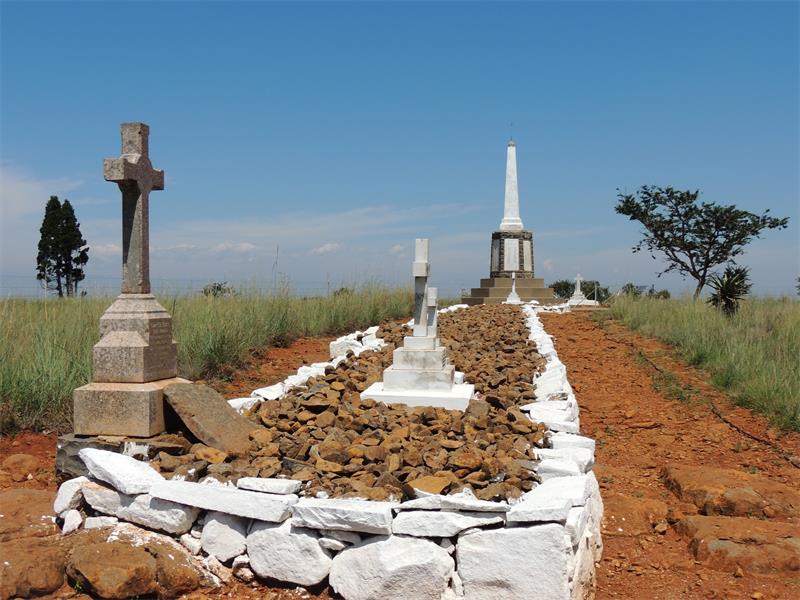
Back in camp after our game viewing, we had a late breakfast then headed out of the reserve to take a look at the Spioenkop battle site. One of the highest hills in the area, Spioenkop offers beautiful views of the surrounding terrain. It is peaceful and pretty – and yet, visiting this hauntingly sad spot, you cannot but be aware of the blood-soaked soil beneath the waving grass.

This lofty spot was the site of one of the major battles during the Second Anglo-Boer War. It took place in January 1900 during the siege of Ladysmith when the British were trying to break through the defensive Boer line along the Tugela River to relieve the town.
The clash saw 1 550 men killed, wounded or taken prisoner. The Boers, under General Louis Botha, had managed to foil a surprise attack by the British and only lost 230 men.
With its monuments, headstones, pathways and neatly delineated mass graves, it is all so tidy and orderly now, up there on the top of Spioenkop, and it is hard to imagine the post-battle carnage and chaos.
An immensely sad illustration on a monument gives an inkling of the horror of that senseless, useless war. It shows a trench filled with bodies awaiting burial. Dumped into the trench, the bodies look like discarded rag dolls yet once they were living, breathing, dreaming young men.
It was interesting to see the battle site but the horror of the fighting still seemed to linger like a sort of cosmic echo. In spite of the blazing heat, I shivered and suddenly needed to go away, back to the peacefulness and gentleness of the lovely Spioenkop Nature Reserve.
How positive and good the reserve seemed to us after our visit to the battle site. The contrast between the two places made me realise how important these little wild spots are. They are not just reservoirs for Mother Nature’s flowers, plants and creatures but even the smallest ones are islands of sanity in this often crazy world. As humans, we need to treasure them.
We spent a couple of hours on our tent veranda, hiding from the midday heat then we did one of the reserve’s discovery trails. It was fairly short and not too difficult but, being rocky and steep in places, it was slow going. The trail led through some beautifully wooded areas, a veritable forest of aloes, a rather tricky uphill section and a lovely section alongside the dam, where we encountered some shy kudu.
Early next morning we did another quick game drive before packing up our tent. As much as we were looking forward to our week in the cottage, we were sad to leave and could well have stayed longer. We’ll definitely be back.



