Tent Travel: Karoo food for thought
We explore one of South Africa's oldest towns
THE True Living Restaurant where we enjoyed a wholesome, hearty and absolutely delicious breakfast of traditional Karoo fare is just one of Cradock’s many claims to fame.Over the years we had paid this town quite a few whistle-stop visits on our way to the nearby Mountain Zebra National Park. It really was time we gave it a bit more attention so, on our latest visit to Mountain Zebra, we decided to drive into Cradock from the park and to spend a morning exploring it.
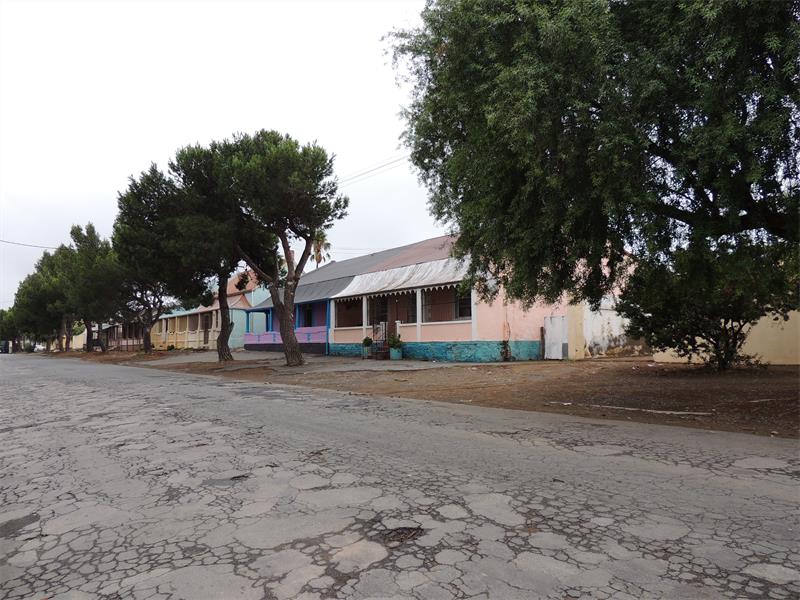
It really is a gorgeous Karoo town and it is also one of South Africa’s oldest. And it really feels old, with a sense of timelessness and a serenity left over from a more gracious era. There is something mature and wise about it, as if it has watched history unfold and reserves its judgement.
History certainly hasn’t passed it by, either. According to Chris Schoeman’s ‘The Historical Karoo (Zebra Press) one of the reasons it was established as a magisterial seat in 1812 was because of its strategic location during the Frontier Wars. It was only acknowledged as a town – and named Cradock, after a former governor of the Cape, Sir John Cradock – six years later when the Dutch Reformed Church was built.

This was the thatched roof forerunner of the present-day church, completed in 1868. Its design was based on that of London’s St-Martin-in-the-Field. During the Anglo-Boer War its handsome clock tower became a lookout post for British soldiers.
Cradock was also at the hub of things at the start of the Great Trek, with many of the trekker families either leaving from this town or passing through it on their way north. Two well-known South African writers, the Olive Schreiner of ‘Story of an African Farm’ fame and Guy Butler, former Head of English at Rhodes University, once lived there. Polar explorer Reginald Koettlitz , a member of Scott’s first ‘Discovery’ expedition to Antarctica, died in Cradock and is buried in the town’s municipal cemetery.
It is not surprising that the sunny Karoo town has always enjoyed a degree of prosperity. Situated on the banks of the Great Fish River, it is surrounded by rich farm lands. It is a pretty town. Many of its attractive old homes and commercial buildings are intact and well-maintained. The abundance of these buildings that have been converted into holiday cottages and bed and breakfast establishments bears testimony to its growing tourism industry.

We visited it on the Saturday of the Easter weekend and Cradock was jam-packed with visitors. More and more people are seeking retreats from fast-paced modern urban life and our attractive Karoo towns are becoming popular tourist destinations.
We’d left Mountain Zebra at 7am so Cradock was just stirring when we reached it. There was not much traffic at that time of the morning so we were able to do a lovely slow drive around the pretty town centre. Then we parked our vehicle and meandered slowly down Market Street admiring the beautifully restored and character-filled tuishuisies, little Victorian cottages now used for tourist accommodation. We also found a craftsman selling the wire windmills for which Cradock is famous. Although we did have a few small ones at home, we couldn’t resist acquiring another, fairly large one one. It makes a great garden ornament – and my granddaughter adores it.

Cradock is very much part of a food revolution that is taking foodies back to basics with wholesome traditional recipes, slow cooking and cooking from scratch with farm-fresh, in season, locally-produced ingredients. This basically sums up what authentic Karoo cuisine is all about so towns like Cradock are cashing in on this healthy, environmentally friendly trend. Call it real food, the sort of food that Karoo restaurants like Cradock’s True Living Restaurant take pride in producing.
Housed in a converted cottage with creaky wooded floors, True Living also sold all sorts of local crafts, Karoo souvenirs and Karoo snacks and treats. You could also buy the artisanal loaves of bread, cooked in a wood stove, and traditional roosterbrood , cooked over coals, on the premises.
Tables and chairs – none of them matching – were set out on the verandah, overlooking the street and in the cosy, sunny back yard. With the wind a bit chilly we opted for the back yard. The waiter, a beautifully mannered young man, showed us to our seats and left us with the menu and huge cups of coffee. The menu was interesting and varied. I ordered a venison pie with potato wedges and Bill had sweet and sour kidneys, scrambled eggs and a relish. Try ordering these sort of dishes in your common or garden chain or franchise restaurant.

We had a bit of a wait for breakfast but this sort of food cannot be rushed and everyone at the restaurant had the knack of treating their customers like valued guests. While we waited, more and more people arrived. Most of them seemed to be townsfolk and the restaurant appeared to be a popular Saturday morning meeting place for all ages. We weren’t surprised about this. Soon we were tucking into a really delicious meal, served with hot, just-off-the-coals roosterbrood. What a treat.
Leaving the restaurant – with a bag of take-away roosterbrood – we popped into the pleasant butchery next door and bought another speciality of the area, the renowned Karoo lamb. The herby bossies on which the sheep graze give Karoo lamb its distinctive taste.
With it being the Easter weekend, the traffic in town was really starting to build up by the time we’d finished out breakfast. Soon we were driving out of town, leaving the hustle and bustle behind us. As much as we’d enjoyed our visit to Cradock, we were now ready to reclaim the tranquility offered by beautiful Mountain Zebra National Park.