
WHILE frosty inland gardens go to sleep during winter, our coastal KwaZulu-Natal gardens just take the odd nap.
There are some trees, like the Celtis africana and the flat crowns (their posh name is Albiza adianthifolia), that drop their leaves and actually go to sleep, only waking up well after the spring carnival has begun. Others, like the Erythrina or coral trees, slumber a bit through the cooler, drier months, saving their energy for a burst of late winter exuberance. Then there are the plants like my magnificent aloes that are positively invigorated by the drop in temperatures, lighting up the winter indigenous garden with their glorious flame-coloured blooms. Some of the aloes are already past their best but others, like the dainty-flowered Aloe chabaudii, are coming into their own. The colourful sunbirds love the aloes, as do the many birds that eat the insects the flowers attract.

Some other avian residents that are enjoying my garden at the moment are the red-capped robin chats ( they used to be known as Natal robins) that are celebrating the cooler weather and the end of a busy breeding season. Their creaky seesaw song is such a joyous sound first thing in the morning and as the sun starts to set.
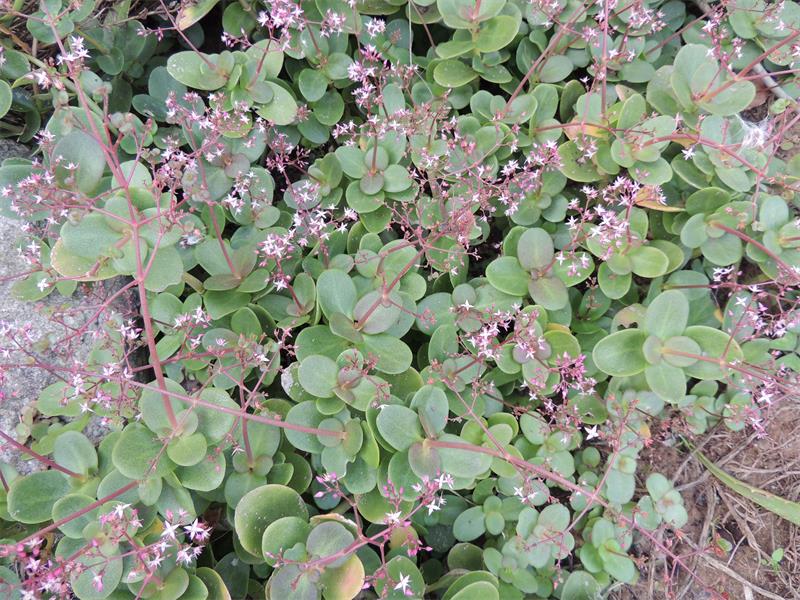
Many blooming succulents, like the starry-flowered crassulas and the striking Cotyledon orbiculata or pigs ears, are really livening up the flower beds. The Crassula ovata bushes – I’ve heard them referred to as jade bushes or money bushes – and the Crassula multicava or fairy crassula are particularly pretty at the moment. These plants are so easy to propagate and, for very little effort, are so rewarding. I must say my insecticide-free veggie container garden fares rather well in our frost-free winter months. There are less bugs about and the veggies generally do better without that hot, moist blanket Mother Nature drops over our coastline during the summer months. I am rather proud of my lettuces at the moment. Perhaps they are just grateful for the lack of frost.

Thanks to the ongoing drought, my garden has been particularly dry this winter and the rather wild and woolly section with wild grasses is even browner than usual. Its winter haircut is overdue. Ideally, this section of the garden could do with a burn every few years. In nature, fire is an integral part of the grassland system but, unfortunately, fires in a suburban garden are not really a practical option.The recent rain gave my garden a much-needed soaking and was very welcome. I hope the much-appreciated downpour was the harbinger of more wet weather and an end to the drought.

To receive news links via BBM, add us using the pin 2BABF7D1.
The South Coast Herald is also on Facebook and Twitter – why not join us there?



